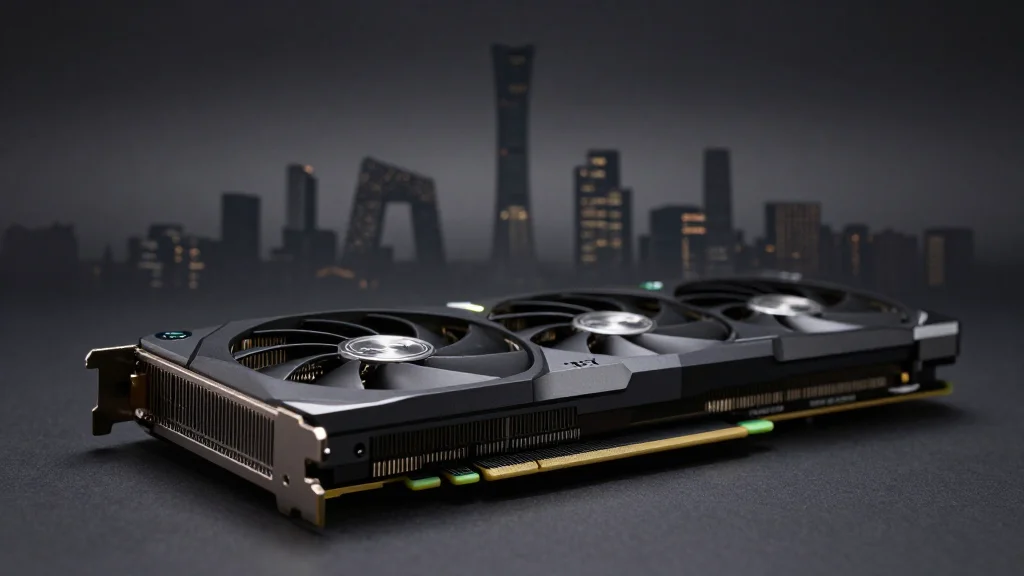
Nvidia CEO Jensen Huang Signals Surprise China Market Opening Amid Rising Chip‑trade Tensions

Companies Mentioned
Why It Matters
The potential reopening of the Chinese market for Nvidia carries profound implications for the global AI‑chip supply chain. China’s appetite for high‑performance GPUs fuels a substantial portion of worldwide AI research and commercial deployment. A calibrated market entry by Nvidia could alleviate supply shortages, accelerate AI innovation, and reshape competitive dynamics among chipmakers. Conversely, any misstep could trigger stricter export controls, further fragmenting the industry and prompting Chinese firms to double‑down on indigenous alternatives. For CEOs across the technology sector, Huang’s maneuver underscores the delicate balance between geopolitical risk management and growth ambition. It highlights how executive leadership must navigate regulatory landscapes while seizing market opportunities, a lesson that will reverberate throughout the CEO Pulse community as trade tensions continue to shape strategic decisions.
Key Takeaways
- •Jensen Huang made a surprise Beijing visit during a U.S.-China summit, signaling a possible market opening.
- •U.S. export controls on advanced GPUs have limited Nvidia’s sales to China since 2022.
- •Analysts estimate a modest China reopening could add $1‑2 billion to Nvidia’s annual revenue.
- •Competitors AMD and Intel are monitoring the situation for similar opportunities.
- •Next steps include licensing requests, potential joint ventures, and compliance frameworks.
Pulse Analysis
Huang’s Beijing appearance is more than a diplomatic courtesy; it is a strategic signal to investors and policymakers that Nvidia is unwilling to cede the Chinese AI‑chip market entirely. Historically, Nvidia has leveraged its dominant GPU architecture to capture a lion’s share of AI workloads, and China represents a critical growth frontier. The company’s willingness to explore a case‑by‑case licensing model reflects a nuanced risk‑mitigation strategy that could set a template for other high‑tech firms caught in the crossfire of U.S.-China trade policy.
From a market perspective, the AI‑chip sector is entering a phase where supply constraints could become a bottleneck for global AI development. If Nvidia can secure a limited, compliant channel into China, it would not only boost its top line but also stabilize the broader ecosystem by ensuring that Chinese data‑center operators have access to cutting‑edge hardware. This would dampen the incentive for rapid domestic substitution, preserving the current technology hierarchy for the near term.
Looking ahead, the success of this tentative opening will hinge on the ability of both governments to craft a regulatory framework that satisfies security concerns without stifling innovation. CEOs will need to monitor policy shifts closely, as any escalation could abruptly reverse the gains hinted at by Huang’s visit. In the meantime, Nvidia’s move may encourage other chipmakers to pursue similar diplomatic overtures, potentially reshaping the competitive landscape of AI hardware worldwide.
Nvidia CEO Jensen Huang signals surprise China market opening amid rising chip‑trade tensions
Comments
Want to join the conversation?
Loading comments...