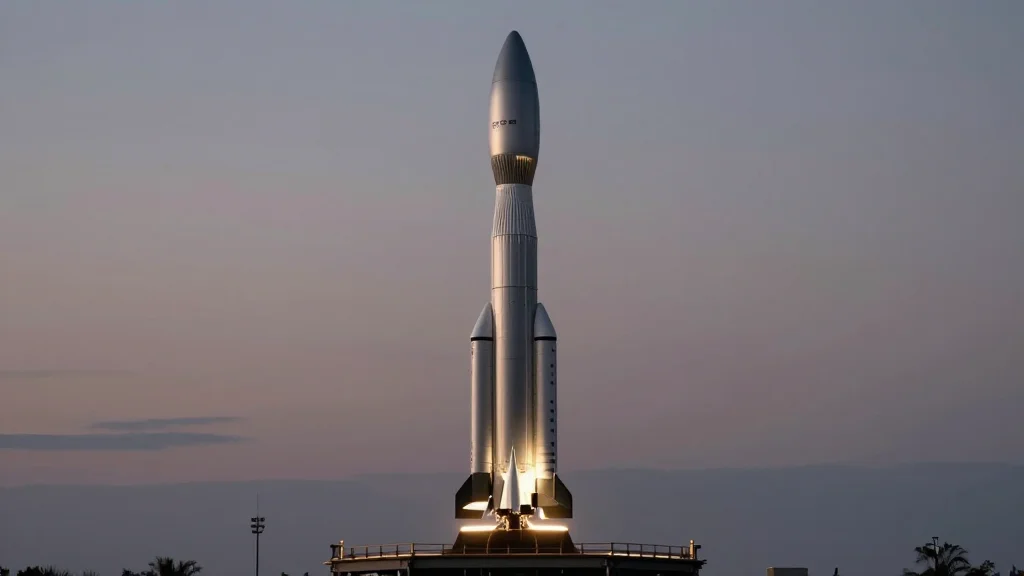
SpaceX Files to Raise $75 Billion in IPO, Offering 555.56 M Shares at $135


Why It Matters
The SpaceX IPO represents a watershed moment for the CEO Pulse space, where a single founder retains overwhelming control while tapping public markets for massive capital. Musk’s ability to preserve more than 80% voting power challenges conventional corporate governance models and could inspire other founder‑centric firms to structure offerings that protect their strategic vision. Beyond governance, the infusion of $75 billion would dramatically expand SpaceX’s capacity to launch satellites, develop reusable rockets, and pursue ambitious projects like Mars colonization. This could accelerate competition in the satellite broadband arena, pressure rivals such as Amazon’s Kuiper and OneWeb, and potentially lower costs for global connectivity. The IPO also signals to investors that deep‑tech sectors are now viable candidates for mega‑scale public offerings, broadening the investment landscape beyond traditional software and consumer internet firms.
Key Takeaways
- •SpaceX plans to sell 555.56 million shares at $135 each, targeting $75 billion in gross proceeds.
- •Elon Musk will retain about 82.4% voting power, ensuring control over shareholder decisions.
- •Underwriters have an option to purchase up to 83.33 million additional shares, potentially diluting the offering slightly.
- •The filing coincides with AI firms like Anthropic filing confidential IPO paperwork, indicating a broader founder‑led IPO wave.
- •If approved, the capital raise would fund Starlink expansion, next‑gen launch vehicles, and deep‑space missions.
Pulse Analysis
SpaceX’s filing underscores a growing appetite among investors for high‑risk, high‑reward ventures led by charismatic CEOs. Musk’s dual role as visionary engineer and dominant shareholder creates a unique risk‑return profile: the company can pursue long‑term, capital‑intensive projects without the typical pressure of quarterly earnings, yet investors must trust a single individual’s judgment. This model contrasts sharply with the more dispersed governance structures of traditional public companies and may set a precedent for future tech IPOs where founders seek to lock in strategic direction while accessing public capital.
The market impact extends beyond SpaceX. By demonstrating that a $75 billion IPO is feasible for a capital‑intensive aerospace firm, the filing could lower the perceived barrier for other deep‑tech companies—such as quantum computing, advanced materials, and autonomous systems—to consider public listings. However, the sheer size also raises regulatory scrutiny, especially around voting concentration and potential antitrust concerns in the satellite broadband market. Investors will be watching the SEC’s response and the underwriters’ pricing strategy to gauge whether the market can absorb such a massive offering without destabilizing related sectors.
Finally, the timing aligns with a resurgence of mega‑IPOs in AI, suggesting a broader shift where founder‑led companies in disparate tech domains are converging on public markets to fund the next wave of innovation. The success or failure of SpaceX’s offering will likely influence how venture‑backed, founder‑centric firms structure future IPOs, balancing the desire for capital with the need to retain strategic control.
SpaceX Files to Raise $75 Billion in IPO, Offering 555.56 M Shares at $135
Comments
Want to join the conversation?
Loading comments...