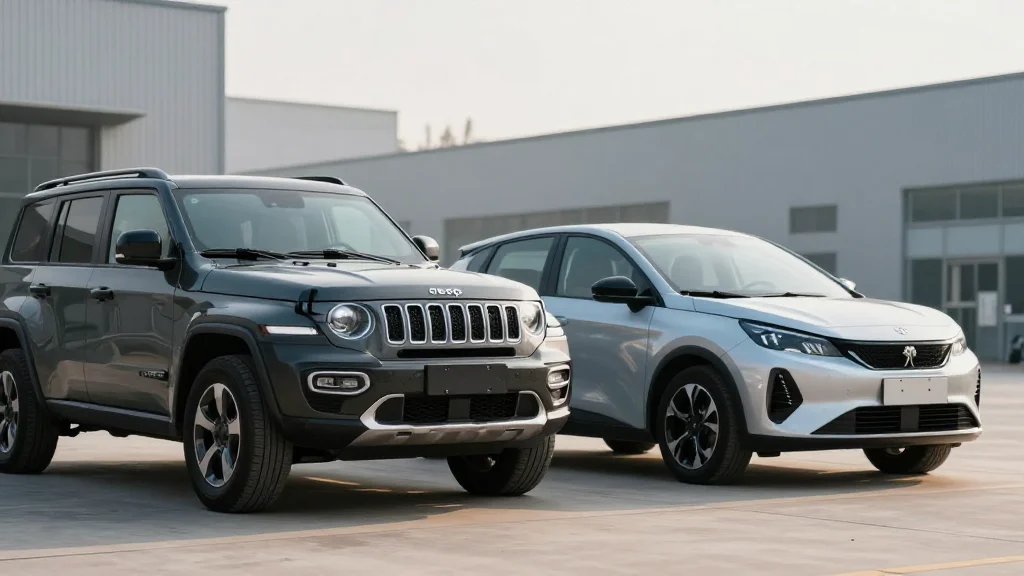
Stellantis, Dongfeng Seal $1.2 B Joint Venture to Relaunch Jeep Production in China

Companies Mentioned
Why It Matters
The Stellantis‑Dongfeng joint venture marks a pivotal shift for a legacy Western automaker seeking relevance in China’s electrified market. By coupling Jeep’s brand cachet with Dongfeng’s local manufacturing expertise, Stellantis aims to overcome the cost and regulatory barriers that have forced many foreign brands out of China. The deal also illustrates how geopolitical friction is prompting companies to embed deeper into local ecosystems rather than retreat, potentially reshaping global supply chains and competitive dynamics in the EV sector. For CEOs across the auto industry, the partnership underscores the importance of strategic flexibility: leveraging state‑backed partners can unlock scale and speed, but it also ties corporate fortunes to the policy environment of a rival superpower. Stellantis’ ability to balance these risks while delivering profitable growth will be a bellwether for other multinational manufacturers contemplating similar alliances.
Key Takeaways
- •Stellantis and Dongfeng sign 8 billion yuan ($1.18 bn) joint venture to produce Jeep and Peugeot EVs.
- •Stellantis will invest roughly $130 million (130 million euros) in the Wuhan plant.
- •Production of two Jeep off‑road NEVs and two Peugeot NEVs slated to start in 2027.
- •Deal includes export of Jeep models to global markets, expanding Stellantis’ supply‑chain reach.
- •CEO Antonio Filosa emphasizes the partnership as a win‑win amid US‑China tensions and a 30.9 % sales drop for Peugeot in China.
Pulse Analysis
Stellantis’ China comeback is less about brand nostalgia and more about securing a cost‑effective manufacturing hub for its EV ambitions. The 8 billion yuan outlay is modest compared with the capital intensity of building a greenfield plant, yet it grants Stellantis access to Dongfeng’s established supply network, battery sourcing, and local regulatory know‑how. This mirrors a broader industry trend where legacy OEMs are opting for joint‑venture models to sidestep the steep learning curve of China’s EV ecosystem.
Historically, foreign automakers have struggled to adapt to China’s rapid shift toward electric powertrains, often lagging behind domestic rivals in technology and pricing. By co‑developing models that blend Jeep’s rugged brand DNA with Chinese EV platforms, Stellantis can accelerate time‑to‑market while mitigating the risk of over‑investing in a market that remains volatile. The export component also hints at a strategic pivot: using China as a production base for global demand, a model already employed by Hyundai and Volkswagen.
Looking ahead, the partnership’s success will depend on three variables: the ability to deliver compelling EVs at competitive price points, the stability of US‑China trade policies, and Stellantis’ broader restructuring agenda, which includes potential divestitures of underutilized European plants. If the joint venture meets its milestones, it could set a template for other Western OEMs seeking a foothold in China without fully surrendering control, thereby reshaping the competitive landscape of global automotive manufacturing.
Stellantis, Dongfeng Seal $1.2 B Joint Venture to Relaunch Jeep Production in China
Comments
Want to join the conversation?
Loading comments...