Why It Matters
The profit boost shows Ford can offset lower unit sales with higher‑margin products, reinforcing cash flow and funding its electrification roadmap. It signals to investors that the company’s shift toward trucks, SUVs and software can sustain earnings while it scales new EV platforms.
Key Takeaways
- •Ford's trucks and SUVs drove 6% revenue rise despite volume drop
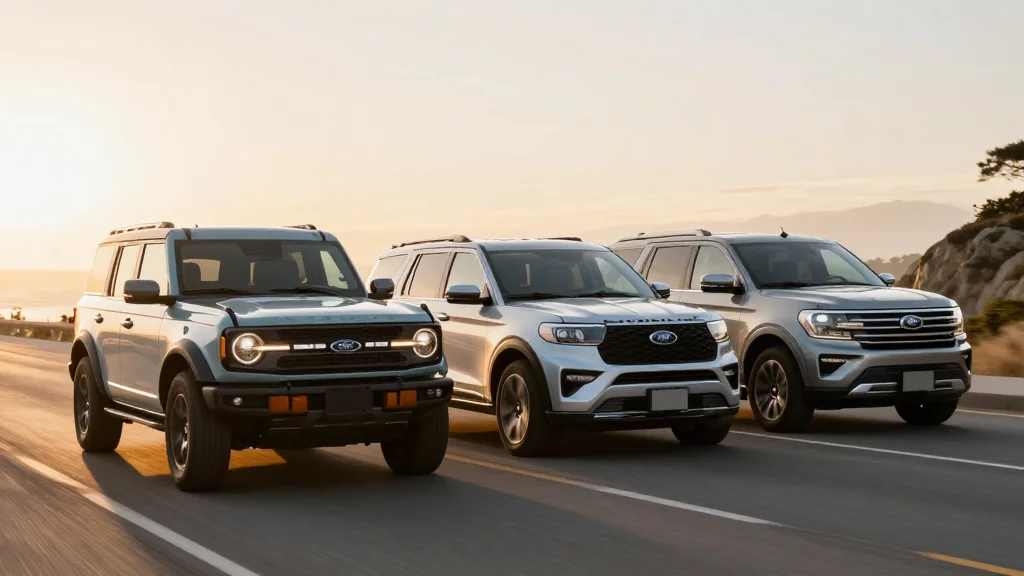
- •Expedition, Explorer, Bronco sales jumped ~30% YoY in Q1
- •F‑150 topped U.S. market with 159,901 units sold
- •Ford Pro software subscriptions hit 879k, up 30% YoY
- •UEV platform slated for 2027 launch to underpin future electrified models
Pulse Analysis
Ford’s first‑quarter results underscore a classic automotive paradox: fewer cars sold but more dollars earned. By leaning into its most profitable segments—full‑size trucks and premium SUVs—the Detroit‑based automaker lifted revenue to $43.3 billion, outpacing the industry’s volume decline. The F‑Series continued to dominate the U.S. market, while the Expedition, Explorer and Bronco line‑up delivered near‑30% year‑over‑year growth, validating Ford’s product‑mix strategy and its focus on higher‑priced trims that command stronger margins.
Beyond hardware, Ford is accelerating a software‑driven revenue engine through its Ford Pro commercial unit. Paid subscriptions climbed to 879,000, a 30% jump, generating $1.7 billion in EBIT on $14.7 billion of sales. This diversification mirrors a broader industry shift where automakers monetize data, connectivity and fleet services, cushioning earnings against cyclical demand swings. The higher‑trim SUV offerings—Explorer Active, ST‑line, and off‑road Bronco variants—further illustrate how premium features can lift average transaction prices without expanding unit counts.
Looking ahead, Ford’s ambition to “future‑proof” its lineup hinges on the Universal Electric Vehicle (UEV) platform slated for a 2027 debut. The modular, zonal architecture promises cost efficiencies and the flexibility to support ICE, hybrid and fully electric powertrains across a single assembly line. If executed, the UEV could position Ford as a cost‑competitive EV contender while preserving its high‑margin truck and SUV heritage, a balance that many rivals still struggle to achieve.
Higher-margin trucks, SUVs boost Ford’s revenue in Q1
Comments
Want to join the conversation?
Loading comments...