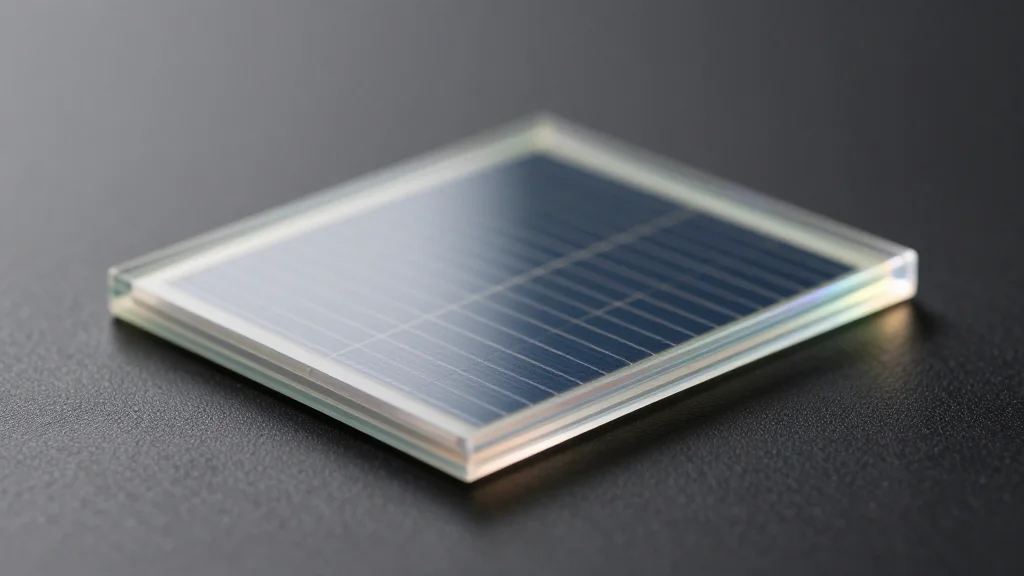
New Passivation Strategy Boosts Perovskite/Silicon Tandem Solar Cell Performance
Key Takeaways
- •33.33% efficiency achieved, certified at 32.89% for 1 cm² cell
- •Polystyrene nanospheres enable selective Al₂O₃ coating on silicon peaks
- •Device retains ~90% efficiency after 1,000 hours continuous operation
- •Passivation method compatible with existing industrial production lines
- •Improves commercial viability of perovskite/silicon tandem photovoltaics
Pulse Analysis
Perovskite/silicon tandem solar cells have emerged as a promising route to surpass the efficiency ceiling of single‑junction silicon, with the world record hovering around 35%. The primary obstacle has been the textured silicon bottom, whose pyramidal geometry hampers uniform perovskite deposition and creates microscopic leakage pathways that erode both performance and durability. Overcoming these defects is essential for translating laboratory efficiencies into scalable, cost‑effective modules that can be deployed at utility scale.
The new peak‑selective passivation strategy tackles the leakage problem head‑on. By using polystyrene nanospheres as a sacrificial template, researchers precisely coat the pyramid peaks with an ultrathin aluminum‑oxide film, effectively insulating the high‑field regions without compromising light absorption. This simple, roll‑to‑roll‑compatible process pushed cell efficiency to 33.33% (certified at 32.89%) on a 1 cm² device and demonstrated remarkable stability, maintaining about 90% of its initial output after 1,000 hours of continuous illumination. The results showcase a rare combination of high efficiency and long‑term reliability, two metrics that have traditionally been at odds in tandem architectures.
Industry analysts view this development as a catalyst for the next wave of photovoltaic manufacturing. The technique’s compatibility with existing silicon production lines reduces capital expenditures and shortens the learning curve for fabs looking to add a perovskite top layer. As global renewable targets tighten, the ability to deliver >30% efficient, stable modules at scale could reshape solar market dynamics, driving down levelized cost of electricity and expanding the role of tandem cells in residential, commercial, and utility applications. Continued optimization and larger‑area demonstrations will be the next milestones toward commercial rollout.
New passivation strategy boosts perovskite/silicon tandem solar cell performance
Comments
Want to join the conversation?