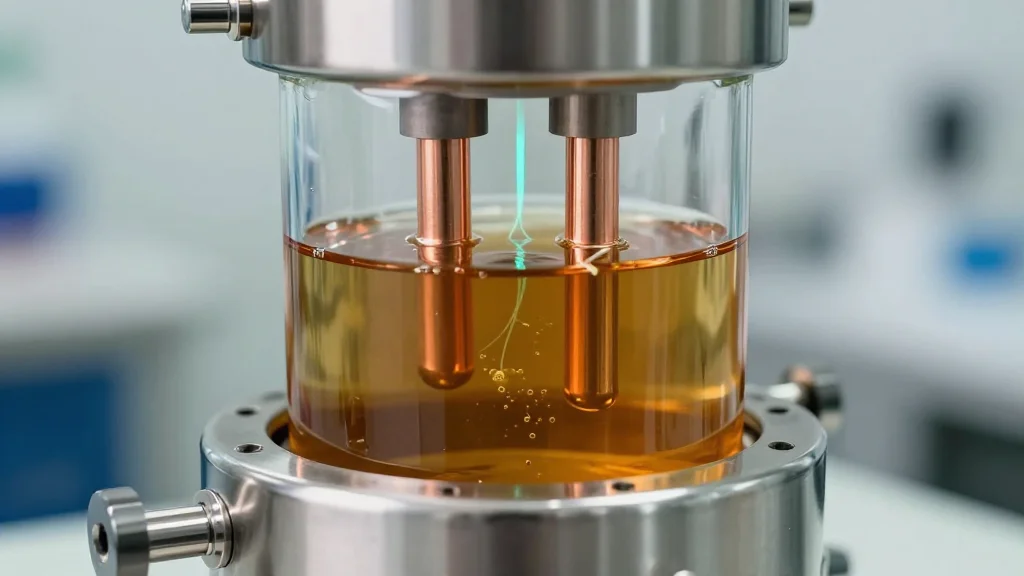
Turning Waste Biomass Into Hydrogen and Value-Added Chemicals
Key Takeaways
- •Glycerol oxidation replaces oxygen evolution, reducing cell voltage.
- •Copper‑cobalt oxide catalyst delivers 96% formate selectivity.
- •System runs at 1.31 V, 110 mA cm⁻² current density.
- •Scalable to megawatt‑scale electrolyzers with stable performance.
- •Converts low‑cost biodiesel by‑product into hydrogen and chemicals.
Pulse Analysis
The push for green hydrogen has been hampered by the energy‑intensive oxygen evolution reaction that dominates conventional water electrolysis. Researchers at Korea Institute of Materials Science (KIMS) and UNIST tackled this bottleneck by pairing hydrogen evolution with the oxidation of glycerol, an abundant by‑product of biodiesel production. This paired electrolysis strategy swaps the high‑potential OER for a glycerol oxidation reaction (GOR), which proceeds at lower voltage and generates value‑added chemicals. By turning a waste stream into a feedstock, the approach aligns the hydrogen economy with circular‑economy principles and promises a more sustainable energy landscape.
The team built an anion exchange membrane water electrolyzer (AEMWE) that operates at a cell voltage of just 1.31 V while delivering a current density of 110 mA cm⁻². Central to this performance is a copper‑cobalt oxide catalyst that avoids expensive noble metals yet achieves roughly 96 % selectivity toward formate, a versatile chemical feedstock. Stability tests in a 79 cm² electrolyzer module showed consistent output over extended periods, confirming the catalyst’s durability. These metrics place the system within the range required for megawatt‑scale deployment, bridging the gap between laboratory proof‑of‑concept and commercial viability.
From a business perspective, the dual‑product electrolyzer cuts hydrogen production costs by harvesting the energy released during glycerol oxidation, while simultaneously creating a marketable chemical—formate—that can be sold to the pharmaceutical and polymer sectors. This creates an additional revenue stream that improves project economics and reduces reliance on subsidies. Moreover, the use of low‑cost, non‑precious metal catalysts simplifies supply chains and mitigates price volatility associated with platinum‑group metals. As governments worldwide tighten carbon‑intensity standards, technologies that turn waste into clean energy and chemicals are poised to attract investment and accelerate the transition to a low‑carbon industrial base.
Turning waste biomass into hydrogen and value-added chemicals
Comments
Want to join the conversation?