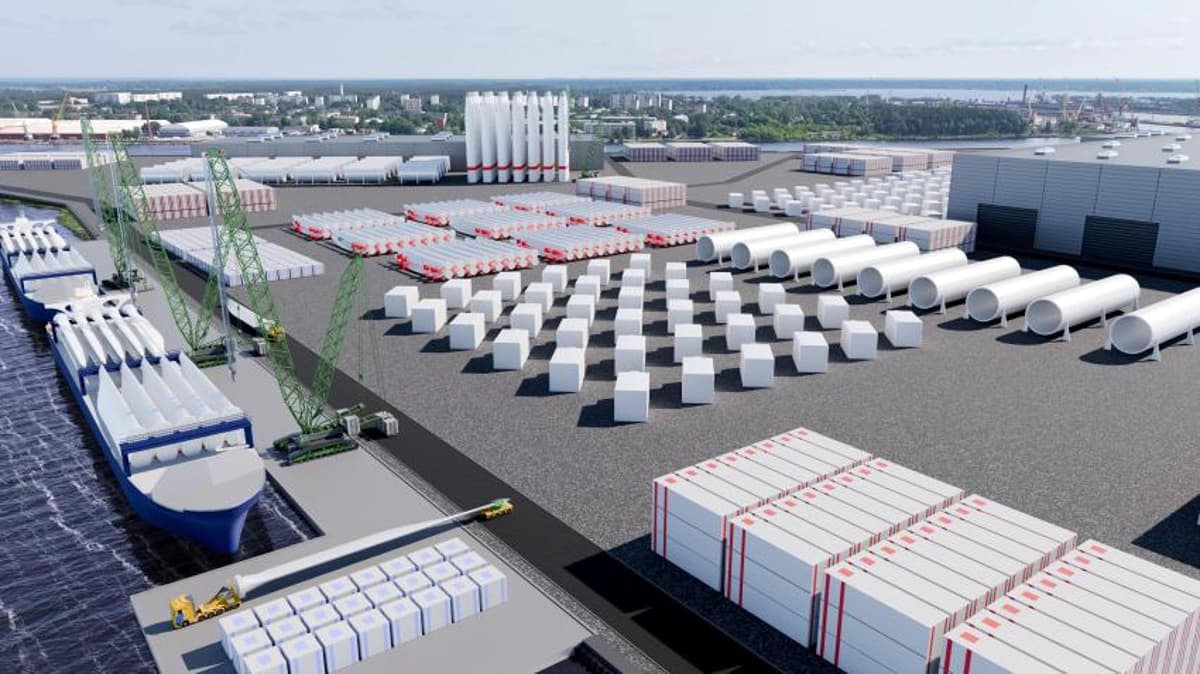
Port of Riga Secures Over $770M in Investment for Wind Technology Production Hub
Why It Matters
The hub diversifies Latvia’s industrial base, attracts high‑value foreign capital, and strengthens Europe’s supply chain for offshore wind and grid‑scale storage, accelerating the region’s clean‑energy transition.
Key Takeaways
- •Over €700 M ($763 M) pledged for wind tech hub by 2034.
- •EU public funding totals €86 M ($94 M) for port infrastructure.
- •Project to create >2,000 jobs across manufacturing and logistics.
- •Solidior Power to build 6.4 GWh battery plant by 2031.
- •Deep‑water berth, road and rail upgrades due by December 2029.
Pulse Analysis
The Baltic Sea is emerging as a strategic corridor for renewable‑energy logistics, and Latvia’s Freeport of Riga is capitalising on that trend. By anchoring a multi‑billion‑dollar wind‑technology cluster at Kundziņsala, the port taps into the EU’s aggressive offshore‑wind targets, which call for gigawatts of new capacity by 2030. The combination of deep‑water berths, rail links and dedicated logistics yards creates a seamless supply chain that can handle the massive components—towers, nacelles and rotors—required for next‑generation turbines, reducing reliance on distant Asian manufacturers.
The three investors bring complementary capabilities: a Latvian firm will produce core turbine parts, Lithuania’s Eurostat 5 will provide assembly and testing services, and Finland’s Solidior Power will introduce a 6.4 GWh nickel‑zinc battery line, the largest in the Nordic‑Baltic region. Public backing of €86 million ($94 million) under the EU Regional Development Fund underscores the project’s alignment with the European Green Deal, while the projected 2,000‑plus jobs span high‑skill engineering to logistics support. The battery plant also promises a technology transfer of U.S. manufacturing processes, bolstering Europe’s energy‑storage independence.
For investors and policymakers, the Riga hub signals a shift toward regional self‑sufficiency in clean‑energy hardware. The infrastructure upgrades slated for completion by 2029 will lower freight costs and improve turnaround times, making the Baltic a competitive alternative to traditional hubs in the Netherlands or Germany. As Europe tightens supply‑chain security for critical energy components, the Riga cluster could attract further downstream manufacturers, fostering an ecosystem that accelerates decarbonisation while delivering robust economic returns.
Deal Summary
The Freeport of Riga Authority secured three international investors—SIA Latvijas atjaunojamās enerģijas projekti, UAB Eurostat 5, and Solidior Power Ltd.—who together committed over €700 million (≈$770 million) to develop wind‑technology production facilities at Kundziņšala. The agreements, signed between December 2025 and March 2026, include private investment and €86 million in EU public funding, with construction slated for completion by 2034.
Comments
Want to join the conversation?
Loading comments...