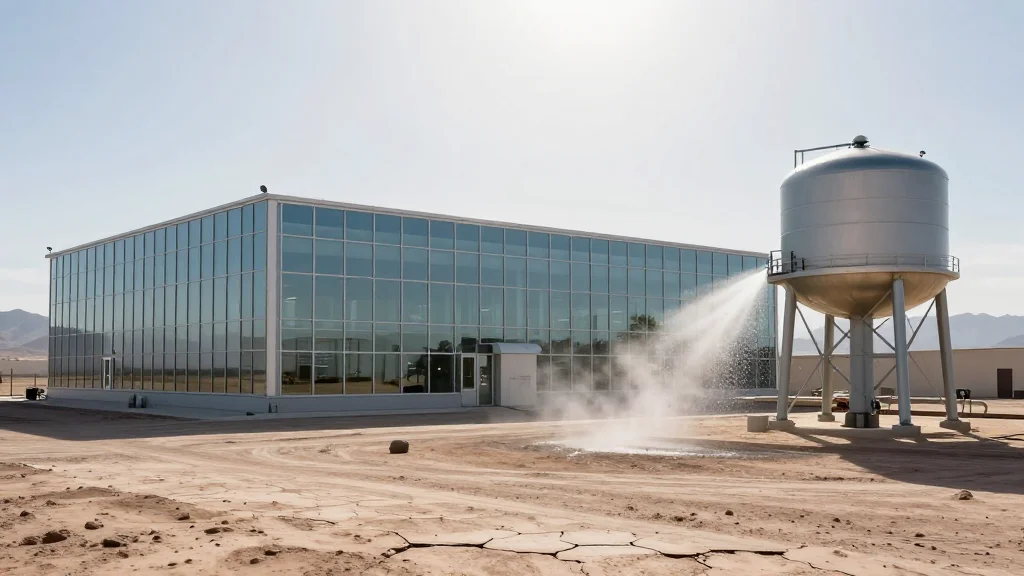
$10 Billion Imperial Valley Data Center Threatens Water Supply for California Region

Why It Matters
The Imperial Valley data center illustrates how ClimateTech infrastructure can clash with local resource constraints. Water is a finite asset in the desert Southwest, and a single facility that consumes three‑quarters of a million gallons daily could exacerbate scarcity, drive up rates for households, and strain municipal supplies. The controversy also highlights a regulatory blind spot: California does not require AI‑focused data centers to disclose water usage, leaving communities without the data needed to assess cumulative impacts. If unchecked, such projects could set a precedent where high‑value tech investments proceed without robust sustainability safeguards, undermining broader climate goals. Conversely, the pushback may accelerate adoption of low‑water cooling technologies and prompt tighter state reporting, shaping a more resilient path for future data‑center development.
Key Takeaways
- •Developer Sebastian Rucci proposes a $10 billion, 330‑MW data center in Imperial Valley, to be completed by 2028.
- •The facility would require 750,000 gallons of water per day for evaporative cooling.
- •Local resident Margie Padilla warns the project could raise water and power rates for households.
- •UC Riverside’s Shaolei Ren says a 100‑MW data center uses about 1 million gallons daily—equivalent to 10,000 homes.
- •California lacks mandatory water‑use reporting for AI data centers, creating regulatory gaps.
Pulse Analysis
The Imperial Valley proposal is a microcosm of the broader climate‑tech dilemma: scaling digital infrastructure while preserving scarce natural resources. Historically, data‑center growth has been driven by cheap electricity, but water is emerging as the next bottleneck, especially in arid regions. The $10 billion price tag signals strong investor confidence in AI workloads, yet the project's water demand—750,000 gallons daily—represents a tangible externality that could erode public support and trigger costly legal challenges.
From a market perspective, developers who pre‑emptively integrate water‑recycling or gray‑water cooling will gain a competitive edge, as municipalities and regulators tighten oversight. The lack of state‑wide reporting creates uncertainty for investors; any future mandate could expose hidden liabilities and force retrofits, inflating capex. Companies that partner with water‑tech firms or adopt proven low‑water designs may not only mitigate community backlash but also unlock financing incentives tied to sustainability metrics.
Looking ahead, the Imperial Valley case may catalyze policy reform. Lawmakers could introduce mandatory water‑use disclosures for data centers, similar to existing electricity reporting, providing transparency and enabling basin‑level planning. If such measures materialize, the sector could see a shift toward locations with abundant reclaimed water supplies or toward innovative cooling methods like liquid immersion. The outcome will shape how ClimateTech balances the twin imperatives of digital expansion and resource stewardship in the coming decade.
$10 Billion Imperial Valley Data Center Threatens Water Supply for California Region
Comments
Want to join the conversation?
Loading comments...