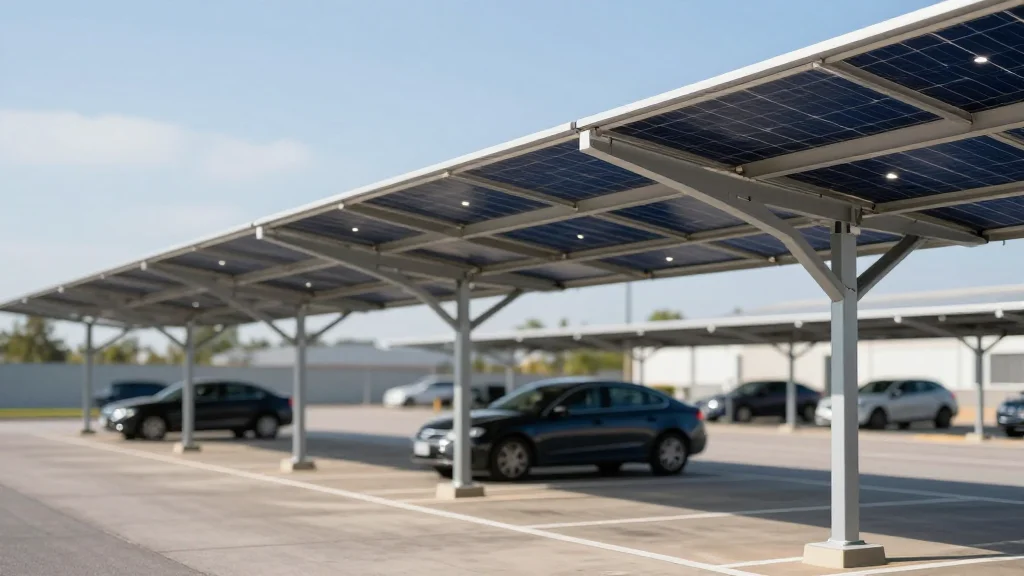
A Blueprint for Successful Solar Canopy Projects
Companies Mentioned
Why It Matters
By turning parking infrastructure into power assets, solar canopies unlock gigawatts of new capacity without new land, accelerating the clean‑energy transition and offering owners direct cost savings and grid resilience.
Key Takeaways
- •Five canopy configurations match varied site and performance goals
- •Geotechnical and utility mapping cut foundation costs and delays
- •Optimized layouts reduce foundations while boosting PV density
- •One‑stop EPC partners streamline design, procurement, and construction
- •Aesthetics and drainage systems enhance site usability and adoption
Pulse Analysis
Solar canopies are reshaping the renewable‑energy landscape by converting idle parking surfaces into high‑value power plants. With millions of acres of underused lots across the United States, the market potential runs into gigawatts, offering developers a low‑land‑use alternative to traditional utility‑scale farms. This scalability dovetails with the rapid rise of electric‑vehicle adoption, as canopies provide both clean electricity and protected charging stations, creating a synergistic value proposition for municipalities, corporations, and private owners.
Successful deployments hinge on meticulous engineering and risk mitigation. Early‑stage decisions—such as selecting the appropriate structural configuration, conducting thorough geotechnical surveys, and mapping underground utilities—directly influence project economics and long‑term resilience. Layout optimization, like using six‑to‑seven modules per span or employing cantilevered purlins, maximizes photovoltaic output per foundation, trimming material and labor costs. Moreover, integrated water‑ and snow‑management systems protect both the array and the underlying parking area, ensuring reliable performance in diverse climates.
Given the technical complexity, an end‑to‑end EPC partner is essential. Firms that handle design, fabrication, logistics, and installation reduce coordination friction and accelerate timelines, while also offering custom aesthetic treatments that align with a site’s architectural language. Case studies from industry leaders—such as Samsung and Cisco—demonstrate that well‑executed canopy projects not only lower energy procurement costs but also enhance brand sustainability narratives. As land‑use pressures intensify, solar canopies present a pragmatic, high‑impact pathway for expanding clean‑energy generation without sacrificing valuable real estate.
A Blueprint for Successful Solar Canopy Projects
Comments
Want to join the conversation?
Loading comments...