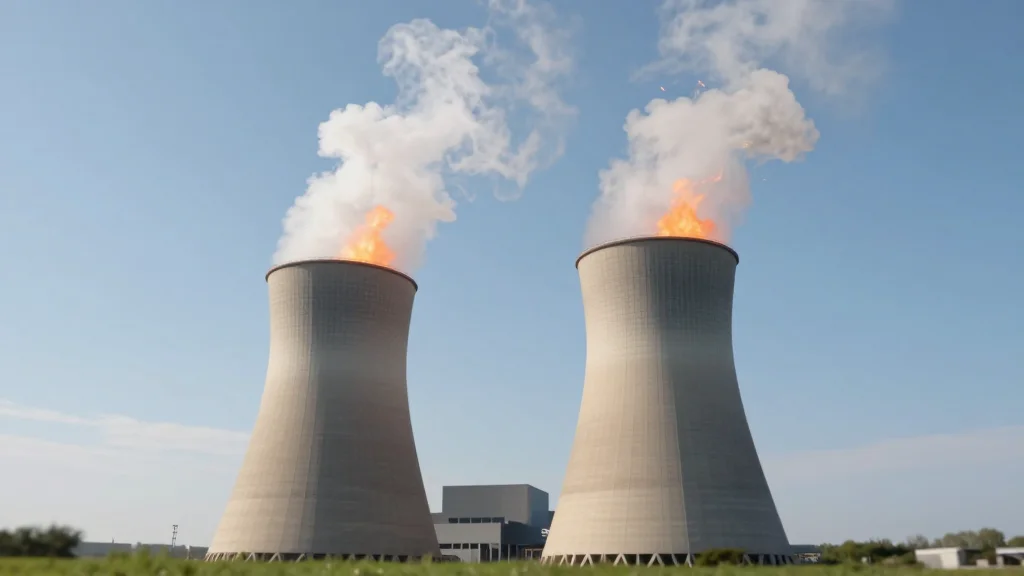
AGL Tops Off Liddell Chimney Demolition, a Landmark in Australia's Coal Phase‑out

Companies Mentioned
Why It Matters
The demolition of Liddell’s chimneys provides a tangible indicator that Australia is moving beyond its coal legacy, a process that has been politically and economically contentious for years. By coupling the physical removal of coal infrastructure with the commissioning of a large‑scale battery, AGL demonstrates a concrete pathway for legacy utilities to pivot toward decarbonisation while maintaining grid reliability. The event also offers a template for other jurisdictions grappling with the safe, community‑sensitive de‑commissioning of aging fossil‑fuel assets. Moreover, the site’s transformation into an industrial energy hub could attract investment in emerging clean‑energy technologies such as green hydrogen or offshore wind connections. The success of this transition will influence policy decisions, financing models, and public perception of Australia’s ability to meet its net‑zero commitments without compromising energy security.
Key Takeaways
- •AGL demolished Liddell’s twin 170‑metre chimneys in a 20‑second controlled blast on Tuesday.
- •The demolition used ~260 kg of explosives per tower, placed in 700 drilled holes.
- •A 1‑km exclusion zone and water‑curtain paddling pools were employed to limit dust.
- •14,000 tonnes of concrete rubble will be cleared over three weeks.
- •A 500‑MW battery storage project is in final commissioning, signaling a shift to renewables.
Pulse Analysis
The Liddell demolition is more than a photo‑op; it is a strategic inflection point for Australia’s energy transition. Historically, coal plant retirements have been hampered by lengthy de‑commissioning timelines, community opposition, and uncertain post‑closure land use. AGL’s methodical 18‑month planning, combined with simultaneous investment in a 500‑MW battery, illustrates a coordinated approach that mitigates these risks. By integrating storage capacity directly on the former coal site, AGL reduces the need for new transmission infrastructure and leverages existing grid connections, a cost‑effective model for other utilities.
From a market perspective, the successful demolition and battery rollout could unlock new financing avenues for similar projects. Investors increasingly demand clear, de‑risked pathways for legacy asset conversion, and AGL’s transparent dust‑control and safety protocols provide a template for risk‑adjusted capital allocation. The visible removal of the chimneys also serves a narrative function, reinforcing public confidence that the coal exit is tangible and irreversible.
Looking ahead, the real test will be how the site’s industrial hub materialises. If AGL can attract green‑hydrogen producers or renewable developers, the Liddell precinct could become a showcase of circular energy economics—where former fossil‑fuel land supports low‑carbon industries. Conversely, delays or community pushback could stall the broader transition agenda. The next demolition phase in November will be a litmus test for AGL’s ability to maintain momentum while balancing environmental stewardship and local sentiment.
AGL tops off Liddell chimney demolition, a landmark in Australia's coal phase‑out
Comments
Want to join the conversation?
Loading comments...