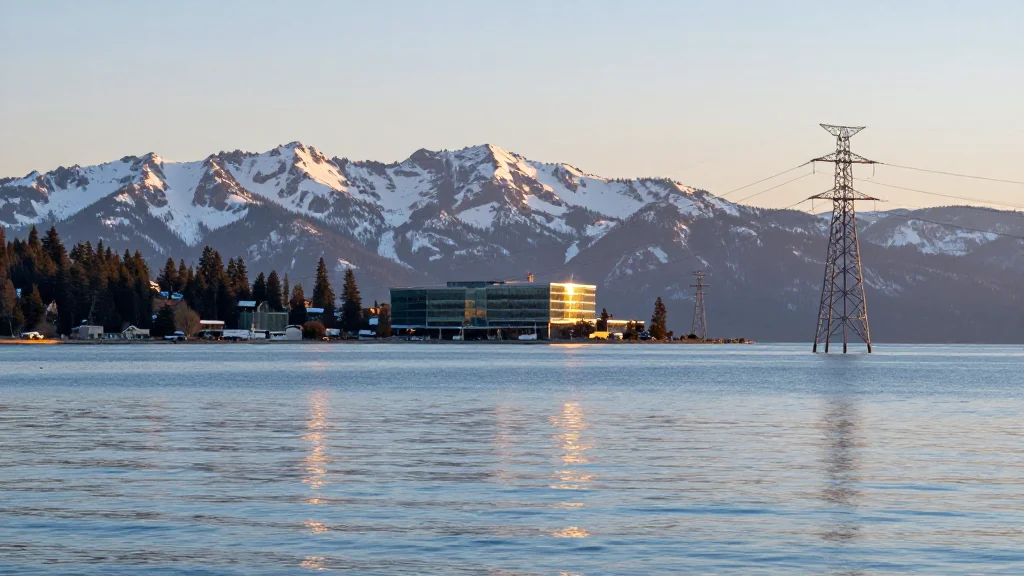
AI Data Centers Threaten Lake Tahoe Power Supply, NV Energy to Cut Service by 2027

Companies Mentioned
Why It Matters
The Lake Tahoe power crisis illustrates how AI‑driven demand can outpace existing grid planning, especially in regions that depend on renewable resources. If utilities continue to prioritize data‑center capacity over residential reliability, public support for clean‑energy transitions could wane, jeopardizing broader climate goals. Moreover, the jurisdictional maze surrounding Lake Tahoe highlights a regulatory blind spot: cross‑state utilities and transmission owners often lack a unified authority to balance competing interests. Addressing this gap will be critical as AI compute expands nationwide, ensuring that community needs are not sidelined by corporate projects.
Key Takeaways
- •NV Energy will cease power deliveries to Lake Tahoe after May 2027 to free capacity for AI data centers.
- •Liberty Utilities serves roughly 49,000 residents in the Tahoe Basin, now forced to find new supply.
- •12 proposed data‑center projects in northern Nevada could demand ~5,900 MW by 2033, over half of the state's current capacity.
- •Lake Tahoe’s grid lies in a jurisdictional overlap, with California regulation but Nevada transmission infrastructure.
- •The crisis raises questions about grid resilience and regulatory coordination as AI compute expands.
Pulse Analysis
The Lake Tahoe episode is a cautionary tale for utilities nationwide. Historically, large industrial loads—such as manufacturing plants—have been the primary drivers of capacity planning. AI compute, however, introduces a new class of load that scales rapidly with model size and training frequency, often outpacing traditional forecasting methods. NV Energy’s decision to prioritize AI data centers reflects a market reality where high‑margin, long‑term contracts can outweigh the political risk of disrupting residential service.
From a market perspective, the scramble for power in northern Nevada could accelerate a shift toward dedicated AI micro‑grids or the construction of on‑site renewable generation paired with storage. Companies like Google and Microsoft have already announced plans for renewable‑backed data centers, but those projects often receive state‑level incentives that may not be available to smaller utilities or communities. The competitive imbalance could spur policy interventions, such as capacity‑allocation rules that protect essential services.
Looking ahead, regulators will need to develop cross‑jurisdictional frameworks that can reconcile the competing interests of AI developers, utilities, and residents. Potential solutions include mandated capacity reserves for residential customers, transparent bidding processes for transmission rights, and coordinated planning between CAISO and Nevada’s balancing authority. Without such mechanisms, the pattern seen in Lake Tahoe could repeat in other renewable‑rich regions, undermining the reliability of grids that are supposed to be the backbone of a low‑carbon future.
AI Data Centers Threaten Lake Tahoe Power Supply, NV Energy to Cut Service by 2027
Comments
Want to join the conversation?
Loading comments...