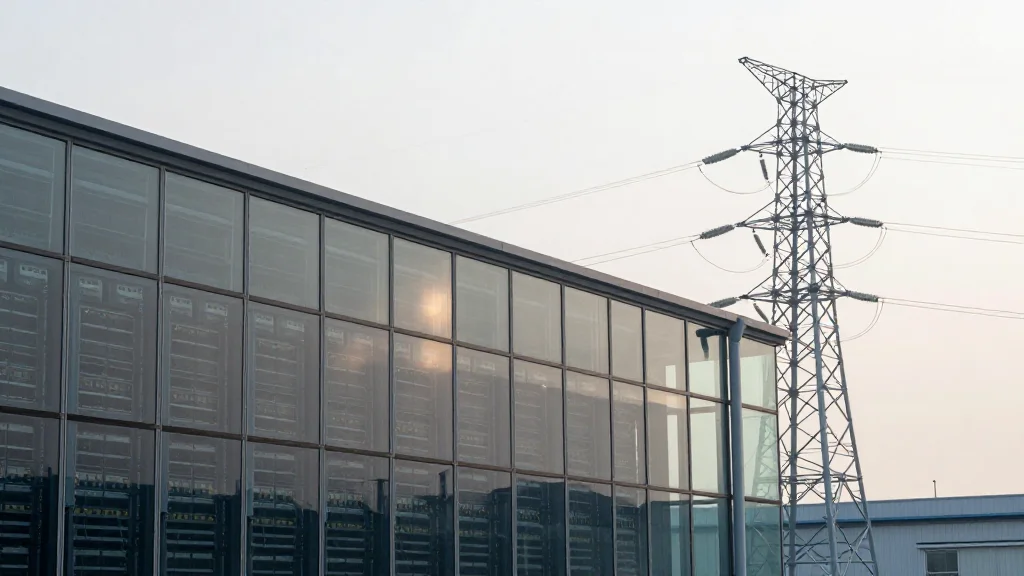
AI Data‑Center Boom Threatens US Grid and Raises Neighborhood Heat‑Island Risks

Why It Matters
The grid‑stress warning underscores a critical bottleneck for the AI economy: without substantial transmission upgrades or new low‑carbon generation, the United States could see higher electricity rates and reliability events that erode public support for both AI and clean‑energy initiatives. The heat‑island findings add a public‑health dimension, showing that data‑centre expansion can exacerbate extreme‑heat risks in already vulnerable communities, potentially prompting local zoning reforms and stricter environmental reviews. Together, these dynamics illustrate how ClimateTech solutions—such as advanced grid‑balancing algorithms, renewable‑plus‑storage hybrids, and waste‑heat capture technologies—must be deployed at scale to reconcile AI growth with climate resilience. Failure to act could lock in higher‑emission generation and amplify urban heat, counteracting broader decarbonisation targets.
Key Takeaways
- •Wood Mackenzie warns AI data‑centre demand (78 GW) far exceeds new generation capacity (36 GW) in PJM’s pipeline.
- •Study finds waste heat from data centres can raise downwind neighborhood temps by up to 4 °F (2 °C).
- •PJM’s two‑tier pricing may accelerate retirement of older gas and coal plants, raising reliability concerns.
- •Texas electricity prices sit at $30‑$40/MWh, below the $78‑$100/MWh needed for new gas generation.
- •Collocation projects total >90 GW in US interconnection queues, viable only for financially strong hyperscalers.
Pulse Analysis
The convergence of grid‑capacity shortfalls and localized heat‑island effects signals a systemic risk that extends beyond the data‑centre sector. Historically, rapid compute growth has been accommodated by incremental grid upgrades, but AI’s exponential scaling—driven by large‑language models and generative workloads—compresses the planning horizon. Wood Mackenzie’s projection of 16.4 GW of new gas capacity needed each year through 2035 is a stark contrast to the modest 4 GW average added in recent years, suggesting that without a decisive policy shift, utilities will either resort to costly peaker plants or defer critical upgrades, both of which jeopardise climate‑tech objectives.
From a market perspective, the findings could reshape investment strategies. Venture‑backed climate‑tech firms focusing on grid‑flexibility, such as advanced demand‑response platforms and AI‑optimized renewable dispatch, may see heightened demand as data‑centre operators seek low‑cost, reliable power. Simultaneously, companies developing waste‑heat recovery—using the excess thermal energy for district heating or industrial processes—could turn a liability into a revenue stream, aligning profitability with emissions reductions.
Regulators are likely to respond with a mix of short‑term safeguards and long‑term planning mandates. Expect the Federal Energy Regulatory Commission to tighten interconnection standards, while state utility commissions may introduce heat‑impact assessments as part of permitting. The next wave of policy will determine whether AI‑driven compute can coexist with a decarbonising grid, or whether it becomes a catalyst for renewed fossil‑fuel reliance and heightened urban heat stress.
AI Data‑Center Boom Threatens US Grid and Raises Neighborhood Heat‑Island Risks
Comments
Want to join the conversation?
Loading comments...