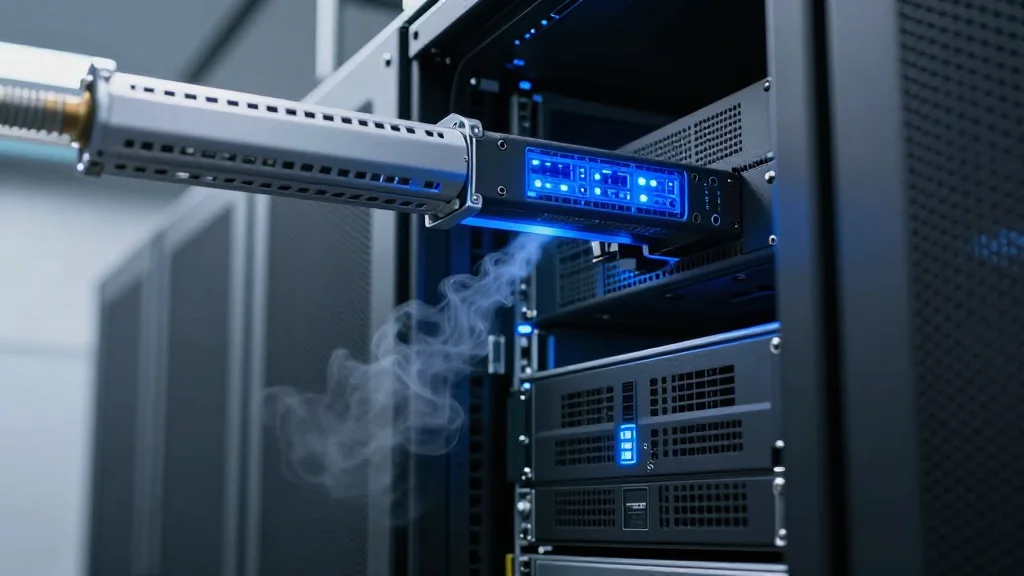
AI Server Power Density Triggers Global Data Center Power and Cooling Overhaul

Why It Matters
The shift to higher‑voltage DC power and centralized cooling directly tackles the energy inefficiencies that have long plagued data centers, which together account for roughly 1 % of global electricity use. By cutting conversion losses and improving thermal management, the redesign can lower the carbon footprint of AI workloads, a critical component of corporate net‑zero pledges. Moreover, the transition reshapes the capital‑allocation landscape for infrastructure investors, creating new opportunities for firms that supply high‑voltage equipment and cooling technologies. Beyond immediate energy savings, the overhaul sets a precedent for how the tech industry can retrofit existing massive infrastructure to meet emerging performance demands without proportionally increasing emissions. If successful, the model could be replicated in other high‑density compute environments, amplifying its climate impact across sectors such as scientific research, autonomous vehicles, and edge computing.
Key Takeaways
- •AI server power density is driving a shift to 400 V and 800 V DC distribution in data centers.
- •Centralized power racks are being deployed to manage higher heat loads and improve efficiency.
- •Industry estimates suggest potential 5‑10 % reductions in overall facility power consumption.
- •Suppliers of high‑voltage equipment are expanding product lines, prompting possible M&A activity.
- •The redesign aligns data‑center operations with corporate carbon‑reduction targets and may reshape REIT valuations.
Pulse Analysis
The data‑center power overhaul marks a pivotal inflection point for climate‑tech within the broader tech ecosystem. Historically, data‑center efficiency improvements have come from incremental upgrades—better fans, more efficient UPS systems, and modest voltage tweaks. The current wave, however, is a structural redesign prompted by the exponential rise in AI compute demand. By moving to 400 V and 800 V DC, operators are not just shaving a few percent off their power bills; they are fundamentally re‑architecting the power delivery backbone, which opens the door to far greater scalability without a linear increase in energy use.
From a market perspective, the transition creates a clear winner‑takes‑most scenario for firms that can certify high‑voltage equipment quickly and at scale. Early movers will lock in long‑term supply contracts with hyperscale cloud providers, while laggards risk being sidelined as new builds adopt the higher‑voltage standard from day one. This dynamic is likely to accelerate consolidation in the power‑distribution niche, as larger players acquire specialized startups to fill technology gaps.
Looking forward, the true test will be the quantifiable impact on carbon emissions. If the projected 5‑10 % efficiency gains hold across the global data‑center fleet, the net reduction could be equivalent to taking millions of cars off the road each year. However, the capital intensity of retrofitting legacy sites could delay adoption, especially among smaller colocation operators. Policy incentives—such as tax credits for high‑efficiency upgrades—could tip the balance, making the overhaul not just an industry-driven evolution but a climate‑policy lever. In sum, the power and cooling redesign is poised to become a cornerstone of the tech sector’s decarbonization strategy, with ripple effects that will shape investment flows, supply‑chain dynamics, and regulatory frameworks for years to come.
AI Server Power Density Triggers Global Data Center Power and Cooling Overhaul
Comments
Want to join the conversation?
Loading comments...