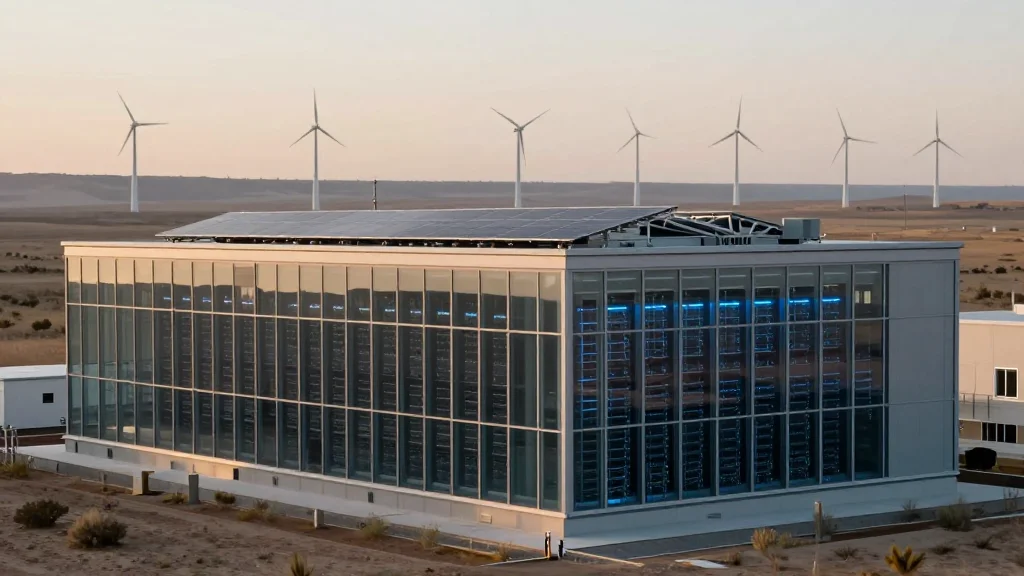
AI Token Surge Powers Qingyang’s Green Computing Hub, Sparking Energy‑Use Debate

Why It Matters
The Qingyang hub illustrates how AI’s explosive growth is reshaping China’s energy landscape, forcing a balance between computational demand and climate goals. If the renewable‑heavy model succeeds, it could become a template for other regions seeking to host AI workloads without exacerbating carbon emissions. Conversely, unchecked power consumption could undermine China’s pledged carbon‑neutral targets, highlighting the need for robust policy and transparent reporting. Beyond China, the development signals a global shift: AI firms are increasingly looking westward for cheaper, greener power, potentially redefining the geography of the AI supply chain. The outcome will influence investment decisions, regulatory frameworks, and the broader debate on whether AI can be scaled sustainably.
Key Takeaways
- •Daily AI token calls in China hit 140 trillion in March, a >1,000× rise from early 2024.
- •Qingyang’s industrial park secures 55 % of its electricity from wind and solar via a green‑power aggregation pilot.
- •Electricity price for data‑center users capped at 0.4 yuan (≈$0.06) per kWh, making compute costs highly competitive.
- •Land priced at 200,000 yuan per mu (~$27,800) and proximity to major coastal markets attract cloud providers.
- •Experts warn that even with 55 % renewable power, AI compute’s high energy intensity could strain regional grids.
Pulse Analysis
Qingyang’s rapid rise as a western AI compute hub reflects a strategic pivot in China’s digital infrastructure policy. By leveraging abundant renewable resources, the region can undercut the historically high electricity tariffs of eastern data‑centers, offering AI developers a cost advantage that could accelerate domestic AI innovation. The "East Data, West Computing" initiative, originally conceived to balance regional development, now finds a new purpose: mitigating the carbon footprint of AI workloads that have become energy‑hungry behemoths.
However, the hub’s success hinges on scaling its green‑power supply faster than AI demand grows. The current 55 % renewable share, while impressive, still leaves a sizable fossil‑fuel gap that could erode any emissions benefits, especially during peak training cycles. Policymakers must therefore prioritize grid upgrades, storage solutions, and stricter emissions reporting to ensure the hub does not become a hidden source of carbon leakage.
Internationally, Qingyang’s model could inspire similar western‑oriented compute zones in other large economies, where renewable capacity is underutilized. If China can demonstrate that high‑performance AI can run on predominantly green electricity at sub‑$0.10/kWh, it may set a new benchmark for sustainable AI deployment, pressuring competitors to adopt comparable strategies or risk falling behind on both cost and climate credentials.
AI Token Surge Powers Qingyang’s Green Computing Hub, Sparking Energy‑Use Debate
Comments
Want to join the conversation?
Loading comments...