Antora Energy’s 5‑GWh ‘Toaster‑Oven’ Battery Powers POET Ethanol Plant with Surplus Wind

Companies Mentioned
Why It Matters
Thermal‑storage batteries like Antara’s provide a new avenue for capturing and reusing excess renewable electricity, directly addressing the curtailment problem that limits wind’s economic viability. By turning electricity into high‑temperature heat, the technology bridges a gap for industries that cannot easily switch to electric processes, reducing reliance on fossil‑fuel‑derived steam and cutting greenhouse‑gas emissions. If replicated at scale, such systems could unlock billions of dollars of value from otherwise wasted wind power, accelerating the decarbonization of heavy industry. The project also serves as a proof point for DOE‑backed research transitioning from the lab to commercial deployment. Demonstrating a 40 % conversion efficiency in a real‑world setting could spur additional public and private investment, prompting a wave of similar installations across the United States and potentially abroad. This could reshape the energy storage market, positioning thermal batteries as a cost‑effective complement to batteries and pumped hydro.
Key Takeaways
- •Antora Energy installed a 5‑GWh thermal‑storage system at POET’s ethanol plant in South Dakota.
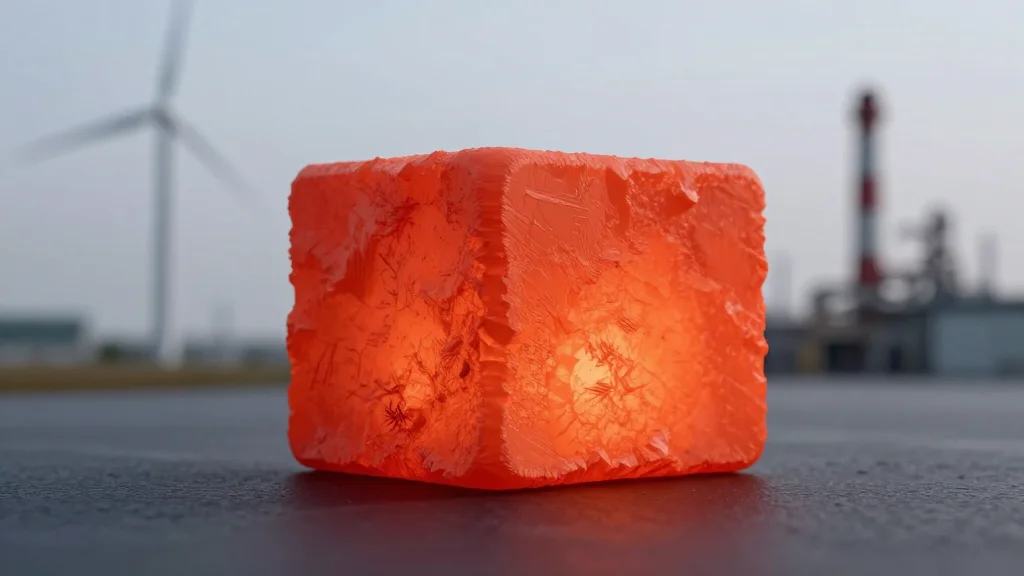
- •The system uses over 200 solid carbon blocks to store surplus wind electricity as heat.
- •Full commercial operation is expected by October after a construction period of under one year.
- •Antara reported a 40 % thermophotovoltaic conversion efficiency in 2022.
- •Wind currently provides about 12 % of U.S. electricity, creating significant curtailment opportunities.
Pulse Analysis
Antara’s South Dakota deployment marks a strategic inflection point for the thermal‑storage niche. Historically, the sector has been dominated by research projects with limited commercial traction. By delivering a 5‑GWh system that can be shipped as integrated modules, Antara reduces the logistical and capital barriers that have hampered earlier attempts. This modularity could enable rapid scaling across geographically dispersed industrial sites, a competitive advantage over monolithic pumped‑hydro or large‑scale battery farms that require extensive site preparation.
From a market dynamics perspective, the project challenges the prevailing narrative that lithium‑ion batteries are the default solution for renewable firming. While batteries excel at short‑duration, high‑frequency regulation, they suffer from energy‑density constraints and high round‑trip losses for long‑duration storage. Thermal storage, by contrast, offers a higher energy‑to‑mass ratio and can be directly coupled to process heat demand, delivering a more efficient value proposition for sectors like ethanol production, steelmaking, and chemicals. If Antara can demonstrate consistent cost savings—particularly in regions where natural‑gas prices are volatile—the technology could attract a wave of corporate procurement driven by ESG targets.
Policy implications are equally significant. The U.S. Department of Energy’s early support for Antara underscores a growing federal appetite for diversified storage solutions. Successful performance data could justify new tax credits or loan guarantees tailored to thermal‑storage projects, mirroring incentives that have propelled battery adoption. As the grid’s renewable share climbs toward 30 % by 2030, the need for a portfolio of storage technologies will intensify, and Antara’s “toaster‑oven” battery may become a cornerstone of that portfolio.
Antora Energy’s 5‑GWh ‘Toaster‑Oven’ Battery Powers POET Ethanol Plant with Surplus Wind
Comments
Want to join the conversation?
Loading comments...