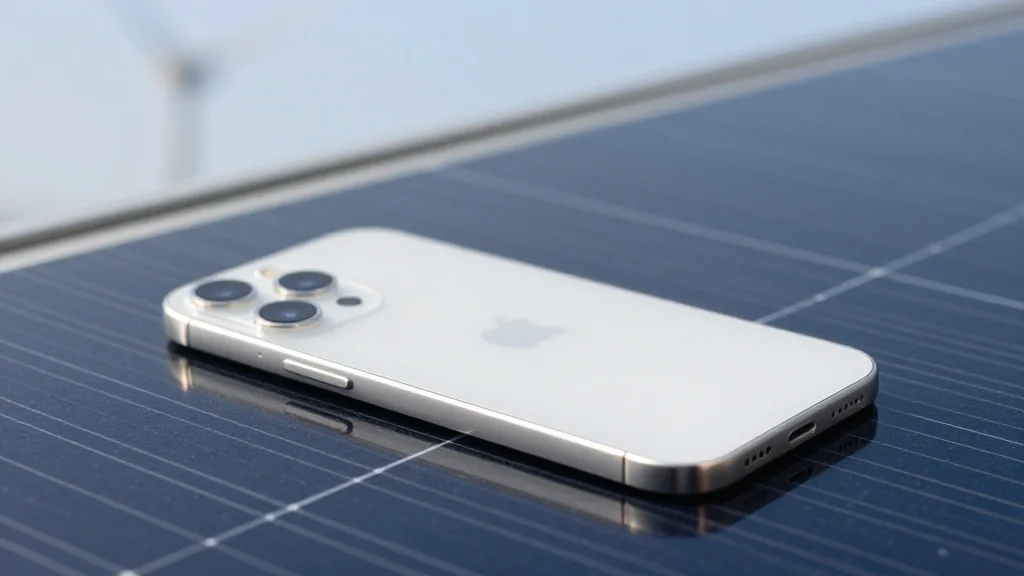
Apple Avoids Over 26 Million Tons of Emissions Through Use of Clean Energy in Supply Chain
Companies Mentioned
Why It Matters
The scale‑up demonstrates how a major tech firm can drive supplier decarbonization, but the flat overall footprint highlights the need for broader logistics reforms to meet climate targets.
Key Takeaways
- •Apple's supply chain renewable capacity reaches 20.7 GW in 2025
- •Supplier clean‑energy program avoided 26 million metric tons CO₂e
- •Product manufacturing still accounts for >50% of Apple’s carbon footprint
- •Apple hits 100% fiber packaging and 30% recycled product content
- •Total value‑chain emissions flat as transport emissions rise
Pulse Analysis
Apple’s aggressive push to source renewable electricity for its suppliers marks a watershed moment for corporate climate action. By expanding clean‑energy contracts to 20.7 GW in 2025, the company more than doubled its renewable footprint since 2021 and lifted avoided emissions to 26 million metric tons of CO₂e. This scale‑up is powered by Apple’s Supplier Clean Energy Program, which blends policy advocacy, data analytics, and direct engagement with renewable developers. The move not only trims the carbon intensity of iPhone and Mac production but also sets a benchmark for other technology giants whose supply chains dominate global emissions.
Despite these gains, Apple’s overall value‑chain emissions held steady, underscoring a critical blind spot: logistics. Increased product‑transport volumes—driven by expanding market reach and frequent product refresh cycles—offset reductions achieved in factories and through energy‑efficiency measures. The flat emissions trajectory signals that decarbonizing transportation, whether via low‑carbon freight, modal shifts, or optimized distribution networks, is essential for meeting Apple’s 75% reduction goal by 2030 and its longer‑term 90% target for 2050. Industry analysts are watching how Apple integrates carbon‑neutral shipping and circular logistics into its broader sustainability roadmap.
Beyond energy, Apple reported progress on material circularity and water stewardship, completing a shift to 100% fiber‑based packaging, achieving 30% recycled content across shipped products, and securing 100% recycled cobalt and rare‑earth magnets. These initiatives reduce reliance on virgin resources and lower embedded emissions, reinforcing the company’s narrative of a closed‑loop ecosystem. For competitors and investors, Apple’s multi‑pronged approach—spanning renewable procurement, material reuse, and water replenishment—illustrates how tech firms can embed sustainability into product design, operations, and supply‑chain strategy, driving both brand equity and regulatory resilience.
Apple Avoids Over 26 Million Tons of Emissions Through Use of Clean Energy in Supply Chain
Comments
Want to join the conversation?
Loading comments...