Armada Secures $230 Million Series B to Build Modular AI Data Centers in Arizona

Companies Mentioned
Why It Matters
Armada’s funding and new factory directly address two pressing challenges in the AI ecosystem: the need for rapid, on‑site compute and the imperative to lower energy intensity. By coupling AI hardware with existing renewable or waste‑heat sources, the modular data centers can deliver high‑performance workloads without the massive power draw of traditional hyperscale facilities. This model not only reduces carbon emissions but also mitigates grid stress, a growing concern as AI models become more compute‑hungry. The strategic partnership with Johnson Controls adds a logistics and service dimension that many AI hardware startups lack. With a nationwide field‑service workforce, Armada can promise quick deployment and ongoing support, making its solution attractive to defense and industrial customers that operate in remote or rugged environments. The domestic manufacturing footprint also strengthens U.S. supply‑chain resilience, a priority for policymakers wary of foreign dependence in critical AI infrastructure.
Key Takeaways
- •Armada raised $230 million Series B, valuing the company at $2 billion.
- •Funding backs a 400,000‑sq ft Arizona factory (Galleon Forge One) creating 500+ jobs.
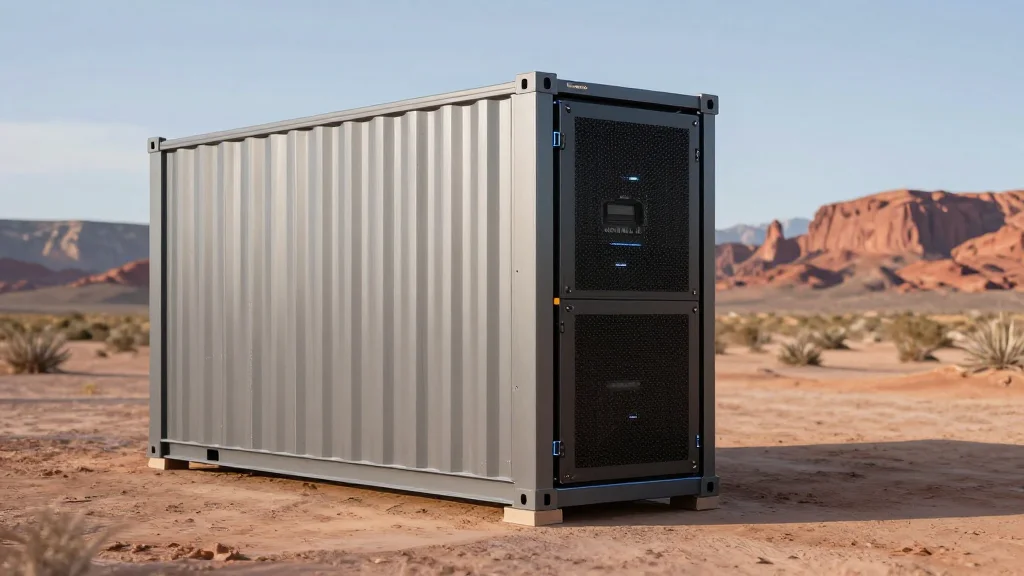
- •Leviathan modular data centers can attach to solar, gas flares, and deploy in days.
- •Customer bookings grew 540 % YoY (FY25‑FY26); Q1 FY27 bookings jumped 2,000 %.
- •Johnson Controls provides a 40,000‑person field service network for rapid deployment.
Pulse Analysis
Armada’s capital raise signals a maturation of the edge‑compute niche that has long been dominated by cloud giants. The company’s modular, plug‑and‑play data centers address a market gap: the need for AI compute that can be placed close to data sources—whether oil rigs, mines, or naval vessels—without the latency and energy penalties of centralized clouds. This approach dovetails with a broader industry trend toward distributed AI, where inference and even training happen at the edge to meet latency, privacy, and bandwidth constraints.
Historically, AI hardware scaling has been a race to build ever‑larger hyperscale facilities, a model that is increasingly unsustainable from both a carbon and geopolitical perspective. Armada’s model flips that script, offering megawatt‑scale units that can be mass‑produced and shipped like containers. The partnership with Johnson Controls is more than a financial infusion; it brings a mature, global service infrastructure that can accelerate adoption in sectors where uptime and rapid fielding are non‑negotiable. This could force traditional data‑center vendors to reconsider their product roadmaps and add modular offerings to stay competitive.
Looking ahead, the success of Galleon Forge One will be a litmus test for the viability of domestic, high‑volume AI hardware manufacturing. If Armada can meet its projected $1 billion booking pipeline and maintain its explosive growth rates, it may catalyze a wave of similar ventures, prompting investors to fund other modular, energy‑flexible compute solutions. The ripple effect could reshape how AI workloads are provisioned globally, making the technology more resilient, greener, and less dependent on a handful of megacorp data‑center operators.
Armada Secures $230 Million Series B to Build Modular AI Data Centers in Arizona
Comments
Want to join the conversation?
Loading comments...