Australia’s Electricity Market Needs Better Price Signals that Reflect Local Conditions
Why It Matters
Accurate, location‑specific price signals are essential to coordinate distributed resources, curb costly congestion, and attract the right investment for Australia’s renewable‑focused grid transformation.
Key Takeaways
- •AEMO congestion costs jumped from AU$73m (~US$48m) to AU$589m (~US$389m).
- •NEM relies on five regional prices, hiding local constraints.
- •Locational marginal pricing separates generation, congestion, and loss costs.
- •2024 AEMC report dismissed full LMP and the CRM hybrid.
- •TxChange creates bilateral contracts to capture unmet congestion value.
Pulse Analysis
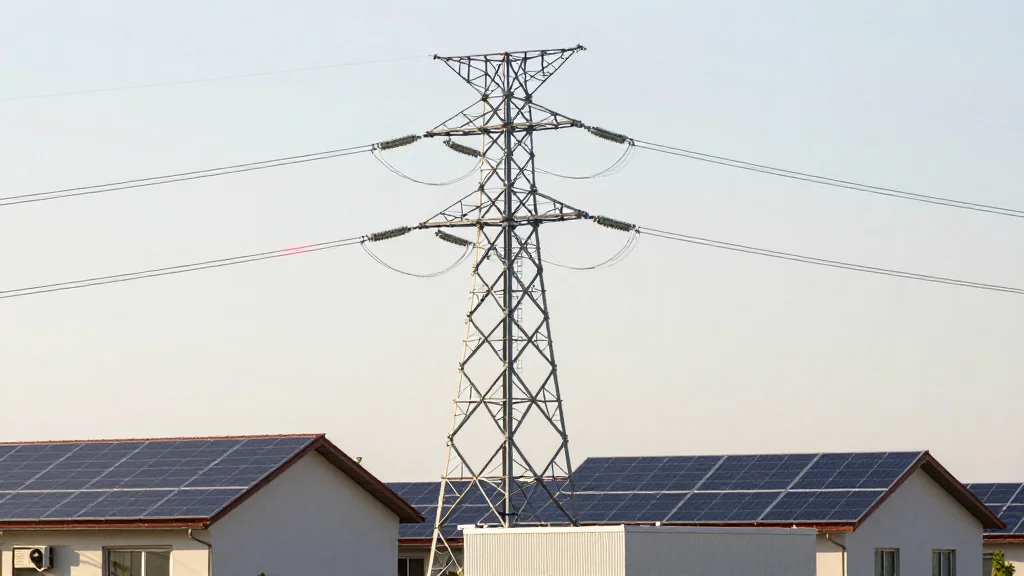
Australia’s National Electricity Market was built for a handful of large generators and predictable demand, using a single price for each of five broad regions. The rapid rollout of rooftop solar, utility‑scale batteries and tighter transmission limits has turned the grid into a patchwork of local bottlenecks. AEMO’s binding‑constraint impact metric illustrates the pressure, climbing from AU$73 million (≈US$48 million) in 2018 to AU$589 million (≈US$389 million) in 2025—an eight‑fold rise that never appears on consumer bills. Without price signals that reflect where electricity actually flows, the market misallocates investment and forces costly redispatch.
Markets that have already adopted locational marginal pricing—such as parts of North America, New Zealand and Singapore—show that exposing congestion, loss and generation costs at the node level drives storage to congested corridors, nudges new generation to viable sites and makes demand response financially attractive where the system is tight. Australia explored a softer hybrid in the form of a voluntary Congestion Relief Market, but the 2024 AEMC report rejected both full nodal pricing and the CRM, citing uncertainty and regulatory complexity. The decision leaves the NEM with opaque signals and pushes the burden onto planning rules.
The path forward does not have to be binary. Publishing shadow nodal prices alongside regional benchmarks would give participants real‑time insight without altering settlement, while expanding the number of pricing zones could capture the most acute constraints. Private initiatives like TxChange demonstrate market appetite for contracts that monetize hidden congestion value, but they cannot replace system‑wide investment cues. As data centres revive load growth in specific suburbs, the urgency for price signals that align with physics intensifies, making incremental reforms a strategic imperative for Australia’s clean‑energy transition.
Australia’s electricity market needs better price signals that reflect local conditions
Comments
Want to join the conversation?
Loading comments...