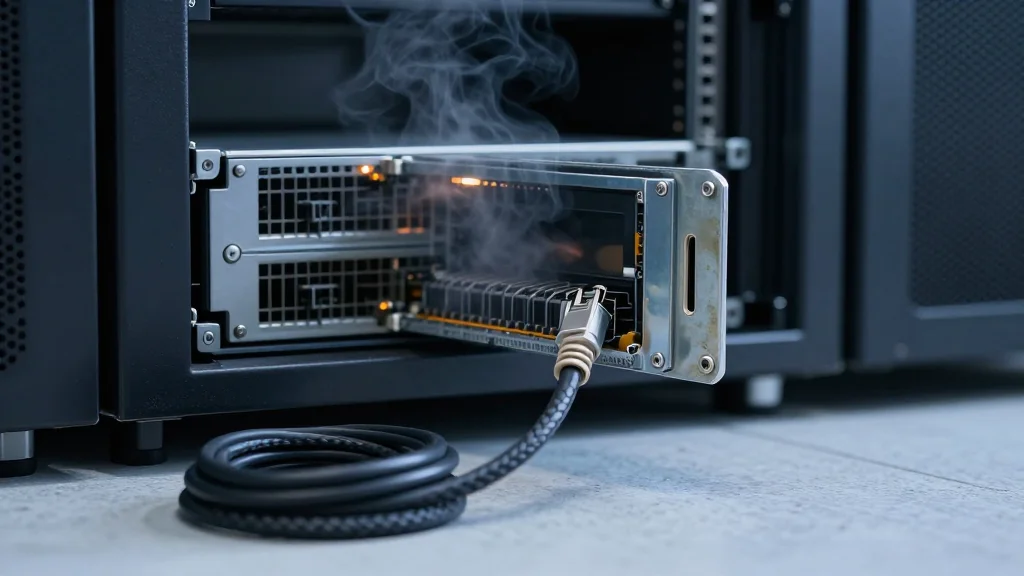
AWS Hit by US-East-1 Outage After Data Center Thermal Event
Why It Matters
The disruption impacted core cloud workloads for thousands of enterprises, exposing the risk of regional concentration and prompting a reassessment of redundancy and disaster‑recovery strategies.
Key Takeaways
- •Thermal event in US‑EAST‑1 AZ4 caused EC2 and EBS power loss.
- •AWS restored cooling by 1:50 PM PDT, full service recovery took >24 h.
- •Customers advised to use EBS snapshots or launch in unaffected zones.
- •Incident underscores physical‑layer failures as a top resilience concern.
- •US‑EAST‑1 concentration risk forces enterprises to revisit regional redundancy.
Pulse Analysis
The May 7 outage in AWS's US‑EAST‑1 region stemmed from an overheating data‑center module that forced servers to shut down automatically, cutting power to the underlying hardware. AWS engineers redirected traffic away from the affected availability zone and worked through the night to restore cooling capacity, finally achieving pre‑event levels by early Friday afternoon. While the technical fix was straightforward—re‑establishing temperature controls—the cascading impact on EC2, EBS, and dependent services such as IoT Core and Redshift illustrated how a single physical fault can ripple through a cloud ecosystem that many businesses treat as a black box.
For enterprises, the incident serves as a reminder that cloud resilience is not solely a software problem. Physical‑layer failures—cooling, power, or networking—remain a tangible threat, especially in regions that host a disproportionate share of global services. Gartner analysts advise CISOs to verify that availability zones are housed in truly separate facilities and to ensure that critical data stores have cross‑zone or cross‑region replication. In practice, this means testing failover to unaffected zones, maintaining up‑to‑date EBS snapshots, and designing applications to tolerate latency spikes without service degradation.
Beyond the immediate technical response, the outage reignites the conversation around concentration risk. US‑EAST‑1 powers identity, DNS, and content‑delivery services that other AWS regions rely on, making it a single point of failure for a broad swath of the internet. Companies should incorporate regional dependency assessments into their third‑party risk frameworks, balancing cost efficiencies against the potential business impact of a prolonged regional outage. By diversifying workloads across multiple regions and regularly auditing vendor footprints, organizations can mitigate the strategic risk that a localized physical event poses to mission‑critical operations.
AWS hit by US-East-1 outage after data center thermal event
Comments
Want to join the conversation?
Loading comments...