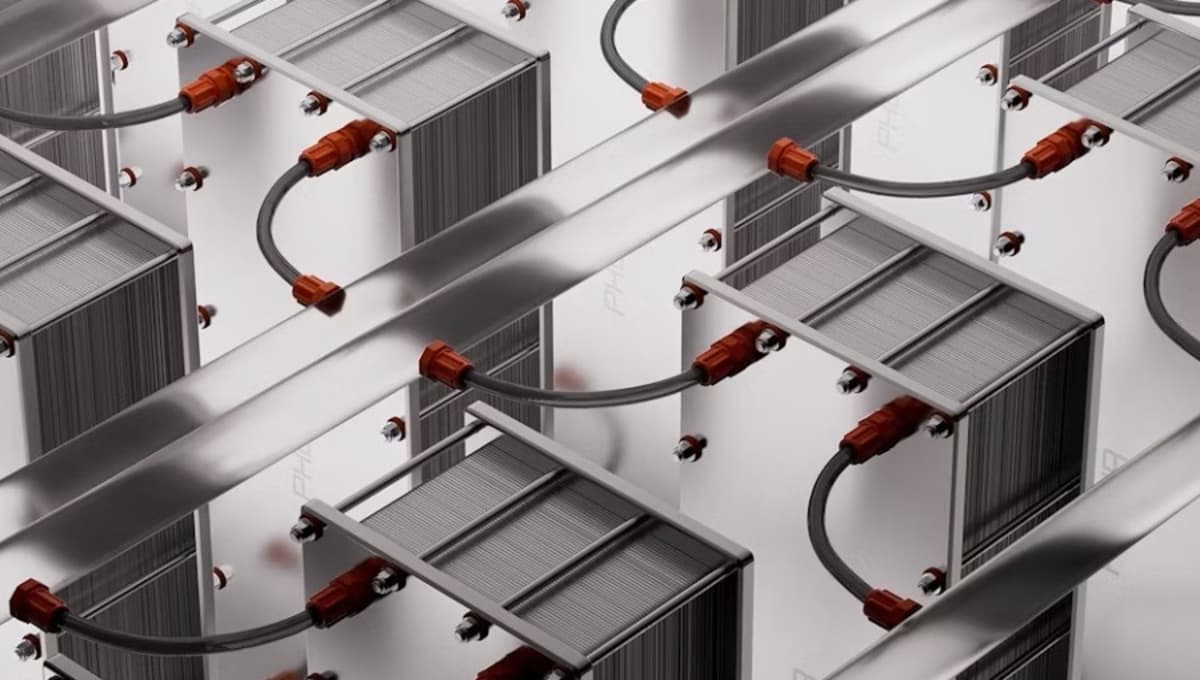
Battery Bottleneck Threatens India’s Renewable Energy Ambitions
Why It Matters
The storage bottleneck could delay India’s clean‑energy transition, raising costs and undermining energy security. Addressing tariff misalignments and supply‑chain gaps is critical for achieving the 2030 target.
Key Takeaways
- •India aims 500 GW renewable capacity by 2030
- •Energy‑storage tenders grew from 6.8 GW (2018) to 90.7 GW (2025)
- •Two‑hour BESS tariffs fell 71% outpacing battery‑pack price drop
- •75% of 2‑hour allocations deemed financially risky at benchmark $2,449/MW
- •Domestic battery incentives like ALBM, PLI, NCMM aim to curb import dependence
Pulse Analysis
India’s renewable ambition is now inseparable from its energy‑storage strategy. The country’s tender pipeline exploded, moving from a modest 6.8 GW in 2018 to a projected 90.7 GW by 2025, with standalone battery‑energy‑storage systems (BESS) accounting for roughly 71% of that volume. This surge reflects policy pressure to decouple from imported fossil fuels and to integrate intermittent solar and wind power, yet the rapid expansion has exposed structural weaknesses in cost modelling and project execution.
Tariff dynamics illustrate the core challenge. Two‑hour BESS contracts now fetch as low as INR 148,000 per MW per month (≈$1,576), a 71% drop since 2022, far outpacing the 36% decline in battery‑pack prices. Consequently, about three‑quarters of the allocated two‑hour capacity is classified as financially risky when benchmarked against a $2,449/MW‑month threshold. Lenders remain cautious, demanding 15‑20% internal rates of return, while only 46% of awarded projects are backed by developers with proven BESS execution capability. This mismatch threatens project timelines, with potential delays of nine to 18 months.
Policy levers are being sharpened to bridge the gap. The government is introducing an Approved List of Battery Manufacturers, expanding Production‑Linked Incentives for cell factories, and launching the National Critical Mineral Mission to diversify lithium sourcing beyond China. Together, these measures aim to lower import reliance, stabilize tariffs, and improve bankability. If execution risks are mitigated, India could sustain its storage rollout, keeping the 500‑GW renewable target within reach.
Battery bottleneck threatens India’s renewable energy ambitions
Comments
Want to join the conversation?
Loading comments...