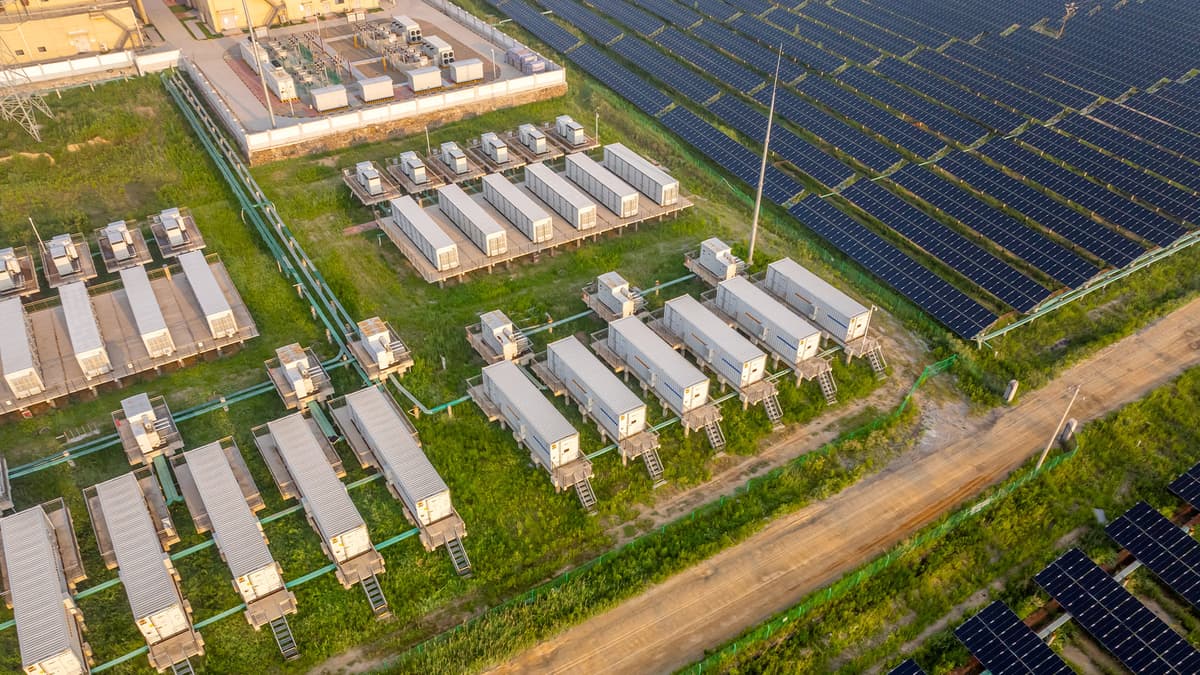
Battery Storage Moves Closer to Data Centers, but Challenges Persist
Companies Mentioned


Why It Matters
BESS offers the flexibility needed to sustain AI‑intensive data centers while easing grid strain, yet cost and integration hurdles will dictate how quickly the industry can scale this solution.
Key Takeaways
- •DataBank uses BESS and VPPs to shave peak demand at multiple sites
- •Google plans 300 MW iron‑air battery and 100 MW VPP in PJM
- •Sodium‑ion batteries eliminate active cooling, potentially cutting operational costs 20%
- •High capital cost, footprint, and community opposition limit widespread BESS rollout
Pulse Analysis
The surge in AI workloads is reshaping data‑center power strategies, pushing operators to look beyond traditional diesel generators and UPS units. Battery energy storage systems provide rapid response, high efficiency, and the ability to store excess renewable generation, making them attractive for both on‑site reliability and grid‑side services. By converting intermittent solar or wind into dispatchable power, BESS helps data centers meet utility demand‑response programs and avoid costly peak‑demand charges, positioning storage as a strategic asset in the compute‑intensive era.
Leading firms are already testing the model at scale. DataBank has linked two of its BESS installations to a virtual power plant, allowing utilities to tap distributed capacity instead of building new generation. Google’s announced 300 MW iron‑air battery in Minnesota, coupled with a 100 MW VPP partnership with Voltus in PJM, illustrates how hyperscalers are betting on storage to smooth load spikes and earn ancillary service revenues. Meanwhile, innovators like Peak Energy are championing sodium‑ion chemistries that dispense with active cooling, promising up to 20% lifetime savings by reducing auxiliary power draw and maintenance complexity.
Despite the promise, several barriers temper enthusiasm. Capital costs for utility‑scale batteries remain high, and the physical footprint required can clash with limited data‑center real estate. Community opposition, fueled by safety concerns, adds permitting friction in many jurisdictions. Moreover, reliability hinges on balance‑of‑system components—HVAC, inverters, and container integrity—where failures are most common. As the industry refines cost models and demonstrates long‑term performance, BESS could transition from a niche, requirement‑driven add‑on to a standard layer of data‑center infrastructure.
Battery Storage Moves Closer to Data Centers, but Challenges Persist
Comments
Want to join the conversation?
Loading comments...