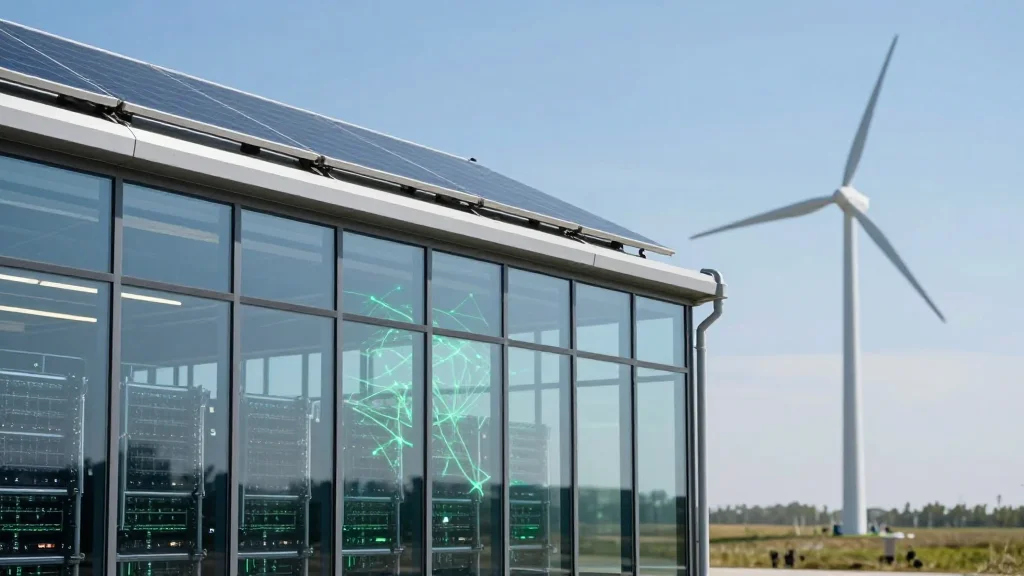
Beijing Orders AI Data Centers to Power Up with Green Electricity, Unveils 29‑Measure Action Plan

Companies Mentioned
Why It Matters
Linking AI compute to renewable power directly addresses one of the fastest‑growing sources of carbon emissions in China. By making green electricity a performance metric, the government forces the sector to internalize its environmental costs, potentially curbing the projected 400 billion‑kilowatt‑hour demand by 2030. The move also signals to global investors that China is serious about integrating climate goals with its AI ambitions, which could unlock new financing for climate‑tech firms. For the broader ClimateTech ecosystem, the policy creates a sizable market for clean‑energy hardware, software that optimizes AI workloads for renewable grids, and financial products such as green certificates. It may also spur innovation in low‑carbon backup solutions, reducing reliance on diesel generators that currently dominate data‑center resilience strategies.
Key Takeaways
- •Beijing’s action plan introduces 29 measures to force AI data centres to source renewable electricity.
- •AI‑related electricity use rose 44% YoY in Q1 2026, reaching 22.9 billion kWh.
- •China’s computing centres could consume over 400 billion kWh annually by 2030 without intervention.
- •Power costs account for 50‑70% of data‑centre operating expenses, driving the push for cheaper green power.
- •Shares of Weichai Power and GE Vernova rose on expectations of increased demand for clean‑energy equipment.
Pulse Analysis
The Beijing action plan marks the first time China has codified renewable‑energy procurement as a regulatory requirement for AI infrastructure. Historically, the country has relied on market‑driven incentives to expand renewable capacity, but the explosive growth of AI compute has outpaced those mechanisms. By embedding green‑power targets into the licensing and approval process for new data‑centres, the state is effectively turning climate policy into a prerequisite for digital expansion.
This approach could reshape the competitive landscape. State‑owned cloud providers, which have easier access to subsidized renewable projects, may gain a cost advantage over private operators that must negotiate green‑certificate purchases on the open market. Meanwhile, the policy creates a clear revenue stream for climate‑tech firms that can supply renewable‑energy hardware, storage, and grid‑balancing services. Companies that can demonstrate AI‑optimized energy management will likely become preferred partners for data‑centre developers.
Looking ahead, the success of the plan will depend on the speed of grid upgrades and the development of transparent green‑certificate trading platforms. If Beijing can deliver reliable, affordable renewable power to the AI hotspots in the north and west, it could set a template for other high‑compute economies facing similar carbon‑intensity challenges. Conversely, delays or uneven enforcement could push firms to seek offshore locations with more mature green‑energy markets, potentially diluting the policy’s intended domestic impact.
Beijing Orders AI Data Centers to Power Up with Green Electricity, Unveils 29‑Measure Action Plan
Comments
Want to join the conversation?
Loading comments...