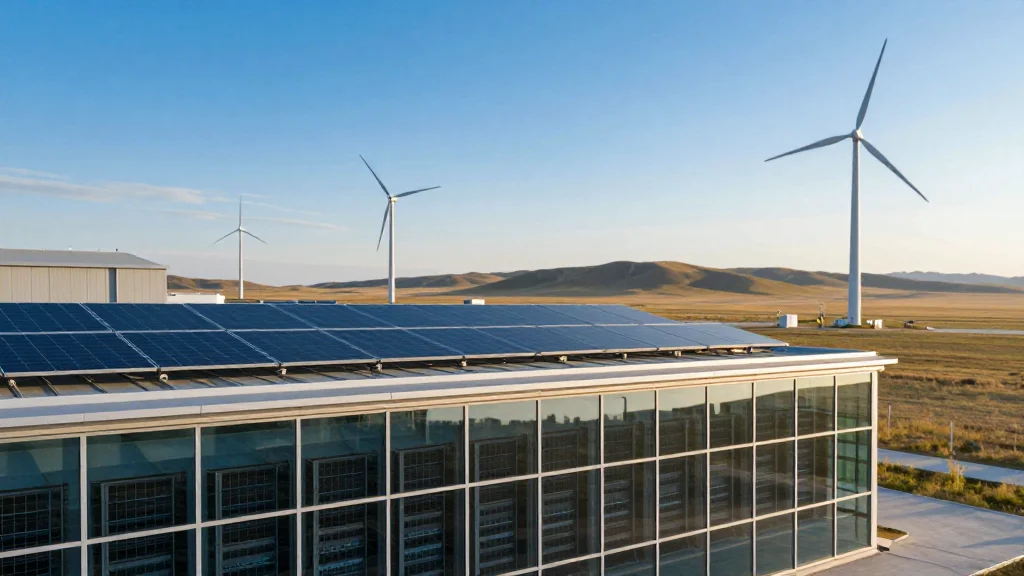
Black Hills Energy to Supply Low‑Carbon Power for Meta’s New Wyoming Data Center

Companies Mentioned

Why It Matters
The Black Hills Energy–Meta partnership showcases how utilities can leverage specialized tariffs and renewable‑focused service models to attract high‑energy‑use customers seeking to meet climate commitments. By providing low‑carbon power to a major data‑center operator, the deal helps reduce the sector’s carbon footprint, a critical step as data centers account for a growing share of global electricity demand. For Wyoming, the agreement signals a shift toward a more diversified, tech‑driven economy. The influx of data‑center projects brings jobs, tax revenue, and the impetus for additional renewable‑energy development, aligning the state’s economic future with broader climate‑tech objectives.
Key Takeaways
- •Black Hills Energy will supply customized, low‑carbon electricity to Meta’s new Cheyenne data center.
- •The partnership uses the Large Power Contract Service tariff, in place since 2016, to manage large‑scale load without rate spikes.
- •Data‑center operations currently represent 5% of Black Hills Energy’s earnings per share, projected to rise to ~10% in five years.
- •Meta’s sustainability objectives drive the demand for renewable‑focused power in its expanding data‑center portfolio.
- •The deal positions Wyoming as a growing hub for tech‑intensive, low‑carbon industries.
Pulse Analysis
Black Hills Energy’s deal with Meta is more than a customer win; it is a proof point that utilities can create market‑ready products for the data‑center sector’s sustainability agenda. The Large Power Contract Service tariff, originally designed for early adopters, now serves as a template for scaling low‑carbon power contracts without imposing undue cost burdens on residential ratepayers. This balance is crucial for utilities that must navigate regulatory scrutiny while courting high‑margin, high‑usage clients.
Historically, data‑center power procurement has been dominated by long‑term PPAs with independent power producers, often focusing on wind or solar. By offering a utility‑managed, capital‑light model, Black Hills Energy sidesteps the capital intensity of building dedicated renewable assets, instead leveraging existing grid infrastructure and future renewable integration pathways. This approach could accelerate the timeline for other utilities to replicate similar offerings, especially in regions with abundant renewable resources.
Looking ahead, the partnership’s success will hinge on measurable emissions reductions and the ability to lock in renewable supply as Meta scales its operations. If the Cheyenne site meets its low‑carbon targets, it could catalyze a wave of similar contracts across the Midwest and Mountain West, where utilities have the grid flexibility and policy support to deliver clean power at scale. For investors, the projected doubling of data‑center earnings contribution signals a lucrative growth avenue for Black Hills Energy, while also aligning with ESG criteria that increasingly influence capital allocation in the energy sector.
Black Hills Energy to Supply Low‑Carbon Power for Meta’s New Wyoming Data Center
Comments
Want to join the conversation?
Loading comments...