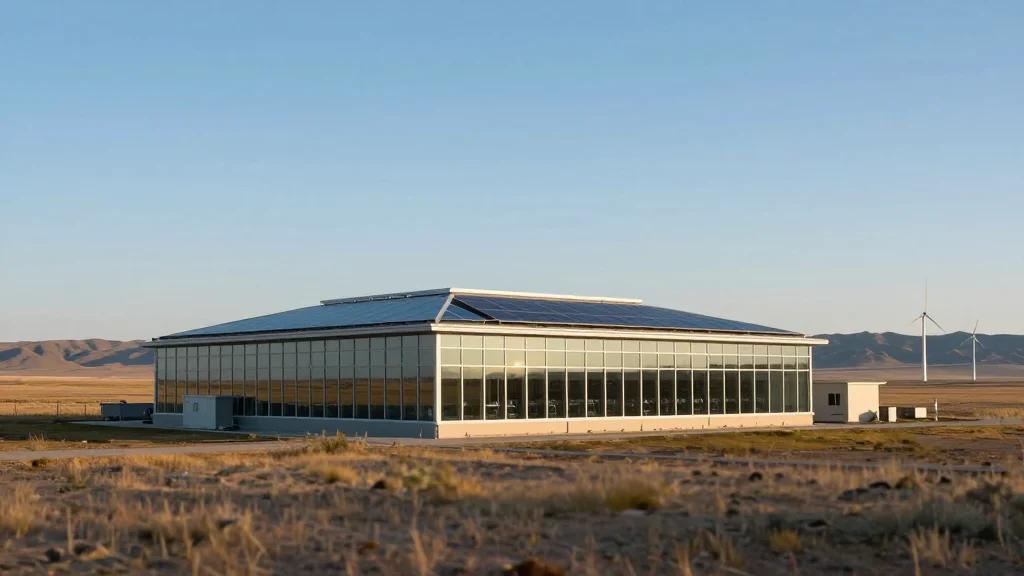
Black Hills Energy to Supply Renewable Power for Meta’s Wyoming Data Center

Companies Mentioned

Why It Matters
The partnership illustrates how utility‑level renewable contracts can bridge the gap between corporate sustainability ambitions and the practicalities of grid management. By securing a dedicated clean‑energy supply, Meta reduces its reliance on carbon‑intensive grid power, directly contributing to its net‑zero timeline. For the climate‑tech sector, the deal validates business models that combine tariff innovation with renewable procurement, offering a scalable path for other data‑intensive firms. In Wyoming, the agreement aligns with state‑wide economic diversification efforts, positioning renewable energy as a cornerstone of future industry attraction. Successful execution could encourage additional tech firms to locate operations in the region, amplifying demand for wind and solar development and reinforcing the state’s transition away from fossil‑fuel dependence.
Key Takeaways
- •Black Hills Energy will supply renewable electricity to Meta’s new Cheyenne data center.
- •The partnership uses the Large Power Contract Service tariff, a utility model created for large‑scale loads.
- •Data‑center operations currently represent 5% of Black Hills Energy’s earnings per share.
- •The utility expects its data‑center contribution to rise to roughly 10% of EPS within five years.
- •Meta’s commitment aligns with its goal to power all new facilities with 100% renewable energy.
Pulse Analysis
The Meta‑Black Hills Energy agreement marks a strategic inflection point for utility‑driven climate solutions. Historically, data‑center power has been sourced through a patchwork of power purchase agreements (PPAs) negotiated directly by tech firms, often resulting in fragmented renewable capacity and price volatility. By embedding the renewable supply within a tariff structure, Black Hills Energy reduces transaction friction and creates a predictable revenue stream that can be reinvested in additional clean‑energy projects. This model could become a template for other regulated utilities seeking to attract high‑intensity, low‑carbon loads.
From a competitive standpoint, Meta’s choice of a regional utility over a corporate‑level PPA signals confidence in Black Hills Energy’s ability to deliver both reliability and sustainability. The move may pressure other utilities in the Mountain West to accelerate similar tariff innovations, especially as more tech firms prioritize geographic diversification of their compute assets. The anticipated doubling of the data‑center segment’s EPS contribution also suggests that renewable‑focused utilities can achieve meaningful financial upside while supporting decarbonization.
Looking forward, the success of this partnership will hinge on the actual renewable mix delivered to the data center and the ability to maintain grid stability as load grows. If Black Hills Energy can demonstrate that its tariff can scale without imposing rate penalties on other customers, it will provide a compelling case study for policymakers aiming to align economic development with climate objectives. The broader climate‑tech ecosystem will watch closely for performance metrics that could validate utility‑level renewable procurement as a viable, replicable pathway for the industry.
Black Hills Energy to Supply Renewable Power for Meta’s Wyoming Data Center
Comments
Want to join the conversation?
Loading comments...