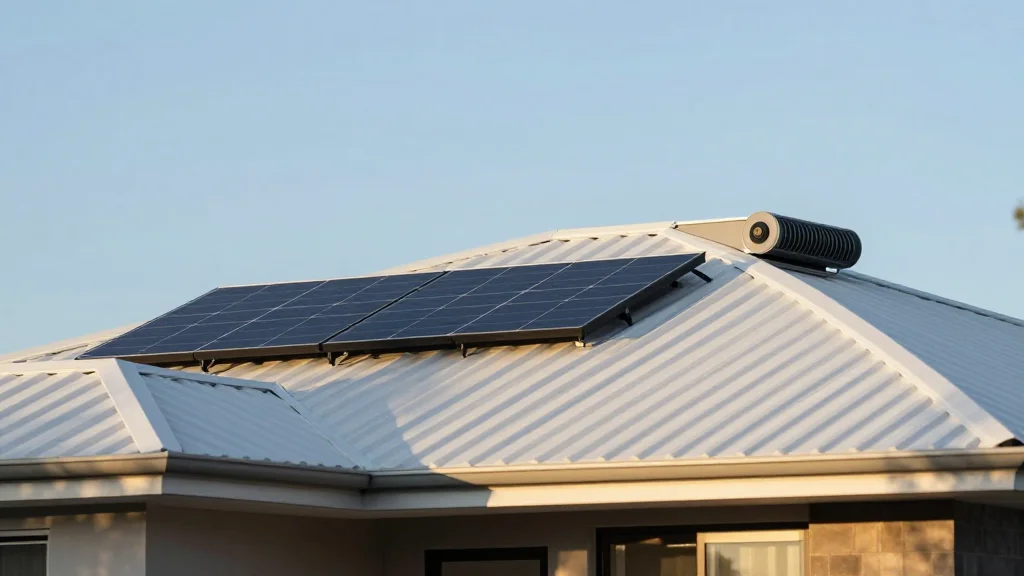
“Blows Your Mind:” Regulator Says Boom in Home Batteries and PV Puts 82 Pct Renewables Within Reach
Why It Matters
The rapid uptake of distributed solar and storage reduces reliance on new utility‑scale projects, accelerating Australia’s decarbonisation timeline and reshaping investment priorities across the energy sector.
Key Takeaways
- •Home battery storage reached 11 GWh, aiming for 40 GWh.
- •April added 441 MW rooftop solar, implying ~4 GW annual run rate.
- •CER now sees less than 20 GW large‑scale renewables needed.
- •70,000 home battery applications filed in April alone.
- •Investors face hurdles: transmission, market signals, and social licence.
Pulse Analysis
Australia’s 82 percent renewable‑energy goal for 2030 has long been viewed as aspirational, but the Clean Energy Regulator (CER) now argues that distributed resources are closing the gap. Federal rebates have spurred a wave of rooftop photovoltaic (PV) installations and home battery purchases, creating a decentralized energy backbone that eases pressure on the grid. By converting household demand into clean generation and storage, the nation can achieve a substantial portion of its target without waiting for massive utility‑scale projects to come online.
Data released at the Smart Energy 2026 conference underscores the speed of this transition. In April, rooftop solar installations hit a record 441 MW, translating to an annualized capacity of roughly 4 GW, while home battery storage surged to 11 GWh and is projected to reach 40 GWh within a year—eight times the Integrated System Plan’s original assumption. These figures shrink the projected need for new large‑scale wind and solar to under 20 GW, a modest uplift over current build rates. However, the CER acknowledges that over 28 GW of large‑scale projects remain in the pipeline, many still awaiting financial close, highlighting a persistent financing and regulatory bottleneck.
Looking ahead, the interplay between small‑scale and utility‑scale renewables will shape Australia’s energy landscape. While distributed assets offer flexibility and rapid deployment, investors in big projects cite transmission constraints, uncertain market signals, and social licence challenges as barriers. Policymakers may need to refine the Capacity Investment Scheme and streamline approvals to sustain the 4 GW‑a‑year cadence required for large projects. Ultimately, the synergy of rooftop PV, home batteries, and strategic large‑scale investments will be critical to meeting the 2030 target and supporting broader electrification of transport and industry.
“Blows your mind:” Regulator says boom in home batteries and PV puts 82 pct renewables within reach
Comments
Want to join the conversation?
Loading comments...