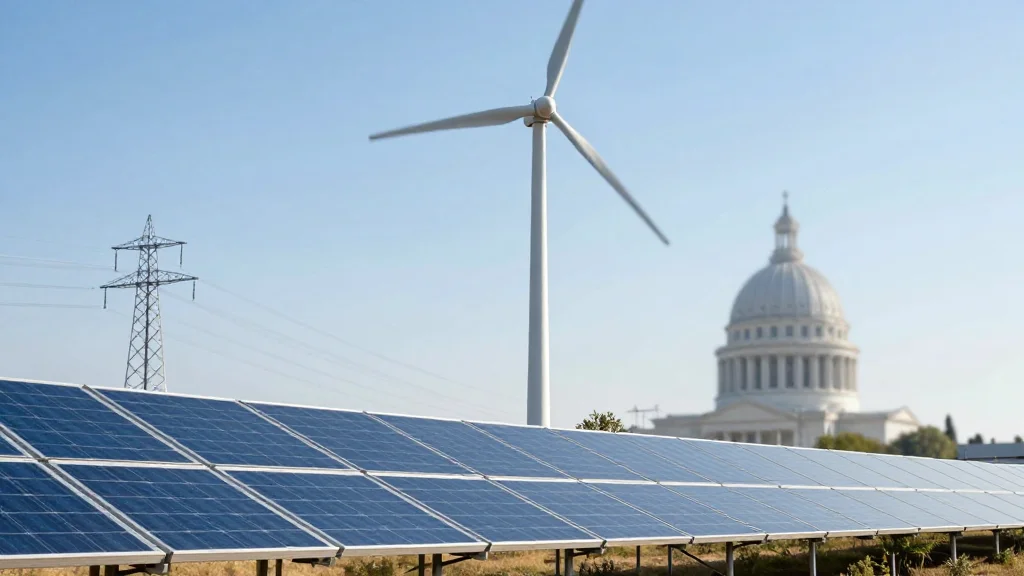
Bolivia Presents New Law to Boost Renewables, Private Investments
Why It Matters
Opening the power sector to private capital aims to address Bolivia’s long‑standing structural deficits, improve service quality, and accelerate renewable deployment, reshaping the country’s energy landscape and regional trade prospects.
Key Takeaways
- •Draft law opens generation, transmission, distribution to private investors
- •ENDE remains system operator while competing with private firms
- •Independent Energy Regulatory Entity to ensure transparency and technical oversight
- •Competitive public auctions will set renewable power prices
- •Goal: position Bolivia as regional hub for grid interconnection
Pulse Analysis
Bolivia’s new Electricity and Renewable Energies draft law marks a strategic shift from a state‑dominated model toward a mixed‑ownership framework. By allowing private entities to invest in generation, transmission and distribution, the legislation tackles chronic under‑investment and operational inefficiencies that have plagued the grid for decades. The retention of ENDE as system operator ensures continuity, while the introduction of an independent Energy Regulatory Entity promises greater transparency, technical oversight, and market confidence—critical factors for attracting foreign capital and fostering competition.
The law’s emphasis on renewable energy aligns with global decarbonisation trends and Bolivia’s own ambition to expand its modest 194 MW solar capacity. Competitive public auctions will replace ad‑hoc pricing, creating a market‑driven price signal that can accelerate utility‑scale solar and wind projects. Coupled with the recent Supreme Decree that simplified medium‑scale distributed generation, the regulatory overhaul reduces permitting hurdles and offers legal guarantees that are essential for long‑term project financing.
Beyond domestic benefits, the legislation positions Bolivia as a potential electricity hub for the Southern Cone. By improving grid reliability and enabling cross‑border interconnections, the country could export surplus renewable power to neighboring markets, diversifying revenue streams and enhancing regional energy security. If implemented effectively, the law could catalyse a wave of private investment, spur job creation in the clean‑energy sector, and solidify Bolivia’s role in South America’s evolving energy mix.
Bolivia presents new law to boost renewables, private investments
Comments
Want to join the conversation?
Loading comments...