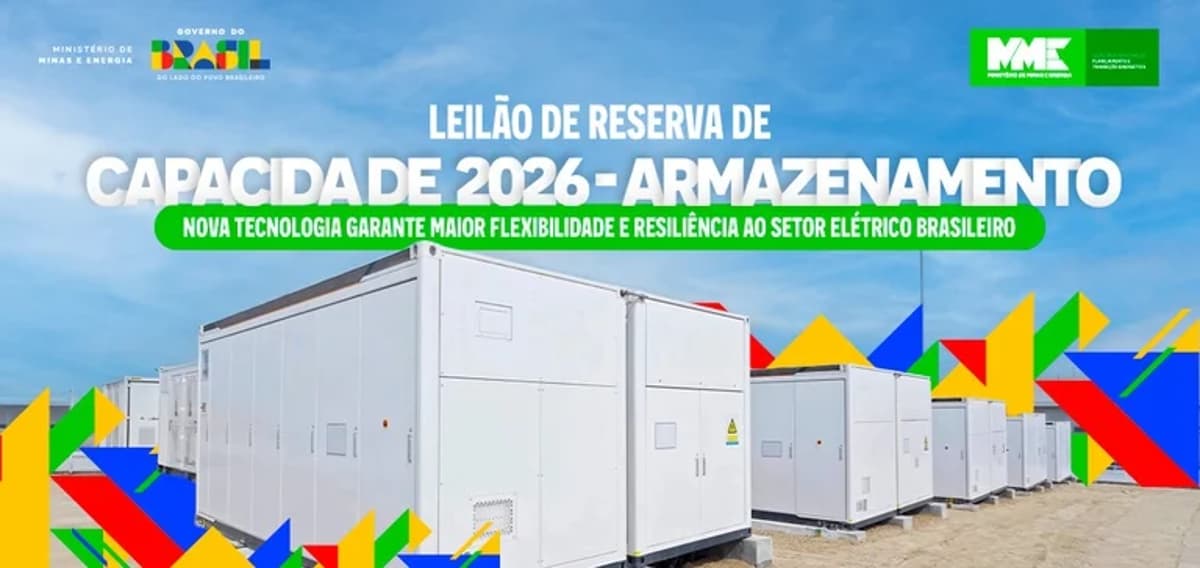
Brazil’s First Energy Storage Auctions Are Coming This Year, Regulatory Framework Approved
Why It Matters
The framework unlocks a market worth billions of dollars, accelerating Brazil’s renewable integration and creating a domestic supply chain for battery technology. Investors now have clear, long‑term revenue streams, reducing financing risk for large‑scale storage projects.
Key Takeaways
- •ANEEL's new ESS regulation authorizes grid access and revenue stacking.
- •Brazil will run two BESS reserve capacity auctions in December 2024.
- •Contracts offer 15‑year availability payments starting Aug 2028, with ONS dispatch control.
- •Minimum project size: 30 MW for 4‑hour duration, 85% efficiency required.
- •Tax incentives under REIDI and reduced grid fees for ONS‑controlled assets.
Pulse Analysis
Brazil’s energy storage market finally cleared a regulatory hurdle that has lingered since 2019. ANEEL’s new rulebook defines how battery assets connect to the grid, how they can stack multiple revenue streams, and how the system operator, ONS, will direct charging and discharging. By embedding tax incentives from the Special Incentives Regime for Infrastructure Development (REIDI) and differentiating network charges based on ONS control, the agency aims to attract both domestic and foreign capital while protecting grid stability.
The upcoming December auctions will be split into two tranches, each offering 15‑year reserve‑capacity contracts that commence in August 2028. Eligibility is limited to new battery installations that can deliver at least 30 MW for four hours with an efficiency of 85% or higher. Winners will be paid for the availability of capacity, not energy output, and must obey real‑time dispatch orders from ONS. Bonus payments are earmarked for projects that connect at strategic nodes of the National Interconnected System, encouraging geographic diversification and grid‑forming capabilities.
For the broader energy transition, the auctions represent a decisive step toward integrating higher shares of wind and solar. Reliable storage will smooth intermittency, reduce curtailment, and lower the need for costly peaker plants. Moreover, the clear policy signal is expected to spur local manufacturing of batteries and power electronics, positioning Brazil as a regional hub for clean‑energy infrastructure. Stakeholders from utilities to fintech investors are closely watching how the market materializes, as the outcomes could set a template for other emerging economies.
Brazil’s first energy storage auctions are coming this year, regulatory framework approved
Comments
Want to join the conversation?
Loading comments...