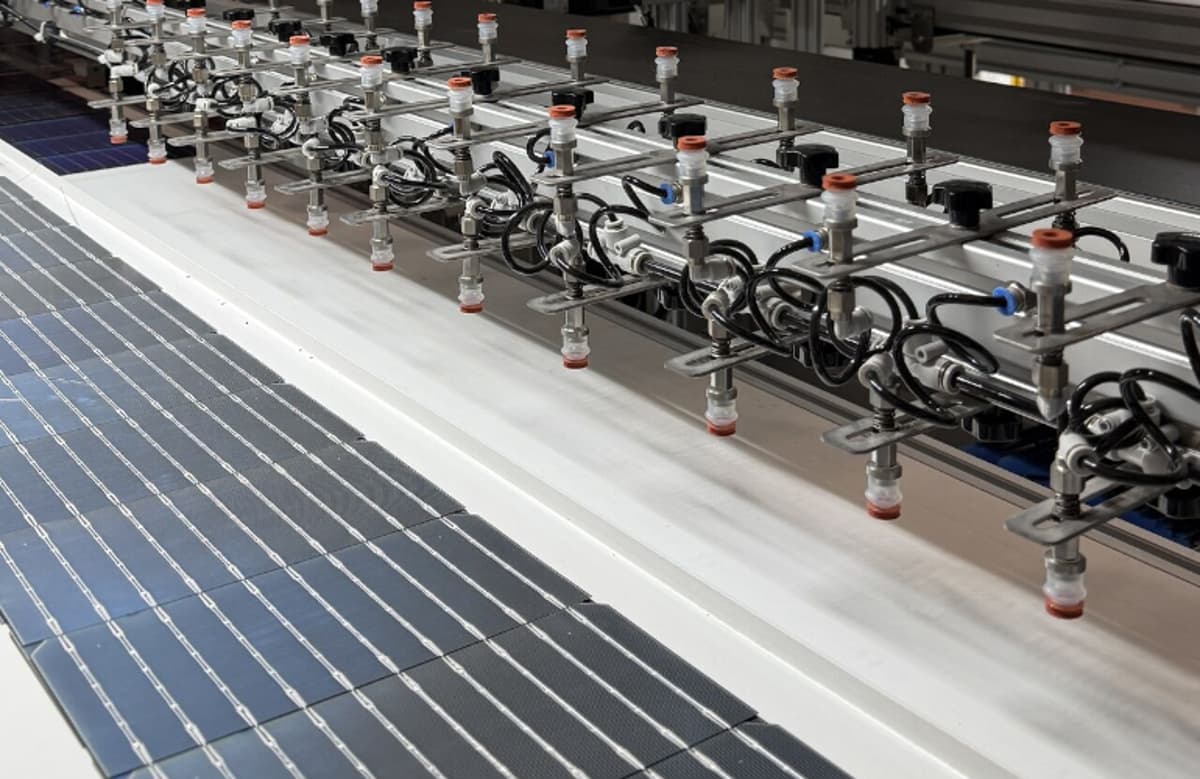
Caelux-Solx Relationship Starts Mass-Production of Perovskite-Silicon Solar Panels in US
Why It Matters
The partnership accelerates U.S. deployment of high‑efficiency tandem solar technology, strengthening energy security and creating advanced manufacturing jobs. It positions America to compete globally in next‑generation photovoltaics.
Key Takeaways
- •Solx and Caelux sign 5‑year, 3 GW perovskite‑silicon partnership.
- •Hybrid Aurora modules target 28% efficiency with dual‑layer design.
- •Production slated at Solx’s 1 GW Puerto Rico plant by late 2024.
- •Suniva supplies U.S.-made silicon cells, completing domestic supply chain.
- •Multi‑gigawatt annual capacity expected by 2027, boosting U.S. jobs.
Pulse Analysis
Perovskite‑silicon tandem cells have long been hailed as the next leap in photovoltaic performance, capturing a broader spectrum of sunlight than traditional silicon alone. By layering a thin perovskite film on glass, manufacturers can add a second power‑generation tier without redesigning the silicon cell architecture. This approach promises efficiencies above 27%, narrowing the gap to theoretical limits and offering higher energy yields per acre—critical for utility‑scale projects where land costs dominate.
The Solx‑Caelux deal merges that technology with a fully American supply chain. Caelux supplies its Active Glass, a perovskite‑coated substrate produced in Baldwin Park, while Suniva provides domestically fabricated silicon cells from its Georgia and upcoming South Carolina plants. Solx’s assembly line in Aguadilla, Puerto Rico, is engineered for gigawatt‑scale output, meaning the first commercial modules could be shipped to U.S. developers within months. The five‑year, 3 GW agreement signals confidence in scaling production, while the 28% efficiency target positions the Aurora panels to compete with premium‑price offerings abroad.
For the broader solar market, this collaboration could reshape cost curves and policy incentives. Higher‑efficiency panels reduce balance‑of‑system expenses, allowing developers to meet renewable targets with fewer installations. Moreover, a domestic tandem supply chain mitigates geopolitical risks associated with imported components and aligns with the Inflation Reduction Act’s domestic content bonuses. As the U.S. pushes toward a 100 GW annual solar build‑out, the Solx‑Caelux model may become a template for other manufacturers seeking to upscale next‑generation PV technologies while bolstering American jobs.
Caelux-Solx relationship starts mass-production of perovskite-silicon solar panels in US
Comments
Want to join the conversation?
Loading comments...