Companies Mentioned
Why It Matters
Providing ready‑to‑use emissions metrics helps companies meet ESG and CSRD obligations while embedding sustainability into financial and operational decision‑making.
Key Takeaways
- •Upsun now shows 2025 carbon data in Billing console
- •Data accessible at organization and project levels with no setup
- •Calculations follow GHG Protocol via Greenly partnership
- •Updated methodology includes new electricity factors and granular PUE
- •Automatic API delivery eliminates manual emissions collection
Pulse Analysis
Regulatory pressure around ESG reporting is intensifying, with the EU’s CSRD demanding transparent, auditable carbon data from every sizable enterprise. Cloud‑based businesses, which often lack direct visibility into the energy consumption of their underlying infrastructure, face a particular challenge in meeting these standards. As sustainability moves from a compliance checkbox to a strategic imperative, firms are seeking tools that fuse environmental metrics with financial dashboards, enabling real‑time insight into the carbon cost of digital operations.
Upsun’s new feature answers that need by embedding precise emissions figures into the familiar Billing console. Leveraging Greenly’s expertise and the globally recognized GHG Protocol, the platform translates raw billing data into kilograms of CO₂ equivalent for each organization and project. The 2025 dataset reflects methodological upgrades—such as refreshed electricity emission factors sourced from IEA and ElectricityMaps, and region‑specific PUE adjustments—that improve accuracy without requiring customers to alter their hosting configurations. Immediate access, coupled with API availability, eliminates the manual collection and spreadsheet gymnastics that previously hampered carbon accounting.
The broader market implication is clear: cloud providers that surface integrated sustainability data will gain a competitive edge as customers prioritize carbon‑aware procurement. Upsun’s approach sets a benchmark for SaaS platforms, encouraging a shift toward automated, API‑driven emissions reporting. Companies adopting this capability can more readily align budgeting, capacity planning, and ESG disclosures, turning sustainability from a reporting burden into a lever for operational efficiency and brand differentiation.
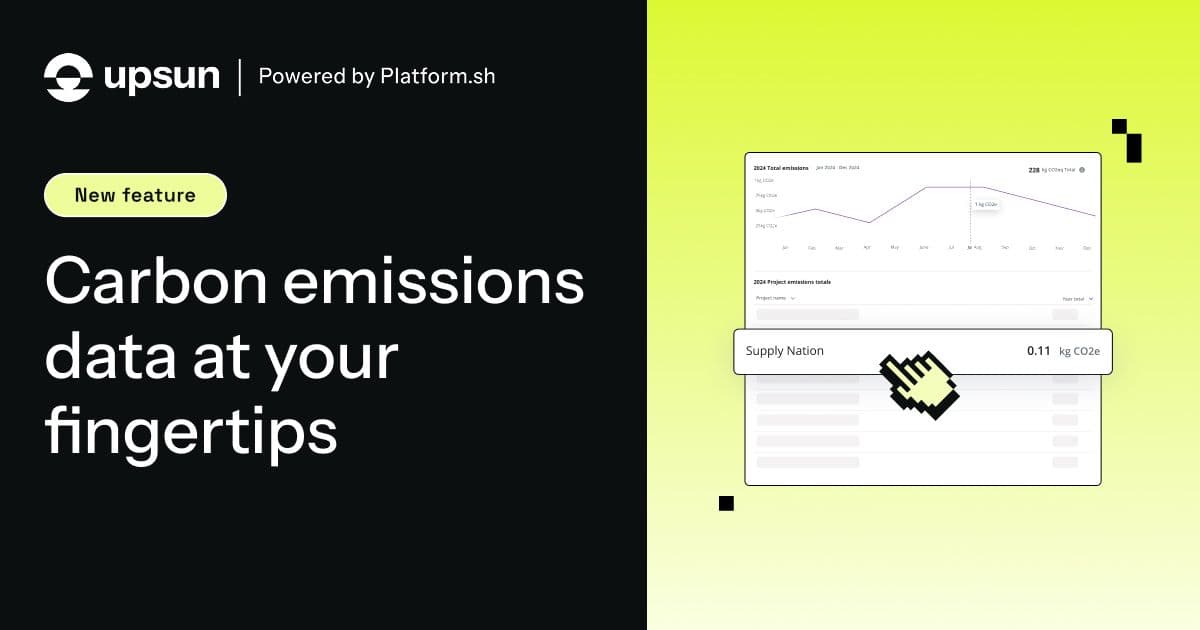
Carbon emissions data at your fingertips
Comments
Want to join the conversation?
Loading comments...