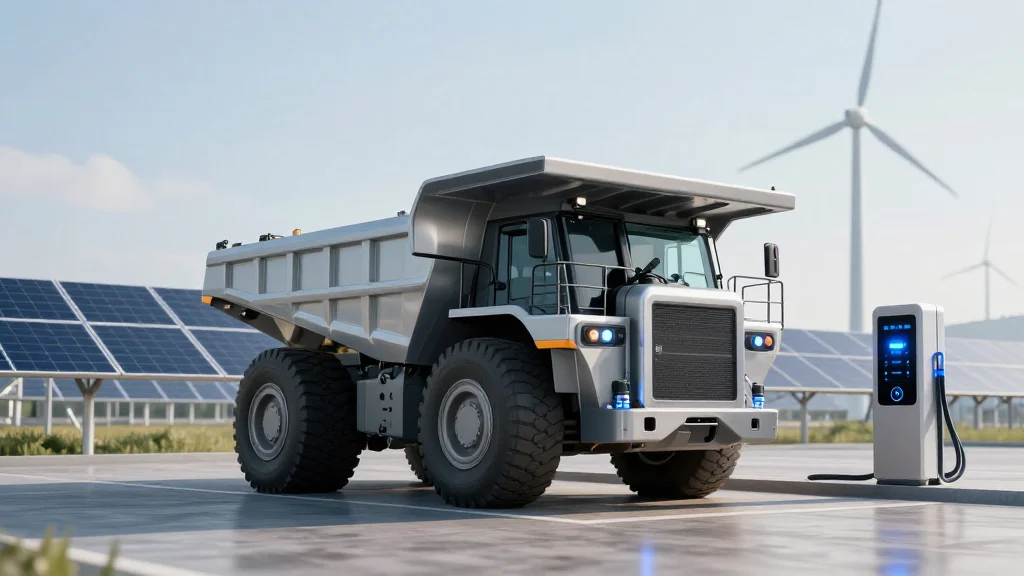
CATL to Supply Chinese Steelmaker with Batteries and Charging Stations for Electric Mining Trucks and Machinery
Why It Matters
The deal accelerates China’s shift toward zero‑emission heavy‑duty transport, reducing carbon intensity in steel and mining while showcasing a scalable battery‑swap model for industrial fleets.
Key Takeaways
- •CATL will supply batteries for 3,000 electric heavy trucks
- •100 swapping stations planned across 16 logistics routes
- •Joint wind‑solar projects will power Jianlong’s industrial parks
- •Partnership aims to fully electrify mining and steel operations
Pulse Analysis
CATL’s agreement with Jianlong marks a pivotal step in China’s heavy‑duty electrification strategy. By coupling high‑energy‑density batteries with a nationwide swapping network, the partnership addresses two long‑standing barriers: range anxiety for long‑haul trucks and downtime for industrial equipment. The planned 100 stations, strategically placed along 16 logistics corridors, will enable rapid battery exchanges, mirroring the model that has proven successful in passenger‑vehicle fleets in Europe and North America. This infrastructure not only supports the slated 3,000 electric trucks but also creates a reusable asset base that can be scaled to other sectors such as maritime and construction.
Beyond vehicles, the collaboration integrates renewable generation directly into Jianlong’s energy‑intensive operations. By co‑developing wind and solar farms to feed the charging network, CATL and Jianlong aim to cut reliance on coal‑derived power, a critical move for the steel industry’s decarbonization roadmap. The joint pilots will generate data on load balancing, battery lifecycle, and grid interaction, offering a blueprint for other heavy‑industry clusters seeking to transition without compromising productivity. This holistic approach aligns with China’s 2030 carbon‑peak and 2060 net‑zero targets, positioning both firms as leaders in sustainable manufacturing.
For the broader market, the CATL‑Jianlong deal signals growing confidence in battery‑swap technology for large‑scale applications. Investors and OEMs are likely to watch the performance metrics—such as station utilization rates and total‑cost‑of‑ownership versus diesel—to gauge commercial viability. Successful execution could spur similar partnerships across Asia and Europe, where steel and mining firms face mounting regulatory pressure. However, challenges remain, including standardizing battery formats, managing second‑life recycling, and ensuring grid stability as renewable penetration rises. If these hurdles are navigated, the model could redefine how heavy industry powers its fleets, accelerating the global transition to clean energy.
CATL to supply Chinese steelmaker with batteries and charging stations for electric mining trucks and machinery
Comments
Want to join the conversation?
Loading comments...