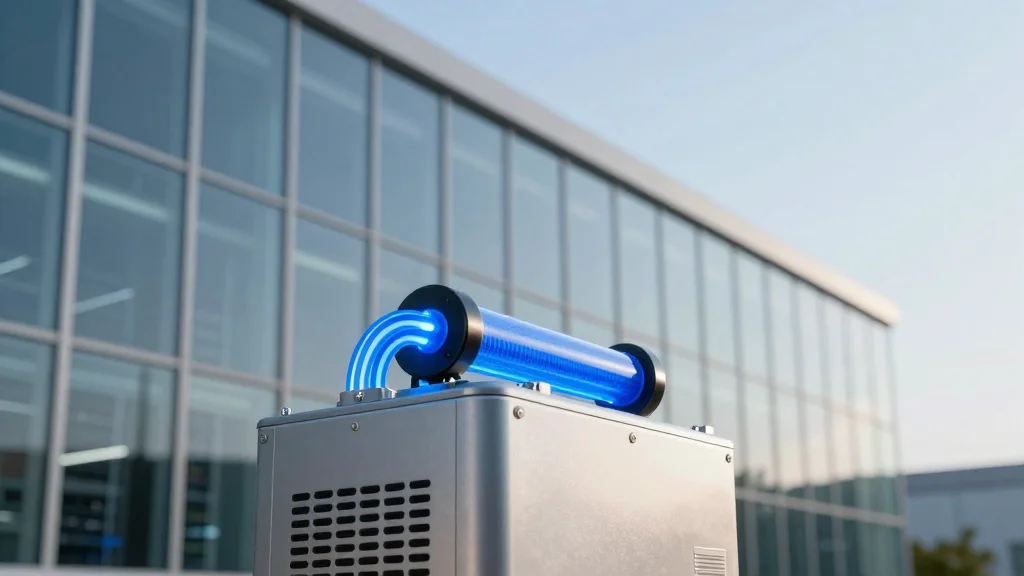
Centrica and Delta Unveil Off‑Grid Fuel‑Cell Power for Data Centres

Companies Mentioned
Why It Matters
Data centres are among the fastest‑growing electricity consumers, accounting for an estimated 1% of global power demand. As the sector pushes toward net‑zero targets, reliable, low‑carbon backup power becomes a critical piece of the puzzle. The Centrica‑Delta fuel‑cell solution directly addresses two pressing challenges: grid reliability and carbon intensity. By providing an off‑grid alternative that can be installed quickly, the partnership helps operators avoid costly downtime while staying aligned with sustainability commitments. Moreover, the launch underscores a broader industry trend toward decentralised power generation. As utilities struggle to keep pace with peak demand, corporate customers are increasingly looking to own or lease their own resilient energy assets. Successful deployment could accelerate investment in fuel‑cell technology, driving down costs through economies of scale and spurring further innovation in hydrogen supply chains and low‑carbon fuel sources.
Key Takeaways
- •Centrica and Delta Electronics announced an off‑grid fuel‑cell generator system for data centres.
- •Solution promises rapid, modular deployment to address grid capacity constraints.
- •Target market valued at roughly $30 billion for data‑centre backup power.
- •Partners aim to deliver lower‑emission alternatives to diesel generators.
- •Pilot projects to begin later this year, with performance data to follow.
Pulse Analysis
The Centrica‑Delta partnership arrives at a moment when data‑centre operators are forced to reconcile two competing imperatives: uninterrupted service and aggressive decarbonisation. Historically, backup power has relied on diesel gensets, which are cheap but emit significant CO₂ and pollutants. Fuel‑cell technology, while more expensive upfront, offers near‑zero on‑site emissions and higher efficiency, especially when paired with low‑carbon fuels. By bundling Centrica’s energy‑service platform with Delta’s modular fuel‑cell hardware, the joint solution lowers the barrier to entry for firms that lack the technical expertise to manage complex on‑site generation projects.
From a market dynamics perspective, the move could reshape the competitive hierarchy in the data‑centre power‑backup space. Established players like Schneider Electric have focused on integrated UPS‑battery systems, while Cummins has leaned on hybrid diesel‑fuel‑cell units. Centrica’s deep relationships with utility customers and Delta’s manufacturing scale give them a unique value proposition that blends service, financing, and technology. If the pilots demonstrate cost parity with diesel over a five‑year horizon, the partnership could trigger a wave of retrofits across legacy data‑centre parks, especially in regions where grid reliability is volatile.
Looking ahead, the success of this initiative hinges on three factors: the availability of low‑carbon fuel (hydrogen or renewable natural gas), regulatory support for off‑grid generation, and the ability to prove total cost of ownership benefits. Governments in Europe and Asia are already drafting incentives for clean backup power, which could accelerate adoption. Conversely, if fuel‑cell costs remain high or hydrogen supply chains lag, the solution may stay niche. Nonetheless, the announcement signals that the industry is moving beyond incremental efficiency upgrades toward a more distributed, resilient, and low‑carbon power architecture.
Centrica and Delta Unveil Off‑Grid Fuel‑Cell Power for Data Centres
Comments
Want to join the conversation?
Loading comments...