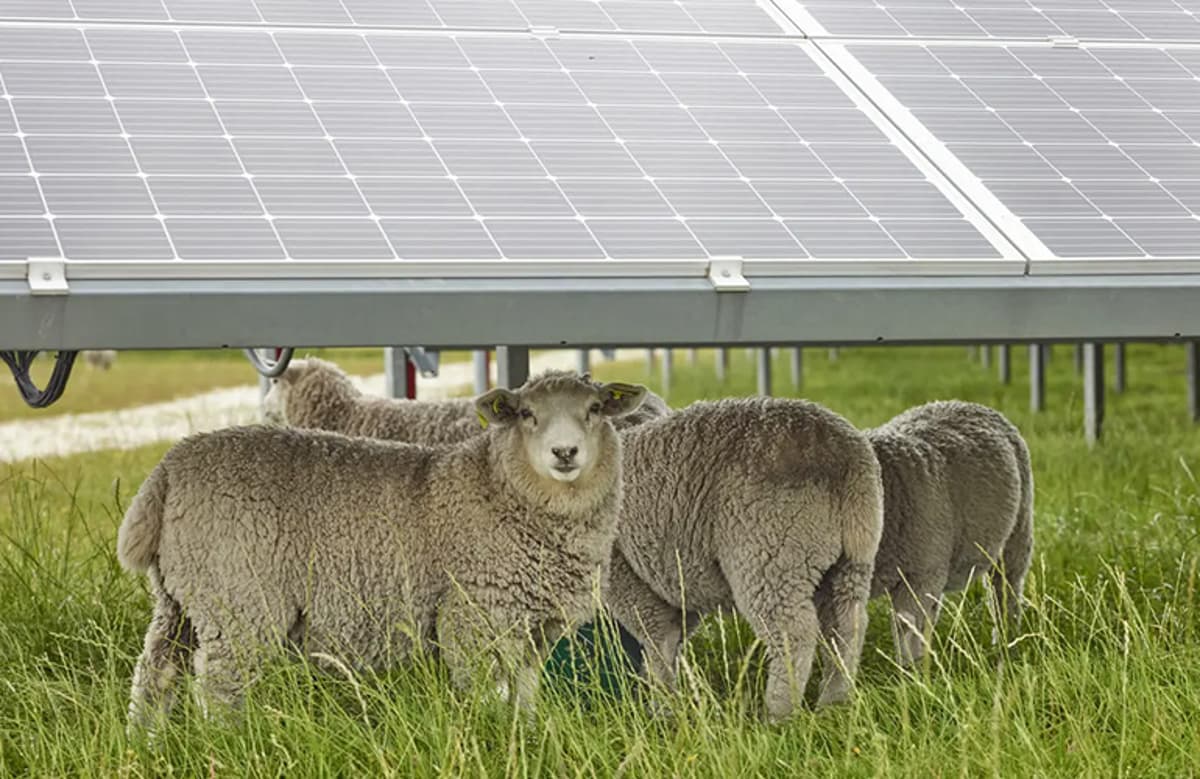
Chaberton Energy Seeks Farmers for Agrivoltaic Projects in Maryland
Why It Matters
The projects demonstrate a scalable model for combining solar generation with agriculture, preserving land use and supporting local farmers while meeting rising energy demand.
Key Takeaways
- •Chaberton launches two agrivoltaic RFPs covering 27 acres in Maryland
- •Farmers receive free land use and paid vegetation management
- •Sugarloaf project offers 13 acres for crops or grazing, 5.23 MW capacity
- •Ramiere project provides 7 acres for agriculture, 3.88 MW capacity
Pulse Analysis
Agrivoltaics— the simultaneous deployment of solar photovoltaics and agricultural production—has moved from experimental pilots to commercial deployments across the United States. By shading crops or grazing livestock under panel arrays, farmers can reduce water usage, improve soil health, and generate supplemental income, while utilities gain access to otherwise idle land for clean energy. Recent studies show that well‑designed systems can increase overall land productivity by up to 20 percent, positioning agrivoltaics as a win‑win solution for food security and climate goals. Investors and policymakers are therefore watching early‑stage projects for scalability.
Chaberton Energy’s two Montgomery County sites illustrate how a community solar model can integrate local agriculture. The 5.23‑megawatt Sugarloaf project and the 3.88‑megawatt Ramiere project together free up 27 acres for farmers, who receive zero‑cost access and paid vegetation management. By partnering with Okovate Sustainable Energy, Chaberton ensures that farming plans are vetted by the county’s Office of Agriculture, aligning crop selection with panel spacing and micro‑climate conditions. This approach not only safeguards existing farmland but also creates a revenue stream for growers who might otherwise face high land costs.
The Maryland initiative could set a template for other states seeking to balance renewable‑energy targets with agricultural preservation. Local governments benefit from reduced grid strain and lower carbon emissions, while the agricultural sector gains resilience against climate‑induced stressors. As federal tax incentives for solar and emerging agrivoltaic subsidies converge, developers are likely to replicate this model in regions with similar land‑use pressures. Continued data collection on yield impacts and maintenance costs will be critical to refining best‑practice guidelines, ultimately accelerating the adoption of dual‑use solar farms nationwide.
Chaberton Energy seeks farmers for agrivoltaic projects in Maryland
Comments
Want to join the conversation?
Loading comments...