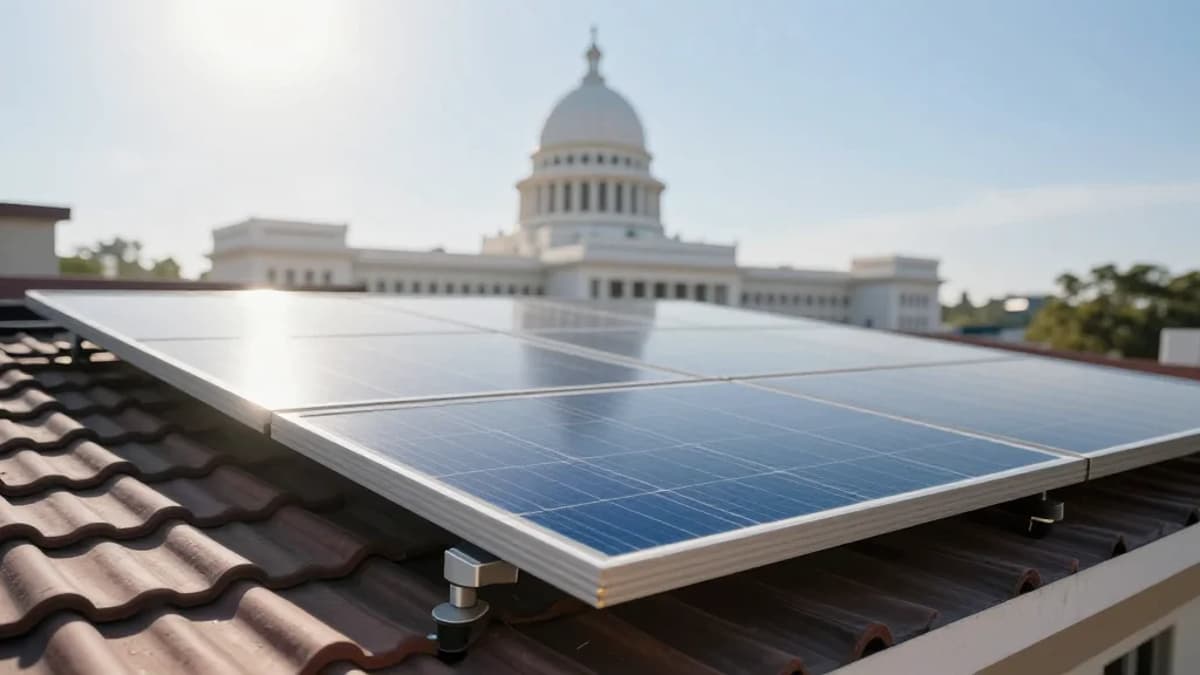
Chandigarh Rooftop Solar Uptake Low Despite Incentives; CREST Flags Strong Savings Potential
•February 22, 2026
0
Why It Matters
The analysis proves rooftop solar is a high‑return investment for homeowners, yet low adoption limits regional clean‑energy targets and market growth.
Key Takeaways
- •Rooftop solar adoption remains low in Chandigarh.
- •2‑3 kWp systems save ₹1k‑₹2k monthly.
- •Payback achieved within four to five years.
- •Lifetime profit can reach up to ₹4 lakh.
- •Incentive scheme insufficient to drive widespread uptake.
Pulse Analysis
India’s renewable agenda has placed rooftop solar at the forefront of its decarbonisation strategy, with schemes like PM Surya Ghar offering zero‑cost electricity to incentivise households. Chandigarh, a high‑income city with abundant sunshine, appears an ideal candidate, yet the uptake remains modest. This gap underscores a disconnect between policy design and on‑ground consumer behaviour, suggesting that subsidies alone may not overcome barriers such as upfront capital, awareness, or perceived complexity.
The CREST study quantifies the economic upside for a typical 2‑3 kWp installation. Monthly savings of ₹1,000‑₹2,000 translate to an annual reduction of roughly ₹13,000‑₹14,000, delivering a payback window of four to five years. Extending the analysis over the system’s 20‑25‑year life reveals potential net profits of up to ₹4 lakh, rivaling traditional real‑estate returns. Compared with other Indian metros where rooftop adoption exceeds 10 percent, Chandigarh’s rates lag, indicating untapped market potential that could be unlocked through targeted financing, streamlined permitting, and consumer education.
For utilities and policymakers, these findings signal a lucrative opportunity to accelerate grid‑level sustainability. Banks could develop low‑interest green loans, while municipal bodies might streamline inter‑connection processes to reduce perceived hassle. Scaling adoption would not only deepen demand‑side management—lowering peak loads—but also contribute to national renewable targets, reducing reliance on fossil‑fuel generation. Aligning financial incentives with clear, accessible pathways could transform Chandigarh’s rooftops into a substantial, decentralized power source.
Chandigarh rooftop solar uptake low despite incentives; CREST flags strong savings potential
0
Comments
Want to join the conversation?
Loading comments...