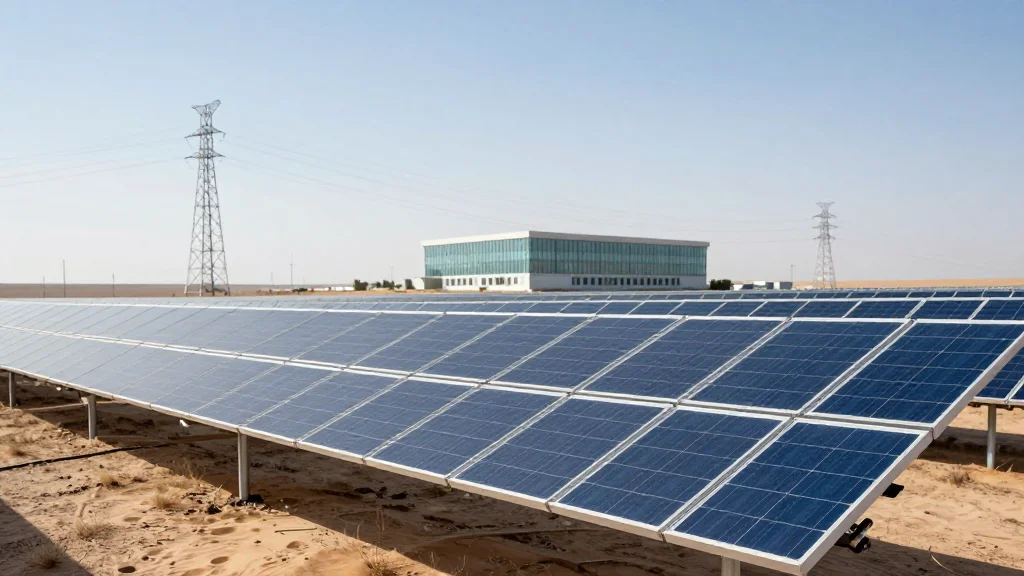
China Datang Launches 500 MW Solar Farm to Power Data Centers

Why It Matters
The Zhongwei project demonstrates a pragmatic pathway to decarbonise one of the fastest‑growing sources of electricity demand – data centers. By co‑locating renewables, storage, and dedicated transmission, the model reduces reliance on indirect green‑energy procurement and offers a replicable blueprint for other regions where renewable resources are abundant but grid integration is complex. Its success could influence policy, encouraging regulators to support infrastructure that directly couples clean generation with high‑intensity digital loads, thereby accelerating progress toward global climate‑tech goals. Moreover, the initiative aligns with China’s strategic shift to develop western computing hubs, leveraging desert solar and wind potential to balance regional development and environmental objectives. If the dual‑track system delivers cost and emissions benefits, it may reshape investment decisions across the global cloud market, prompting vendors to favour sites with integrated renewable supply chains.
Key Takeaways
- •500 MW solar farm commissioned in Zhongwei, Ningxia, directly powering a data‑center cluster
- •Annual generation of ~970 GWh, covering about 50 % of the cloud base’s electricity demand
- •Phase one includes 1.5 GW wind farm and storage, targeting 4.3 TWh annual output
- •Total first‑phase investment of CNY 8.7 billion (~$1.27 billion); full project to reach CNY 20 billion (~$2.9 billion)
- •Dual‑track supply model combines dedicated transmission lines with bilateral market trading
Pulse Analysis
Datang’s Zhongwei hub arrives at a moment when the cloud industry is grappling with a supply‑side emissions gap. Traditional data‑center power strategies rely on purchasing renewable energy certificates (RECs) or offsetting emissions after the fact, a method that offers limited visibility into real‑time carbon intensity. By physically tying generation to load, Datang sidesteps these shortcomings, delivering a more transparent and potentially cheaper energy solution. The model also mitigates grid congestion, a chronic issue in China’s western provinces where transmission capacity has lagged behind renewable build‑out.
Historically, large‑scale renewable projects have been grid‑centric, feeding bulk power into the national system before being dispatched to end users. The Zhongwei approach flips that paradigm, treating the data‑center cluster as a defined, high‑value load that can be matched with on‑site generation. This mirrors early utility‑scale solar‑plus‑storage pilots in the United States, but scales it up to a half‑gigawatt level and integrates wind to smooth diurnal variability. If the coordinated dispatch delivers the projected 4.3 TWh of clean electricity, it could set a performance benchmark that justifies further policy incentives for similar co‑location projects.
Looking ahead, the model’s replicability will hinge on regulatory flexibility and the economics of dedicated transmission. Should the wind component come online as scheduled and the storage system prove effective, investors may view integrated renewable‑digital hubs as lower‑risk assets, accelerating capital flow into the sector. Conversely, any bottlenecks in transmission or market‑trading mechanisms could expose vulnerabilities, prompting a reassessment of the dual‑track strategy. Either outcome will provide valuable data for policymakers and industry leaders seeking to align the rapid expansion of digital infrastructure with climate‑tech imperatives.
China Datang Launches 500 MW Solar Farm to Power Data Centers
Comments
Want to join the conversation?
Loading comments...