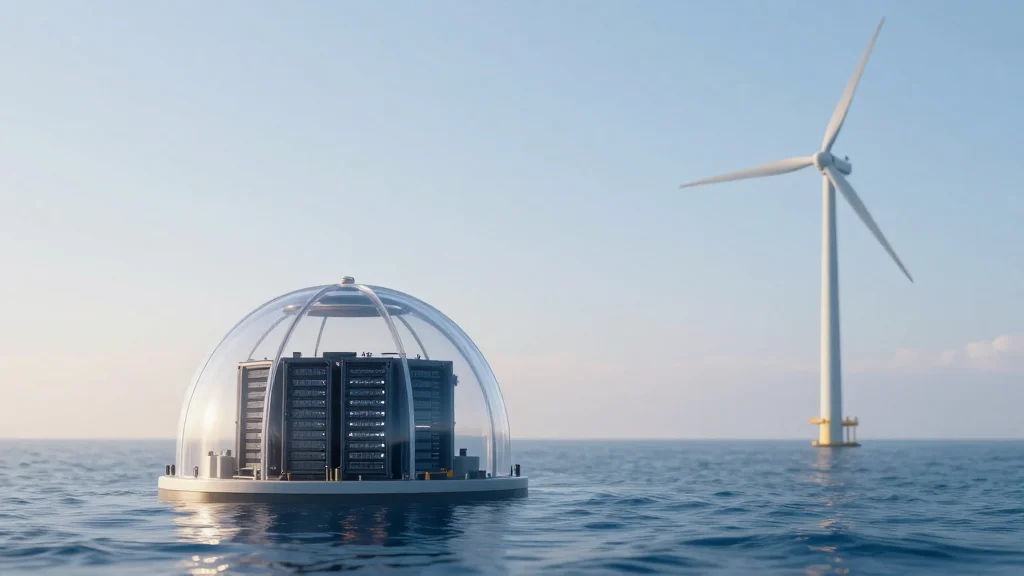
China Deploys $226 Million Offshore Underwater AI Data Centre Near Shanghai

Companies Mentioned
Why It Matters
The Shanghai underwater data centre demonstrates a viable pathway to decouple AI compute growth from rising energy consumption and freshwater scarcity. By proving that large‑scale AI workloads can be powered by offshore wind and cooled by seawater, the project offers a replicable blueprint for nations seeking to meet both digital and climate goals. Its success could accelerate the adoption of low‑carbon data‑centre architectures, reshaping how the tech industry sources power and manages heat. Beyond environmental benefits, the initiative signals a strategic shift in China’s AI infrastructure policy, emphasizing self‑reliance in large‑language model training while reducing dependence on land‑intensive facilities. If the model proves cost‑effective, it may spur private‑sector investment in similar subsea projects, potentially redefining global data‑centre markets and prompting regulatory frameworks for underwater installations.
Key Takeaways
- •China’s offshore underwater AI data centre began commercial operation in May 2026.
- •The $226 million project houses nearly 2,000 servers and delivers 24 MW of compute power.
- •Powered by offshore wind, the facility achieves a PUE of about 1.15, far better than many land‑based centres.
- •Seawater cooling eliminates the need for energy‑intensive air‑conditioning and reduces freshwater use.
- •Long‑term maintenance and corrosion control are identified as key challenges for scaling the model.
Pulse Analysis
China’s underwater data centre marks a decisive experiment in marrying renewable energy with high‑performance computing. Historically, data‑centre expansion has been hampered by the twin constraints of electricity demand and cooling costs, both of which are projected to intensify as AI models grow in size. By situating servers beneath the sea and tapping directly into offshore wind, the project sidesteps the conventional land‑use bottleneck and leverages the ocean’s thermal inertia for passive cooling. This could redefine the economics of AI infrastructure, especially for coastal economies where land is premium and wind resources are abundant.
From a competitive standpoint, the move positions China ahead of Western counterparts that have largely confined underwater data‑centre concepts to research pilots. While Microsoft’s Project Natick proved feasibility, it never transitioned to a revenue‑generating service. China’s decision to commercialize the technology suggests confidence in operational reliability and a willingness to absorb the higher upfront capital costs—estimated at $226 million—to secure long‑term energy savings and carbon‑reduction credentials. If the PUE target holds, the cost per compute unit could undercut traditional facilities, giving Chinese AI firms a pricing advantage in training large models.
Looking forward, the sector will watch how the Shanghai installation handles maintenance cycles, especially corrosion mitigation and module retrieval. Success could unlock a wave of subsea data‑centre clusters in the North Sea, the Gulf of Mexico, and other wind‑rich coastal zones. Conversely, persistent technical hurdles could relegate the concept to niche applications. Either outcome will shape investment decisions, regulatory standards, and the broader narrative of how the tech industry meets its growing appetite for compute while honoring climate pledges.
China Deploys $226 Million Offshore Underwater AI Data Centre Near Shanghai
Comments
Want to join the conversation?
Loading comments...