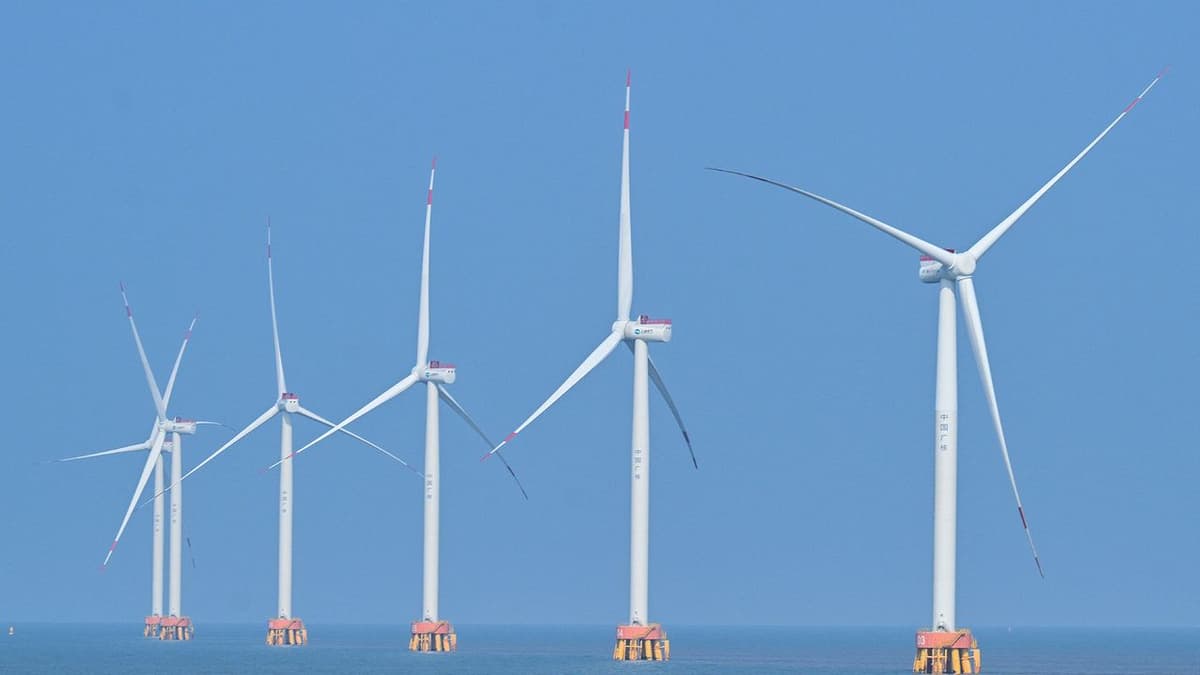
China Installs World's Largest Floating Wind Turbine in Deep Water Test — It Generates Enough Energy to Power 4,200 Homes Annually
Why It Matters
The installation proves floating wind can unlock vast deep‑water resources, expanding China’s offshore renewable capacity and setting a benchmark for global developers seeking to meet aggressive decarbonisation targets.
Key Takeaways
- •16 MW floating turbine installed off Guangdong, world’s largest single unit.
- •Rotor 252 m, blade tip 270 m above water.
- •Generates 44.65 million kWh, enough for 4,200 U.S. homes.
- •Designed for 20 m waves and 164 mph winds.
- •Enables commercial floating wind in deep waters beyond shallow shelves.
Pulse Analysis
The Three Gorges Pilot marks a pivotal moment for floating offshore wind, marrying a 16‑megawatt generator with a semi‑submersible platform that can endure 66‑foot waves and hurricane‑strength gusts. Its 827‑foot rotor and high‑flexibility 66‑kilovolt subsea cable illustrate how Chinese engineers are solving the twin challenges of structural load and dynamic grid connection, paving the way for larger, more resilient turbines in waters previously deemed unsuitable for fixed‑bottom foundations.
China’s offshore wind agenda has accelerated dramatically, with the nation targeting 30 gigawatts of offshore capacity by 2030. Floating wind technology expands that horizon by tapping deep‑water zones where continental shelves are narrow, a geographic reality for much of the country’s coastline. The Three Gorges Pilot not only adds roughly 45 GWh of clean energy—equivalent to 4,200 homes—but also validates a cost‑effective pathway to scale floating farms, potentially reshaping global supply chains and encouraging investment from European and American developers eyeing similar sites.
Looking ahead, the commercial viability of floating turbines will hinge on reducing platform costs, streamlining mooring designs, and integrating high‑voltage subsea cables with on‑shore grids. Policy incentives, such as feed‑in tariffs and green financing, will be critical to bridge the gap between prototype and utility‑scale deployment. If these hurdles are cleared, floating wind could become a cornerstone of the clean‑energy transition, delivering reliable power from depths beyond the reach of traditional turbines and accelerating the world’s shift toward net‑zero emissions.
China installs world's largest floating wind turbine in deep water test — it generates enough energy to power 4,200 homes annually
Comments
Want to join the conversation?
Loading comments...