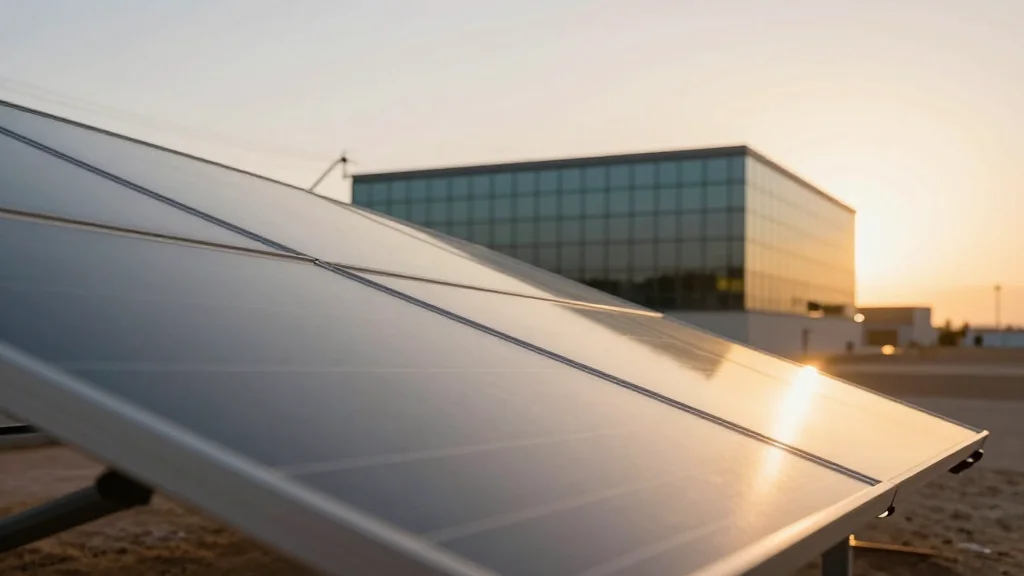
China Launches $1.28 B, 500‑MW Solar Park to Power Data Centers in Ningxia

Why It Matters
The Ningxia solar‑to‑data‑center link illustrates how China is marrying its climate‑tech ambitions with its rapid digital expansion. By delivering renewable electricity directly to high‑energy users, the project sidesteps the carbon‑intensity of the national grid and showcases a scalable blueprint for decarbonising the global data‑center industry, which accounts for roughly 1% of worldwide electricity demand. Beyond emissions, the model could reshape cost structures for cloud providers. Dedicated transmission lines and long‑term renewable contracts lock in lower, more predictable power prices, reducing reliance on volatile spot markets and enhancing the competitiveness of Chinese cloud services on the international stage.
Key Takeaways
- •500‑MW PV plant launched in Ningxia, part of a 2‑GW first‑phase renewable hub
- •Total investment of 8.7 billion yuan ($1.28 billion) for solar, wind and storage
- •Project will supply 2.29 billion kWh of green electricity annually to data centers
- •Dedicated point‑to‑point transmission bypasses the national grid, boosting green‑power ratio
- •NEA to issue new policies on direct renewable supply, enabling further computing‑energy synergies
Pulse Analysis
China’s decision to couple a massive solar farm with a dedicated data‑center load reflects a strategic pivot from treating renewable generation as a generic grid commodity to a targeted input for carbon‑intensive industries. Historically, the country’s renewable rollout has been hampered by curtailment and grid bottlenecks; the Zhongwei project sidesteps those issues by creating a closed‑loop supply chain that guarantees off‑take and reduces curtailment risk. This mirrors a broader global trend where energy‑intensive sectors—such as cryptocurrency mining, AI training and high‑performance computing—are seeking bespoke renewable contracts to meet ESG mandates and cost pressures.
From a market perspective, the initiative could catalyse a wave of private‑sector investment in similar point‑to‑point projects. Cloud giants like Alibaba, Tencent and Baidu have already announced plans to shift workloads westward, and a reliable, low‑cost renewable feed could accelerate those migrations. Internationally, the model may pressure Western data‑center operators to adopt comparable arrangements, especially as Europe tightens its carbon‑pricing mechanisms. The success of the Ningxia hub will likely become a benchmark for policy‑driven, sector‑specific renewable integration.
Looking ahead, the key variables will be the speed of policy rollout by the NEA and the scalability of the wind‑solar‑storage mix. If the 1.5 GW wind component comes online as scheduled and storage proves effective at smoothing diurnal gaps, the project could deliver a near‑continuous green power supply—an achievement that would set a new standard for renewable reliability in high‑demand computing environments.
China launches $1.28 B, 500‑MW solar park to power data centers in Ningxia
Comments
Want to join the conversation?
Loading comments...