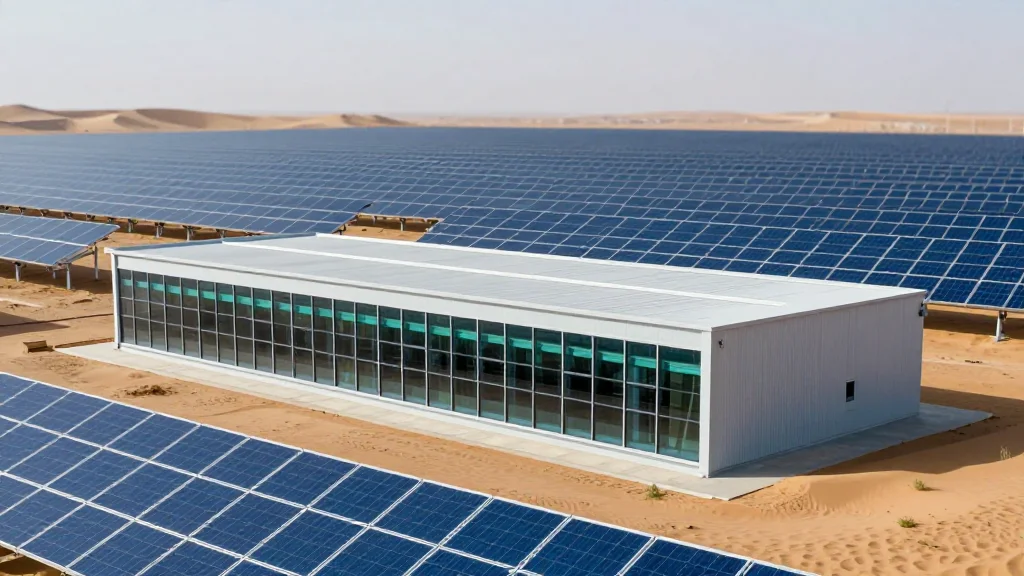
China Launches $1.28 Bn 500‑MW Solar Hub to Power Data Centers Directly

Why It Matters
The Ningxia project proves that large‑scale renewable generation can be coupled directly to high‑energy digital workloads, a sector traditionally dependent on fossil‑fuel‑heavy grids. By eliminating the intermediate grid step, the model reduces transmission losses, cuts carbon intensity, and offers a replicable pathway for other nations grappling with the twin challenges of decarbonising compute and meeting soaring data demand. If the pilot delivers on its promised efficiency and cost benefits, it could accelerate global investment in point‑to‑point renewable‑to‑compute infrastructure, reshaping the climate‑tech market and creating new revenue streams for solar and wind developers. The initiative also underscores how policy alignment—here between the NEA and the digital strategy—can unlock financing for projects that sit at the intersection of energy and information technology.
Key Takeaways
- •500‑MW photovoltaic plant launched in Ningxia, directly powering Zhongwei data centre.
- •First phase totals 2 GW of renewable capacity with 8.7 billion yuan ($1.28 bn) investment.
- •Project will deliver 2.29 billion kWh of green electricity annually once fully operational.
- •Dedicated point‑to‑point transmission bypasses national grid, raising green‑power ratio above 70 %.
- •NEA to issue new guidelines for direct renewable supply, enabling further energy‑digital synergies.
Pulse Analysis
China’s decision to marry desert renewables with compute workloads reflects a strategic pivot from merely expanding capacity to optimising energy quality for high‑value digital services. The direct‑supply architecture sidesteps the inefficiencies of a centrally managed grid, a move that could become a competitive advantage as global data demand outpaces traditional power‑plant build‑out timelines. Historically, data centres have been criticised for their carbon footprints; this project flips the narrative by turning the compute load into a demand anchor for renewable expansion.
The financial commitment—$1.28 bn for the first phase—signals that investors view the synergy as a viable return‑on‑investment proposition, not just an environmental add‑on. By locking in a high‑green‑power ratio, operators can hedge against future carbon pricing and regulatory risk, while also marketing a low‑carbon compute offering to climate‑conscious customers. This could spur a wave of similar projects in regions where renewable resources are abundant but grid integration is costly.
However, the model is not without challenges. Balancing solar and wind output, ensuring storage reliability, and managing the dual‑track supply system will require sophisticated grid‑management tools and robust regulatory oversight. If China can demonstrate operational stability and cost savings, the blueprint may be exported to the U.S., Europe, and emerging markets, potentially reshaping the global climate‑tech investment landscape and accelerating the decarbonisation of the digital economy.
China launches $1.28 bn 500‑MW solar hub to power data centers directly
Comments
Want to join the conversation?
Loading comments...