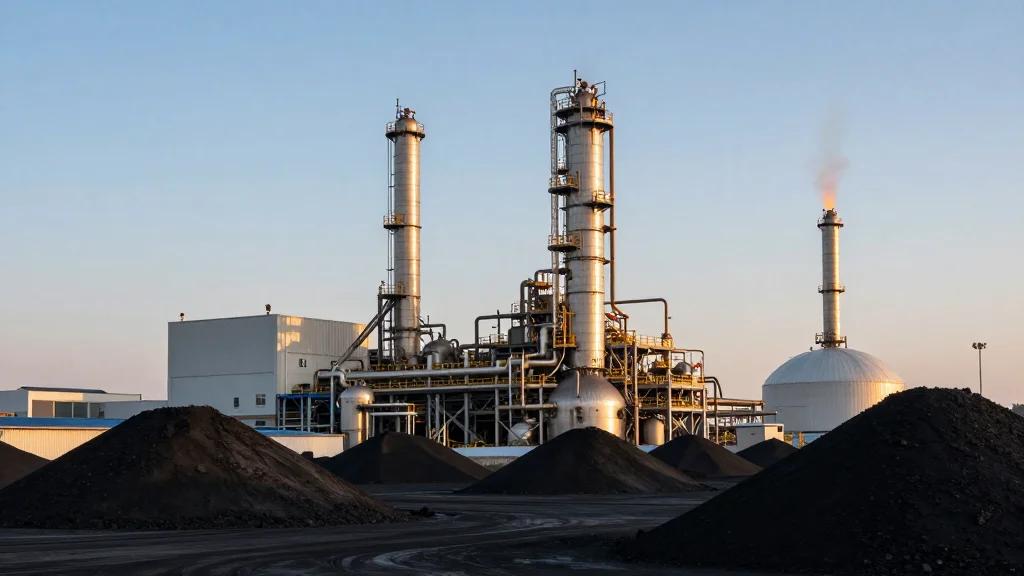
China Restarting Massive Coal-to-Gas Project After Decade-Long Pause
Why It Matters
Reviving coal‑to‑gas capacity bolsters China’s energy security amid volatile global gas markets, while adding a significant share of synthetic gas to meet domestic demand. It also signals a pragmatic shift in China’s clean‑energy transition, balancing coal reliance with lower‑carbon gas and nuclear options.
Key Takeaways
- •Fuxin coal‑to‑gas plant resumes construction, targeting October 2026 start.
- •Project cost $3.7 billion, part of 13 similar projects nationwide.
- •Synthetic gas could supply 12% of China's current gas demand.
- •Middle‑East gas disruptions push China to revive coal‑to‑gas strategy.
- •Analysts expect more coal‑to‑nuclear conversions under C2N plan.
Pulse Analysis
The Fuxin coal‑to‑gas facility, a flagship initiative of China Datang Corp., was launched in 2011 with a $3.7 billion budget but was suspended in 2014 after technical setbacks and rising costs. After a decade of dormancy, construction resumed last autumn, and the company now aims to commission the plant by October 2026. The timing coincides with a sharp reduction in imported natural gas following the U.S.–Israel‑Iran conflict, which has strained pipelines and liquefied natural gas (LNG) shipments to Asia. By converting abundant domestic coal into synthetic gas, China hopes to plug the supply gap without relying on volatile overseas markets.
Analysts estimate that the 13 coal‑to‑gas projects currently under way could generate enough synthetic natural gas to cover roughly 12 % of China’s total gas consumption. This additional volume would ease pressure on the country’s LNG import contracts and provide a more predictable price base for power generators. Moreover, synthetic gas burns cleaner than raw coal, reducing particulate emissions and helping Beijing meet its short‑term carbon‑intensity targets. The Fuxin restart therefore serves both economic and environmental objectives, offering a hedge against geopolitical risk while modestly lowering the carbon footprint of the power sector.
Beijing’s energy roadmap is increasingly hybrid, pairing traditional coal resources with emerging low‑carbon technologies. In parallel with the coal‑to‑gas push, the state‑run China Energy Engineering Group is piloting a ‘Coal to Nuclear’ (C2N) program that will retrofit retired coal plants with nuclear reactors. This dual‑track approach reflects a pragmatic acknowledgment that coal will remain part of the energy mix for the foreseeable future, but its role is being reshaped toward cleaner outputs. Investors are responding positively, seeing higher profitability in projects that convert cheap coal into higher‑value gas or nuclear power.
China Restarting Massive Coal-to-Gas Project After Decade-Long Pause
Comments
Want to join the conversation?
Loading comments...