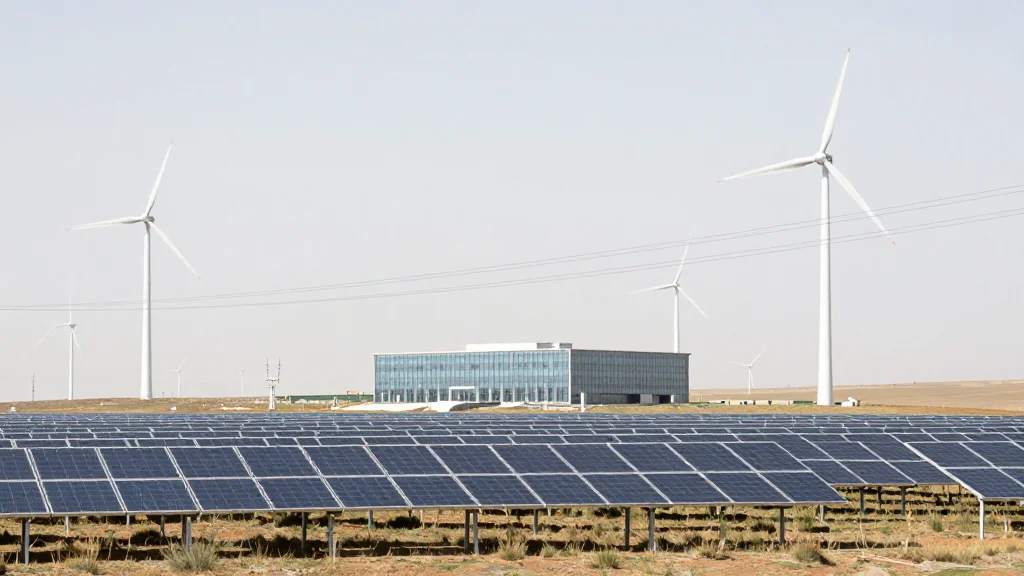
China Taps Western Renewable Power to Slash AI Data‑center Costs

Companies Mentioned

Why It Matters
Linking low‑cost renewable electricity to AI compute directly tackles one of the sector’s biggest cost drivers—energy—while advancing China’s climate goals. By turning surplus wind and solar into high‑value digital services, the model demonstrates a scalable pathway for other regions with abundant renewables but limited local data demand. The approach also pressures global AI providers to reconsider their energy sourcing strategies, potentially accelerating a broader shift toward greener compute worldwide. If the projected 2 trillion‑yuan investment materializes, it will spur massive upgrades to transmission infrastructure, battery storage, and grid management technologies, creating a new wave of climate‑tech opportunities. Moreover, the competitive pricing advantage for Chinese AI services could reshape market dynamics, influencing pricing, adoption, and the geographic distribution of AI workloads.
Key Takeaways
- •Qingyang’s 11 data centers now deliver >140,000 PFlops of AI compute.
- •Renewable electricity costs as low as 0.1 yuan/kWh (~$0.014), versus 0.39 yuan/kWh (~$0.054) for coal.
- •Electricity makes up 56.7% of data‑center operating expenses.
- •Second data‑center building slated for delivery next month.
- •Projected infrastructure spend could exceed 2 trillion yuan (~$276 billion) by 2030.
Pulse Analysis
China’s strategy of pairing green power with AI compute is a textbook example of vertical integration aimed at cost leadership. By internalizing the energy supply chain, Chinese operators sidestep the volatile global carbon credit markets and avoid the premium that Western data centers pay for renewable offsets. Historically, the AI compute race has been dominated by firms that could afford massive electricity bills in power‑rich regions like the U.S. Pacific Northwest. China’s western provinces now offer a comparable, if not cheaper, energy base, but with the added advantage of state‑driven coordination under the "East‑to‑West Computing" policy.
The move also raises competitive questions for global AI providers. If Chinese firms can sustain sub‑$0.02/kWh electricity, their marginal cost for training large models drops dramatically, allowing them to undercut pricing and potentially attract price‑sensitive developers worldwide. This could force incumbents such as Microsoft, Google, and Amazon to accelerate their own renewable procurement or invest in carbon‑neutral data‑center designs to stay competitive.
Looking ahead, the success of this model hinges on solving two technical puzzles: grid stability amid renewable intermittency and the regulatory framework for cross‑regional power sales. Advances in battery storage, demand‑response algorithms, and AI‑driven grid management will be critical. If China can demonstrate a reliable, low‑cost renewable‑powered AI compute hub, it may set a template for other nations with similar geographic imbalances between renewable generation and digital demand, catalyzing a new era of climate‑smart compute.
China taps western renewable power to slash AI data‑center costs
Comments
Want to join the conversation?
Loading comments...