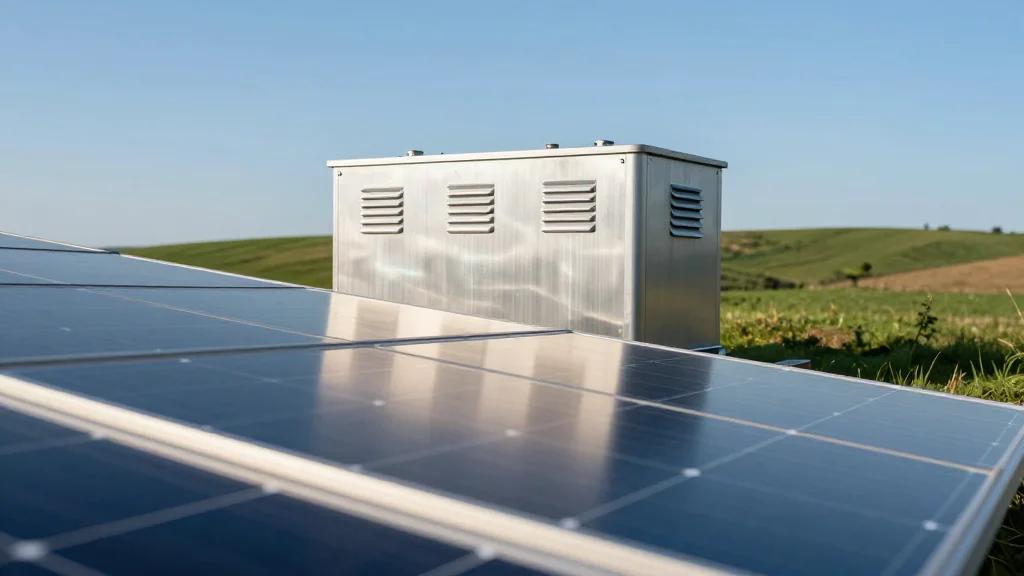
CMS Guides Launch of 57.6 MW Solar Park and 24/48 MWh Storage in Bulgaria

Why It Matters
The Sinitovo solar‑plus‑storage project demonstrates how integrated renewable generation and battery assets can overcome the intermittency challenges that have slowed Eastern Europe's clean‑energy transition. By securing a sizable financing package and navigating complex regulatory terrain, the developers provide a replicable blueprint for other markets where coal remains dominant. Moreover, the project contributes directly to Bulgaria’s ability to meet EU climate objectives, reducing reliance on fossil fuels and enhancing grid resilience. As more investors recognize the value of co‑located storage, the financing landscape is likely to evolve, unlocking capital for similar mid‑scale projects that can deliver both energy and ancillary services.
Key Takeaways
- •CMS advised commissioning of 57.6 MW solar plant and 24/48 MWh BESS in Bulgaria.
- •Project financed by EuroBank Bulgaria with €32 m (2025) and €8.2 m (2026) loans (~$43 m total).
- •Drag Holding Ltd participates as investor, focusing on renewable asset acquisition.
- •Co‑located storage provides grid flexibility, supporting frequency regulation and peak shaving.
- •Adds ~57.6 MW of clean capacity, helping Bulgaria move toward EU 2030 renewable targets.
Pulse Analysis
The Sinitovo development underscores a shifting financing paradigm in Eastern Europe, where banks are increasingly comfortable underwriting hybrid projects that bundle generation with storage. Historically, lenders hesitated to fund solar projects without clear revenue streams for ancillary services. By attaching a 48 MWh battery, the developers created a dual‑revenue model—selling electricity and providing grid services—making the loan package more attractive.
From a competitive standpoint, the project pits traditional coal‑heavy utilities against agile, privately‑backed renewable consortia. Drag Holding’s involvement signals that private equity is willing to allocate capital to assets that can deliver both environmental and financial returns, especially as EU policy nudges member states toward decarbonization. The success of Sinitovo may pressure incumbent utilities to accelerate their own hybrid roll‑outs or seek partnerships to stay relevant.
Looking forward, the key question is scalability. If the first year of operation demonstrates strong capacity factors and reliable storage dispatch, the model could be replicated across the Balkans, where similar grid constraints and coal dependence exist. Policy makers will likely watch the performance metrics closely, potentially shaping future subsidy schemes or capacity market rules that favor hybrid assets. In short, Sinitovo is more than a single project—it is a litmus test for the viability of integrated renewable‑storage financing in a region still transitioning from coal.
CMS guides launch of 57.6 MW solar park and 24/48 MWh storage in Bulgaria
Comments
Want to join the conversation?
Loading comments...