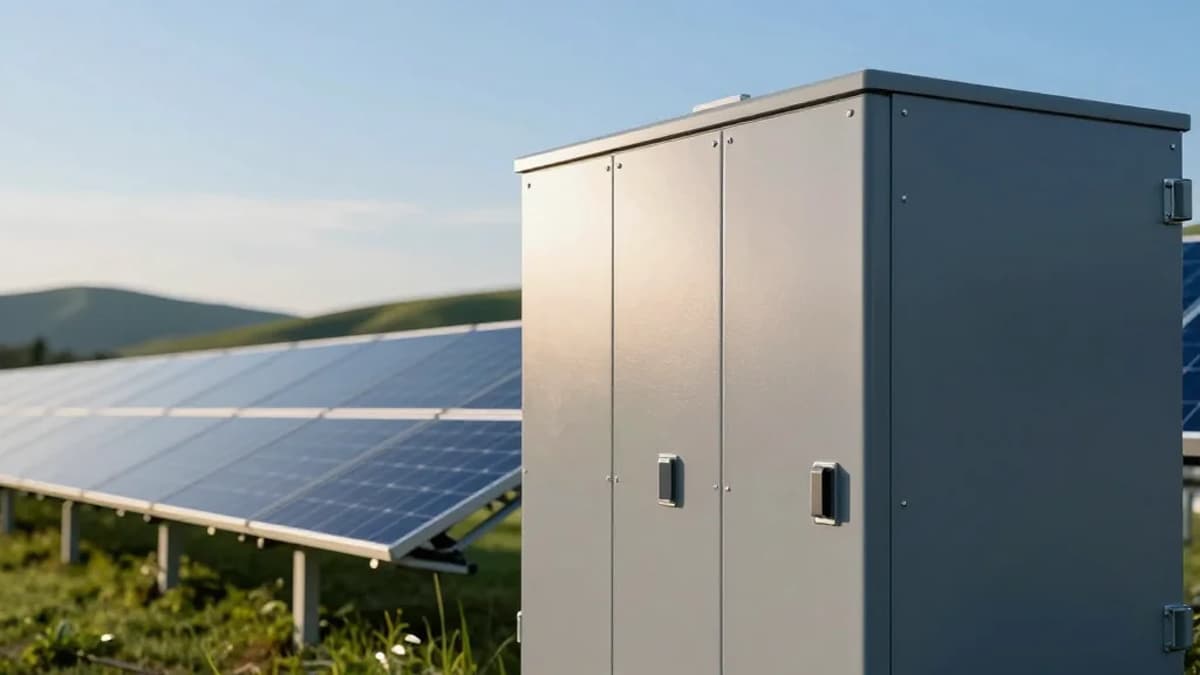
Community Battery Launches Next to Community Solar System, to Help Power Regional Resilience
•March 6, 2026
0
Why It Matters
The deployment strengthens rural energy security and demonstrates a scalable model for community‑owned storage, accelerating renewable integration and grid resilience.
Key Takeaways
- •First of seven community batteries deployed in regional Victoria.
- •340 kWh battery paired with 99 kW solar at historic gaol.
- •Expected to deliver 38.2 MWh of stored solar annually.
- •Provides backup power against bushfires, storms, and floods.
- •Supports up to 2,000 customers with 5 MWh total storage.
Pulse Analysis
Community‑scale battery projects are gaining traction as policymakers and investors seek tangible ways to harden regional grids against climate‑driven disruptions. Indigo Power’s initiative, backed by a substantial ARENA commitment, illustrates how public funding can catalyze private‑sector deployment of distributed storage. By locating BEECH01 at the Old Beechworth Gaol—a site already symbolic of the company’s solar origins—the project blends heritage tourism with modern energy infrastructure, creating a visible showcase for other rural towns.
Technically, the 340 kWh battery coupled with a 99 kW photovoltaic system offers a versatile energy hub. Its ability to discharge up to 38.2 MWh annually translates into daily peak‑shaving for households and a reliable reserve during extreme weather events. The system’s design prioritises critical circuits, ensuring essential services like emergency shelters remain operational when the main grid fails. This dual function—daily renewable sharing and emergency backup—addresses both economic and safety concerns that often dominate community discussions about energy transition.
Looking ahead, the cumulative 5 MWh capacity across seven sites positions Indigo Power to service roughly 2,000 customers, signaling a viable business case for community batteries at scale. The model reduces reliance on centralized generation, lowers transmission losses, and creates local revenue streams through shared solar. As more regional utilities confront the twin challenges of decarbonisation and resilience, projects like BEECH01 provide a replicable blueprint that aligns environmental goals with community empowerment, potentially reshaping the energy landscape of Australia’s hinterland.
Community battery launches next to community solar system, to help power regional resilience
0
Comments
Want to join the conversation?
Loading comments...