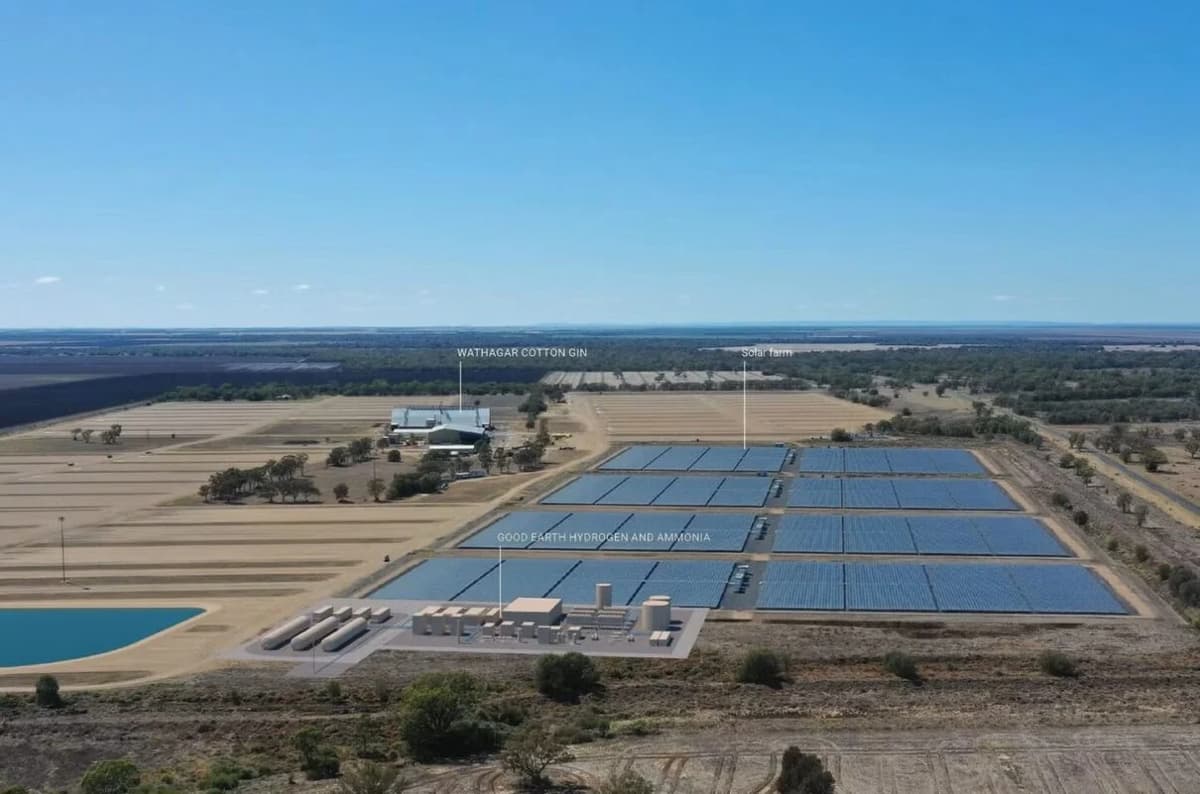
Construction Begins on AU$72 Million Solar-Powered Green Hydrogen Hub in New South Wales, Australia
Companies Mentioned
Why It Matters
By generating renewable‑based ammonia locally, the hub reduces Australian reliance on imported fertilisers and diesel, bolstering regional energy security and cutting emissions. It also demonstrates a scalable, government‑backed pathway for green hydrogen deployment in regional economies.
Key Takeaways
- •AU$71.6M (US$50M) green hydrogen hub starts construction near Moree.
- •35 MW solar + 30 MWh battery powers 15 MW electrolyzer for 200 t H₂.
- •Produces 4,500 t low‑carbon ammonia annually for 65,000‑acre farm.
- •NSW government contributes AU$45.2M (≈US$31.6M) under Hydrogen Hubs Initiative.
- •Decentralised model cuts logistics, contrasts recent large‑scale project exits.
Pulse Analysis
Australia’s push toward a domestic green‑hydrogen industry has been hampered by the scale and capital intensity of flagship projects, many of which have stalled or been abandoned. The GEGHA hub sidesteps these challenges by pairing a modest‑size solar array with battery storage to run a 15 MW alkaline electrolyser, a configuration that aligns capital outlay with the immediate needs of regional agriculture. This approach not only lowers upfront risk but also creates a replicable template for other farming districts seeking energy independence.
The hub’s output—200 tonnes of green hydrogen and 4,500 tonnes of low‑carbon ammonia per year—directly supplies Sundown Pastoral’s Keytah Farm, a 65,000‑acre cotton and cropping operation. By replacing imported, fossil‑fuel‑derived fertilisers with locally produced ammonia, the farm can cut both input costs and its carbon footprint. The integrated 30 MWh battery ensures continuous electrolyser operation despite solar intermittency, while the 600‑tonne ammonia storage buffer smooths seasonal demand, illustrating how renewable energy can be reliably married to chemical production.
From a policy perspective, the project validates the NSW government’s Hydrogen Hubs Initiative, which earmarked AU$45.2 million (≈US$31.6 million) to accelerate regional clean‑energy clusters. Its success could shift industry sentiment away from megaprojects toward a network of smaller, community‑anchored hubs, fostering domestic manufacturing of electrolyser components and creating local jobs. If replicated across New South Wales, this model could underpin a sovereign supply chain for fertilisers and fuel, strengthening Australia’s resilience against global price volatility and advancing its National Hydrogen Strategy.
Construction begins on AU$72 million solar-powered green hydrogen hub in New South Wales, Australia
Comments
Want to join the conversation?
Loading comments...