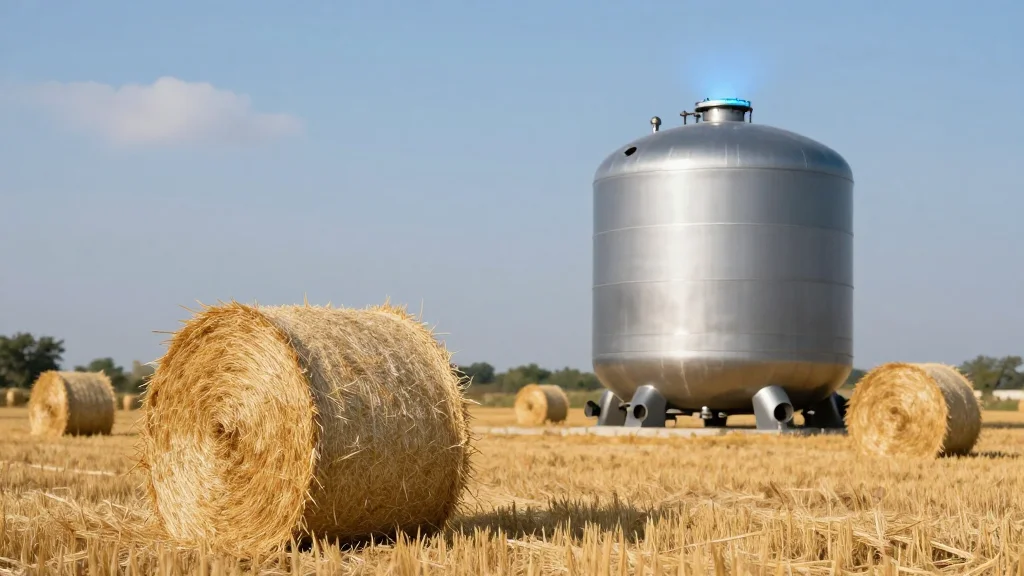
Converting Crisis Into Opportunity: Why Paddy Straw-Based CBG Deserves Special Funding
Why It Matters
Paddy‑straw CBG directly tackles India’s pollution, climate and energy security challenges while unlocking rural income, making it a strategic priority for policymakers and investors.
Key Takeaways
- •India generates ~230 million tonnes surplus agricultural biomass annually
- •Burning one tonne straw releases 1.46 t CO₂ and 3 kg PM
- •CBG blending obligation rises to 5% by FY2028‑29
- •High collection costs hinder paddy‑straw CBG profitability
- •Targeted subsidies and carbon credits can bridge CBG financing gaps
Pulse Analysis
Winter air‑quality emergencies in Delhi‑NCR are amplified by paddy‑stubble burning, which emits roughly 1.46 tonnes of CO₂, 3 kg of particulate matter, and a suite of toxic gases per tonne of straw. The practice not only degrades public health but also strips essential nutrients—nitrogen, phosphorus, potassium—from the soil, eroding long‑term agricultural productivity. While the Crop Residue Management scheme has reduced fire incidents, the sheer volume of residual biomass—over 230 million tonnes annually—remains a largely untapped resource.
Compressed biogas (CBG) derived from paddy straw presents a holistic remedy. By diverting straw from open‑field combustion, CBG plants slash emissions at source, contributing to national climate goals and improving local air quality. The resulting renewable gas feeds into the government’s CBG Blending Obligation, slated to reach 5% of natural‑gas consumption by FY2028‑29, bolstering energy security and reducing import dependence. Moreover, the process yields nutrient‑rich organic manure, restoring soil health, while creating supply‑chain jobs and new income streams for farmers, thereby stimulating rural economies.
Despite its promise, paddy‑straw CBG faces steep economic barriers: costly collection, preprocessing, and logistics inflate capital outlays, and feedstock variability can depress returns. Targeted policy tools—enhanced capital subsidies, Viability Gap Funding, uncapped support for aggregation infrastructure, and concessional financing—are essential to bridge the gap. Access to carbon‑credit markets and climate‑finance mechanisms can further augment project economics, making large‑scale deployment viable and turning a recurring environmental crisis into a sustainable growth engine for India.
Converting crisis into opportunity: Why paddy straw-based CBG deserves special funding
Comments
Want to join the conversation?
Loading comments...