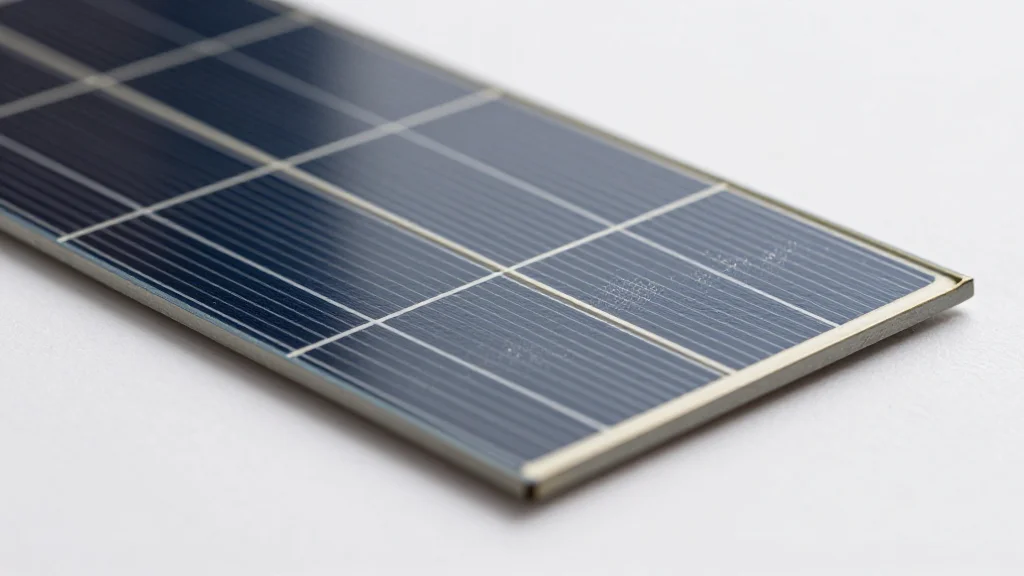
DAS Solar, UNSW Build Tunnel Back-Contact Solar Cell with 27% Efficiency, Lower Silver Content
Why It Matters
Cutting silver consumption directly lowers material costs and buffers manufacturers against price volatility, while the >27% efficiency pushes silicon‑based cells closer to the performance ceiling of emerging technologies.
Key Takeaways
- •Zero-busbar design cuts silver use to ~6 mg/W, 30% less than MBB
- •Mass‑produced TBC cells achieve >27% efficiency, rivaling top‑con modules
- •Optimized metal grid reduces finger‑width losses, boosting current collection
- •Lower silver consumption stabilizes costs amid volatile metal prices
- •Interconnection reliability remains a challenge for ZBB modules
Pulse Analysis
Back‑contact silicon cells have long been prized for their high voltage and low recombination losses, but traditional multi‑busbar layouts demand substantial silver paste, driving up module cost. The tunnel‑oxide passivated contact (TBC) architecture mitigates surface recombination, yet its full commercial promise hinges on cost‑effective metallization. By eliminating busbars entirely, the UNSW‑DAS Solar collaboration leverages a fine‑finger grid that preserves carrier collection while slashing silver demand to roughly 6 mg per watt—an amount more typical of thin‑film technologies. This material efficiency not only reduces the bill of materials but also insulates producers from the recent spikes in silver prices, a critical factor for maintaining competitive pricing in a market where margins are thin.
The technical breakthrough rests on advanced simulation tools that fine‑tune finger width and pitch, ensuring that optical and electrical losses stay minimal. Coupled with precision screen‑printing and optimized soldering, the ZBB TBC cells consistently exceed 27% conversion efficiency in pilot‑scale production runs. Such performance places them on par with the latest TOPCon and heterojunction cells, but with a simpler rear‑side architecture that can be integrated into existing line equipment. The ability to mass‑produce these cells demonstrates that high‑efficiency silicon can be delivered without the capital expense of new deposition tools, accelerating adoption across utility‑scale and rooftop segments.
For the photovoltaic industry, the convergence of ultra‑high efficiency and reduced silver usage could reshape cost models for next‑generation modules. While the ZBB design eases material pressure, it introduces new challenges in module interconnection and long‑term reliability, requiring rigorous testing before full market rollout. Nonetheless, the demonstrated scalability and performance suggest that ZBB TBC cells could become a cornerstone of cost‑competitive, high‑efficiency solar, especially as manufacturers seek to hedge against commodity volatility and meet increasingly ambitious efficiency targets. Continued research on solder joint durability and module‑level integration will be pivotal in translating laboratory gains into commercial success.
DAS Solar, UNSW build tunnel back-contact solar cell with 27% efficiency, lower silver content
Comments
Want to join the conversation?
Loading comments...