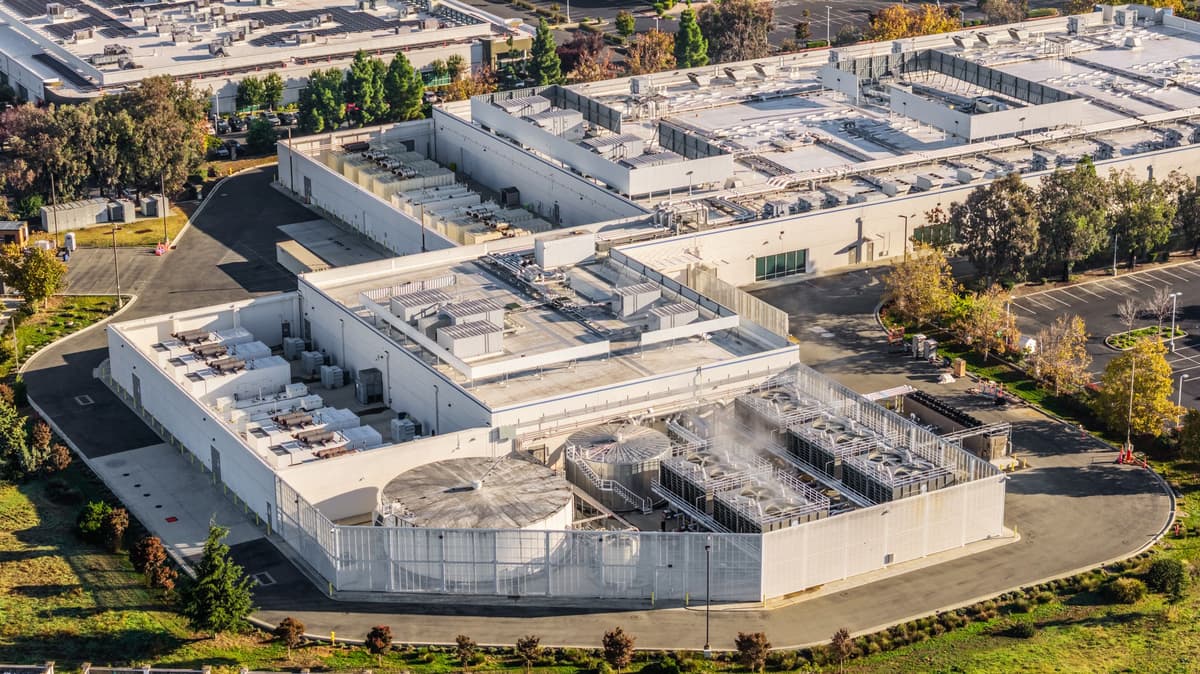
Data Center Operators Are Trying to Fix Their Water Use Problems
Why It Matters
Water constraints could limit the geographic rollout of hyperscale data centers, affecting cloud capacity and regional economic development. Companies that align cooling strategies with local water resources can avoid regulatory backlash and unlock power‑grid relief during peak demand.
Key Takeaways
- •SpaceX IPO now flags water scarcity as data center risk
- •Evaporative cooling could consume up to 33 billion gallons by 2030
- •Google pledges to replenish more water than it consumes at sites
- •Microsoft, OpenAI and Oracle plan to abandon evaporative cooling
- •Site‑specific hydrologic studies guide cooling choices across regions
Pulse Analysis
Data centers have become a flashpoint in the sustainability debate, with recent Gallup polling showing that 70 % of Americans oppose new facilities and cite water scarcity as the top concern. As hyperscale operators expand into arid regions, the demand for cooling water collides with municipal supplies, prompting regulators and community groups to scrutinize permits. The issue is not merely environmental; it touches on corporate social license, real‑estate costs, and the ability to meet growing cloud demand without triggering public backlash.
Evaporative cooling remains popular because it can slash electricity use by up to 30 % compared with traditional air‑cooled systems, yet it trades power savings for a massive water footprint. A 2024 Lawrence Berkeley National Laboratory study warned that if current practices persist, U.S. hyperscale sites could draw as much as 33 billion gallons annually by 2030—roughly the volume of a midsize reservoir. In water‑rich locales, that approach can free 10–30 GW of grid capacity during peak summer loads, but in drought‑prone basins it threatens supply reliability and may trigger stricter permitting.
Tech firms are carving divergent paths. Microsoft, OpenAI and Oracle have announced plans to phase out evaporative cooling in water‑stressed states, opting for closed‑loop or air‑side solutions that minimize withdrawals. Google, by contrast, is betting on a data‑driven watershed framework, pledging to replenish more freshwater than it consumes and to expand recycled‑water use at its sites. These strategies reflect a broader industry shift toward localized water risk assessments, which could become a regulatory prerequisite and a competitive differentiator for providers of sustainable cloud infrastructure.
Data Center Operators Are Trying to Fix Their Water Use Problems
Comments
Want to join the conversation?
Loading comments...