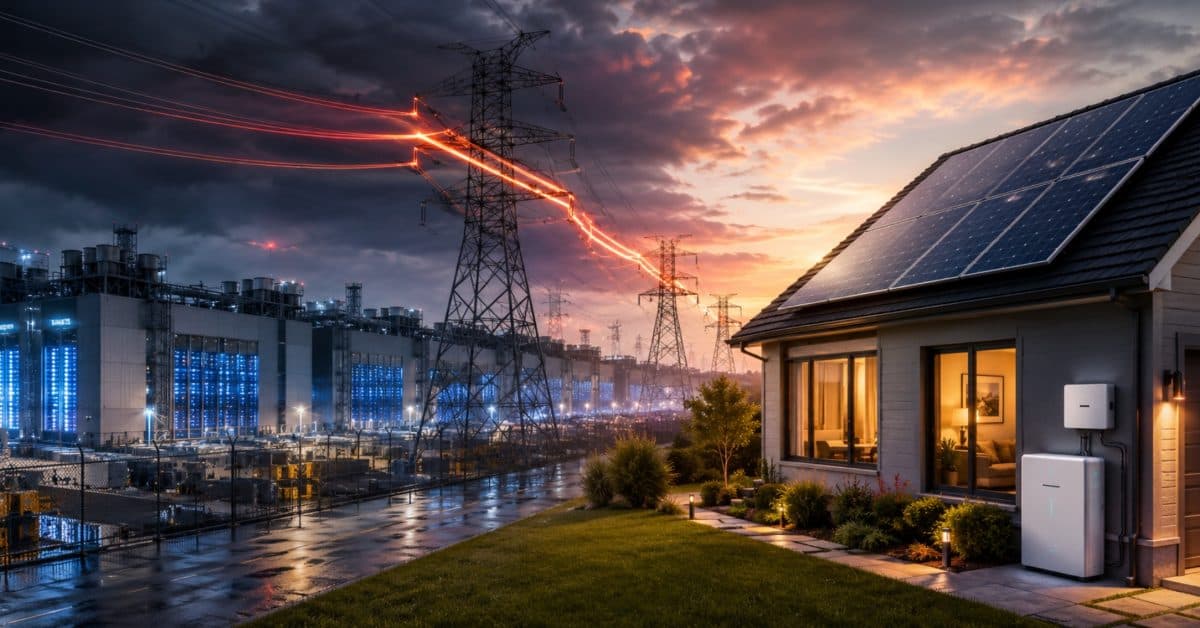
Data Centers Are Cutting Power to Homes, Driving Homeowners to Solar and Batteries
Why It Matters
The reallocation of grid capacity to data centers raises residential electricity costs and reliability risks, making self‑generated solar and storage a critical hedge for homeowners and a catalyst for broader energy‑market transformation.
Key Takeaways
- •NV Energy will cut 75% of Lake Tahoe power for data centers.
- •Data centers could use 35% of Nevada electricity by 2030.
- •Residential rates rise as grid upgrades serve AI‑driven data centers.
- •Homeowners adopt solar‑plus‑storage despite 2025 federal tax credit loss.
- •Ann Arbor and Vermont launch city‑owned solar‑battery programs for homes.
Pulse Analysis
The AI boom is reshaping America’s power grid, with data centers gobbling an ever‑larger slice of electricity. In Nevada, data‑center load already accounts for 22% of total consumption and could climb to 35% by 2030, a pattern echoed nationwide as AI‑related facilities are projected to triple their share of U.S. electricity use by 2028. Utilities such as NV Energy are reallocating capacity to serve high‑margin industrial customers, prompting rate‑case filings that translate into higher monthly bills for residential users. This dynamic underscores a structural shift: the grid is increasingly prioritized for data‑center reliability, leaving traditional homeowners vulnerable to outages and price spikes.
Faced with rising rates and diminishing federal incentives, homeowners are pivoting from tax‑driven solar adoption to a resilience‑focused strategy that couples photovoltaic panels with battery storage. Third‑party ownership models, still eligible for the commercial investment tax credit through 2027, are projected to capture 69% of residential installations in 2026, reflecting a market that values guaranteed power over short‑term subsidies. States outside the Sun Belt, such as Texas and parts of the Southeast, are seeing notable upticks in solar‑plus‑storage deployments driven by reliability concerns and extreme weather, not just electricity cost differentials.
Municipal initiatives are amplifying this trend. Ann Arbor’s city‑owned utility is installing solar and batteries on 150 homes, while Vermont’s Green Mountain Power offers near‑zero‑upfront battery solutions. These programs signal a growing recognition that distributed energy resources can alleviate grid stress caused by data‑center demand. For policymakers and investors, the takeaway is clear: supporting residential solar and storage not only empowers consumers but also provides a pragmatic tool to balance an increasingly industrialized grid. The Lake Tahoe case serves as a cautionary tale and a catalyst for broader adoption of resilient, decentralized power solutions.
Data centers are cutting power to homes, driving homeowners to solar and batteries
Comments
Want to join the conversation?
Loading comments...