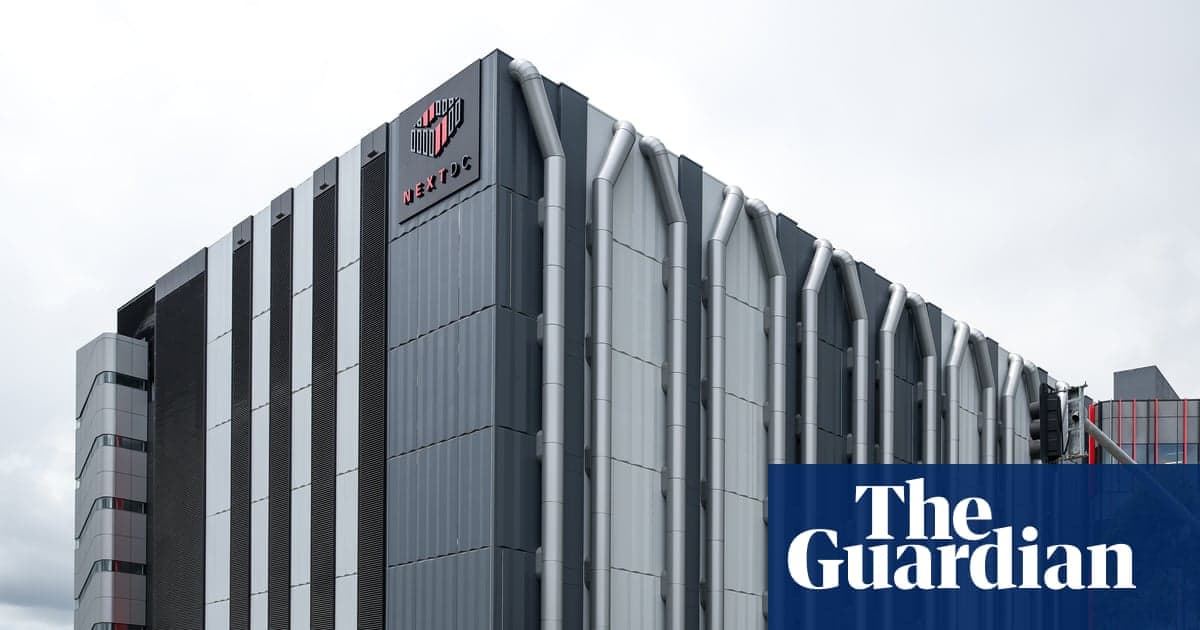
Datacentres Should Be Forced to Invest in Wind and Solar Energy, All States Agree – Except Queensland
Why It Matters
Mandating renewable offsets turns datacentres from a grid strain into a clean‑energy asset, accelerating Australia’s decarbonisation while shaping future investment risk. Queensland’s dissent highlights the political balance between affordability, reliability and climate policy.
Key Takeaways
- •Datacentres consume ~2% of east‑coast electricity, set to triple by 2030.
- •All states except Queensland back mandatory renewable offsets for datacentres.
- •Industry invested ~US$2 bn in energy infrastructure; another US$4.8 bn projected.
- •Required capacity to rise from 1.4 GW to 3.2 GW by 2030.
- •Queensland demands cost‑benefit analysis before adopting national renewable mandate.
Pulse Analysis
The rapid expansion of data‑centre capacity, driven by artificial‑intelligence workloads, is reshaping Australia’s electricity landscape. Today’s 162 facilities draw about 2% of the east‑coast market’s power, but forecasts from the Australian Energy Market Operator show usage could triple by 2030. This surge not only strains the grid but also raises water‑use concerns for cooling, prompting regulators to view datacentres as both a challenge and an opportunity for the nation’s renewable transition.
At a recent ministerial council, every state and the federal government endorsed a policy that would force datacentres to fully offset their power draw through new wind, solar and storage projects, effectively turning them into grid‑supporting assets. The only hold‑out, Queensland, cited the need for detailed cost‑benefit analysis to protect local electricity bills. While the consensus aims to reduce policy uncertainty, industry leaders warn that ambiguous implementation could increase investment risk, even as many operators already offset 70% of their consumption via long‑term renewable contracts.
Financially, the sector has poured roughly US$2 billion into energy infrastructure between 2020 and 2025, with a further US$4.8 billion expected by 2030. This capital influx creates a sizable pipeline for renewable developers and storage providers, positioning Australia to meet the looming demand while fostering a greener grid. The outcome will hinge on how quickly the Australian Energy Market Commission delivers actionable guidance and whether Queensland eventually aligns with the national framework, shaping the competitive dynamics of the country’s data‑centre and clean‑energy markets.
Datacentres should be forced to invest in wind and solar energy, all states agree – except Queensland
Comments
Want to join the conversation?
Loading comments...