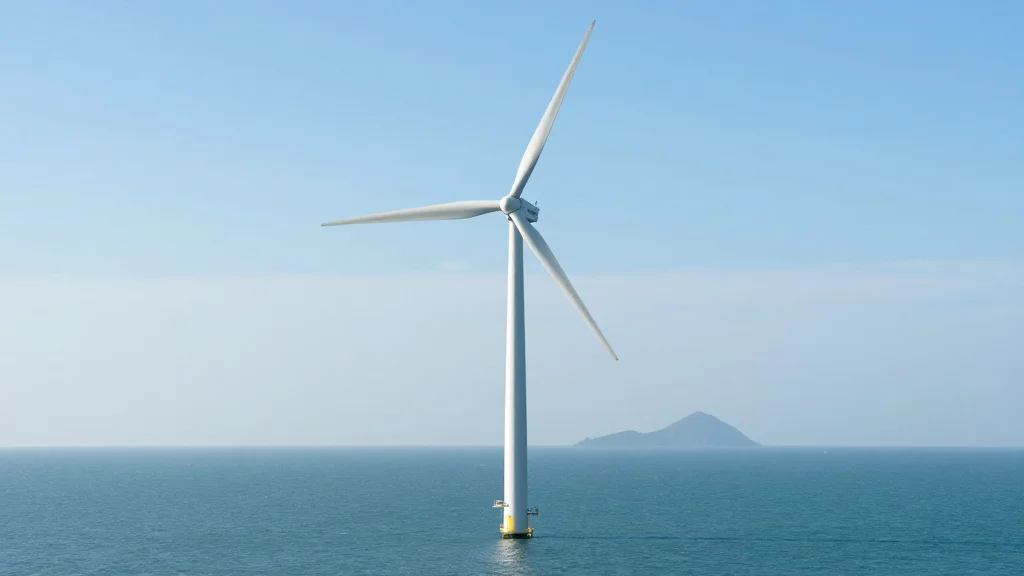
De-Risking Offshore Wind Could Put Philippines Ahead in Clean Energy Race: GWEC’s Ann Francisco
Why It Matters
Successful offshore wind deployment will diversify the Philippines’ energy mix, reduce reliance on coal, and position the country as a clean‑energy leader in ASEAN, attracting sizable private and multilateral investment.
Key Takeaways
- •178 GW offshore wind potential per World Bank study.
- •3,300 MW offered in GEA‑5 fixed‑bottom auction.
- •Projects cost $3.5‑4 M per MW, capital intensive.
- •Blended finance can lower cost of capital for developers.
- •Community engagement crucial for social licence and marine protection.
Pulse Analysis
The Philippines’ offshore wind ambition rests on a confluence of abundant natural resources and urgent energy security needs. A 2022 World Bank assessment highlighted more than 178 GW of technical potential, prompting the Department of Energy to fast‑track policy frameworks and award over 90 service contracts totaling nearly 70 GW. The fifth Green Energy Auction (GEA‑5) marks a watershed, earmarking 3.3 GW of fixed‑bottom capacity despite the technology’s steep $3.5‑4 million per megawatt price tag. By setting clear eligibility criteria and performance bonds, regulators aim to weed out projects that cannot deliver, while still encouraging a competitive pipeline.
Financing remains the sector’s Achilles’ heel, as offshore wind’s capital intensity deters conventional lenders. GWEC advocates for blended finance structures that pair low‑cost multilateral capital with domestic bank participation, effectively compressing the overall cost of capital. A dedicated loan facility, modeled after successful geothermal schemes, could provide concessional terms that make projects bankable without inflating consumer tariffs. Moreover, integrating ancillary infrastructure financing—such as ports, grid upgrades, and supply‑chain development—can generate economies of scale and stimulate local manufacturing, further reducing reliance on imports.
Beyond economics, the Philippines can leverage its ASEAN chairmanship to cement regional leadership in renewable integration. Aligning offshore wind development with the ASEAN Power Grid enhances cross‑border electricity trade and stabilises the regional market. However, scaling must be balanced with marine biodiversity safeguards and genuine community participation. Transparent benefit‑sharing, early stakeholder engagement, and robust marine spatial planning are essential to secure social licence and protect fisheries. If these governance and financing pillars align, the Philippines could emerge as a flagship offshore wind market in Southeast Asia, accelerating its clean‑energy transition while fostering inclusive growth.
De-risking offshore wind could put Philippines ahead in clean energy race: GWEC’s Ann Francisco
Comments
Want to join the conversation?
Loading comments...