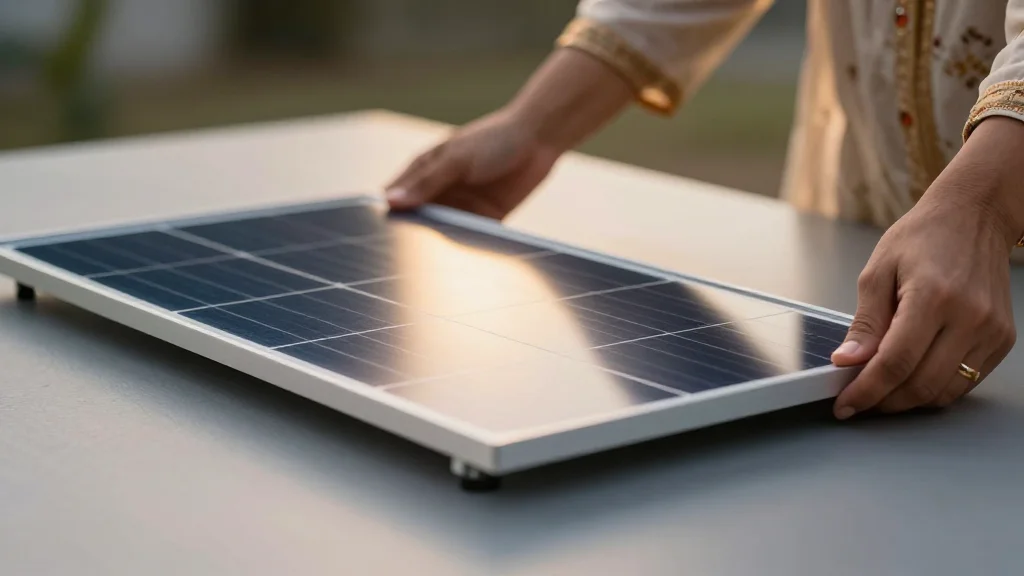
Deputy Chief Minister Bhatti Inaugurates Solar Plant Managed by Women SHGs
Why It Matters
Empowering women through profit‑sharing renewable assets accelerates financial inclusion while bolstering Telangana’s green‑energy ambitions. The model showcases how targeted credit can drive both gender equity and large‑scale solar deployment.
Key Takeaways
- •$360k solar plant transferred to women SHGs in Khammam district.
- •State plans 20,000 MW solar capacity by 2030, district‑wide rollout.
- •Interest‑free loans target $2.4 bn annually for women’s groups.
- •SHGs expected to earn $5‑6k monthly from plant electricity sales.
Pulse Analysis
Telangana’s latest green‑energy push underscores a strategic blend of renewable expansion and gender‑focused economic policy. By handing a $360,000 solar facility to women’s self‑help groups, the state not only diversifies its energy mix but also creates a replicable template for community‑owned power generation. The initiative aligns with India’s broader ambition to reach 500 GW of solar capacity by 2030, positioning the state as a micro‑cosm of national targets while addressing local power demand, which rose to 18,485 MW this fiscal year.
Central to the scheme is a massive credit program that promises $2.4 billion in interest‑free loans each year, with a longer‑term goal of $12 billion in bank financing for women’s collectives. By raising the loan ceiling to roughly $12,000 per SHG, the government removes a key barrier to capital, enabling groups to acquire assets such as solar panels, petrol bunks, and even buses for lease to public transport. The Venkatapuram plant alone is projected to deliver $5‑6 k in monthly revenue, illustrating how modest renewable projects can generate tangible income streams for marginalized entrepreneurs.
If replicated across Telangana’s 33 districts, the model could add tens of megawatts of clean power while fostering a new class of women‑led micro‑entrepreneurs. This dual impact supports India’s climate commitments and the United Nations’ Sustainable Development Goals on gender equality and affordable clean energy. However, scaling will require robust power purchase agreements, grid integration, and continuous monitoring to ensure that revenue flows remain stable and that the financial incentives translate into long‑term economic resilience for the SHGs.
Deputy chief minister Bhatti Inaugurates solar plant managed by women SHGs
Comments
Want to join the conversation?
Loading comments...